How to Choose an Automotive Display?
As electric vehicles, smart vehicles, commercial vehicles, and construction machinery continue to develop, the automotive display has become an important part of modern vehicle human-machine interface systems.
From instrument clusters and center console displays to rear-view camera monitors, navigation systems, and construction vehicle control terminals, different automotive applications have different requirements for display size, resolution, brightness, touch technology, operating temperature, interface, mechanical structure, and reliability.
So, how do you choose the right automotive display? What specifications should you consider before selecting an automotive LCD display?
In general, automotive display selection should take the following factors into account:
Application + Display Size + Resolution + Brightness + Viewing Angle + Touch Technology + Operating Temperature + Interface + Mechanical Design + Reliability + Long-Term Supply
This guide explains the key factors to consider when selecting an automotive display and the technical information you should prepare before contacting a display manufacturer or supplier.
Determine the Automotive Display Application
The first step in choosing an automotive display is to determine where the display will be installed and how it will be used.
Different vehicle applications have different display requirements.
For example, an instrument cluster may place greater emphasis on sunlight readability, wide operating temperature, viewing angle, and reliability. A center display may require higher resolution, capacitive touch, and a suitable high-speed display interface. Displays used in construction machinery may require high brightness, wide temperature operation, water resistance, glove touch, and resistance to vibration.
Common automotive display applications include:
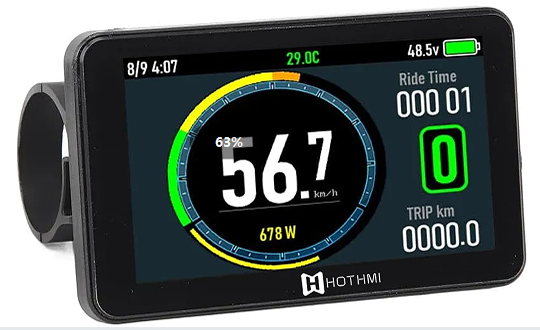
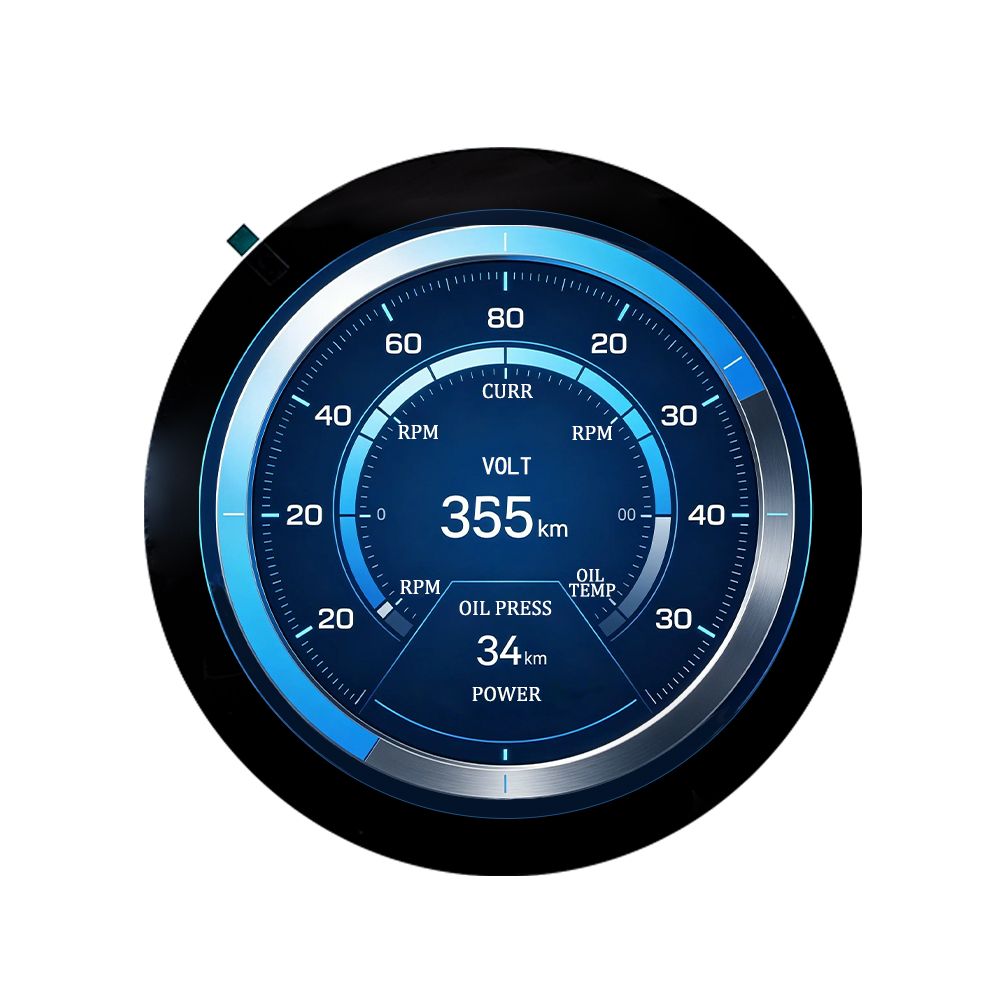
- Instrument Cluster: Displays vehicle speed, battery level, engine information, warnings, and other vehicle status data.
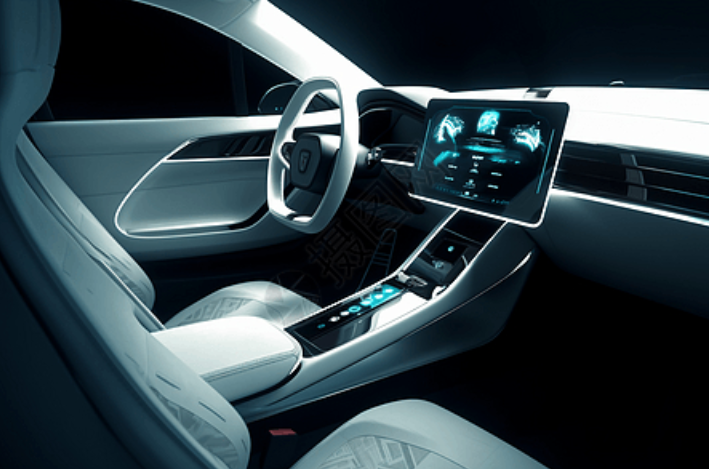
- Center Information Display: Used for navigation, entertainment, vehicle settings, climate control, and intelligent interaction.
- Rear Seat Entertainment Display: Used for video, entertainment, and passenger information.
- Rear-View Camera Display: Displays real-time camera images and requires good brightness, viewing angle, and image response.
- Commercial Vehicle Display: Used in buses, trucks, logistics vehicles, and fleet equipment.
- Construction Vehicle Display: Used in excavators, forklifts, agricultural machinery, and other outdoor equipment.
- Special Vehicle Display Terminal: Used in professional and specialized vehicles requiring customized display solutions.
Before selecting a display, define the application, installation position, viewing distance, ambient environment, and required functions.
These factors will help determine the appropriate display size, brightness, resolution, touch technology, interface, and mechanical design.
Choose the Right Automotive Display Size
The size of an automotive display should be selected according to the available installation space, viewing distance, user interface, and amount of information that needs to be displayed.
Common automotive display sizes include:
3.5 inch, 4.3 inch, 5 inch, 7 inch, 8 inch, 10.1 inch, and larger sizes.
Different applications may use different screen sizes:
| Application | Typical Display Size | Key Considerations |
|---|---|---|
| Instrument Cluster | 3.5″–7″ | Readability, viewing angle, reliability |
| Rear-View Display | 4.3″–7″ | Brightness, viewing angle |
| Center Display | 7″–10.1″ | Resolution, touch, brightness, interface |
| Construction Machinery | 7″–10.1″+ | High brightness, wide temperature, touch |
| Commercial Vehicle | 7″+ | Visibility, reliability, long-term supply |
| Large Vehicle Terminal | 10″+ | High resolution, mechanical integration |
A larger screen does not automatically provide a better user experience.
The display size should also be evaluated together with:
- Aspect ratio
- Resolution
- Viewing distance
- Dashboard space
- Mechanical dimensions
- Touch requirements
- User interface layout
If a standard automotive LCD display does not fit the available installation space, a customized display module or mechanical structure may be required.
Select the Appropriate Display Resolution
Resolution directly affects text clarity, image detail, and overall display quality.
If an automotive display mainly shows simple information such as:
- Vehicle speed
- Battery level
- Icons
- Warning indicators
- Basic vehicle status
a very high resolution may not be necessary.
However, applications such as:
- HD navigation
- Rear-view camera systems
- Video playback
- Smart cockpit systems
- Multimedia systems
- Vehicle monitoring systems
usually benefit from a higher-resolution automotive display.
For example, 7-inch TFT LCD displays may be available in resolutions such as:
800 × 480, 1024 × 600, or 1280 × 800.
The difference becomes noticeable when displaying small text, graphics, navigation maps, and camera images.
When choosing resolution, consider the combination of:
Display Size + Viewing Distance + Display Content + Graphics Performance + Main Controller Capability
Choosing the highest resolution is not always necessary. The best solution is the resolution that matches the application and system performance.
Consider Automotive Display Brightness and Sunlight Readability
Brightness is one of the most important specifications when selecting an automotive display.
Unlike indoor electronics, vehicle displays may operate under rapidly changing lighting conditions, including:
- Nighttime
- Cloudy weather
- Indoor parking areas
- Normal daylight
- Direct sunlight
- Outdoor construction environments
If the display brightness is too low, important information may become difficult to read under strong ambient light.
Therefore, brightness should be carefully evaluated for:
- Instrument clusters
- Center displays
- Rear-view camera monitors
- Commercial vehicle displays
- Construction machinery displays
- Outdoor vehicle terminals
However, sunlight readability is not determined by brightness alone.
Other optical factors should also be considered:
Brightness + Surface Reflection + Anti-Glare Treatment + Contrast Ratio + Optical Bonding
For displays used in bright outdoor environments, a high-brightness automotive TFT display combined with suitable anti-glare or low-reflection treatment can significantly improve readability.
Choose the Right Touch Technology
If the automotive display requires user interaction, the touch panel technology also needs to be selected carefully.
Common options include:
- PCAP Capacitive Touchscreen
- Resistive Touchscreen
- Non-Touch Display
PCAP Capacitive Touchscreen
PCAP, or Projected Capacitive Touch, is widely used in modern vehicle interfaces such as:
- Center console displays
- Smart cockpit systems
- Navigation systems
- Multimedia systems
- Vehicle HMI terminals
Advantages of PCAP touchscreens include:
- Multi-touch operation
- Smooth user experience
- Modern interface design
- High optical clarity
- Support for customized cover glass
For many modern automotive display applications, PCAP is the preferred touch technology.
Resistive Touchscreen
Resistive touchscreens may still be suitable for certain:
- Construction vehicles
- Industrial vehicles
- Agricultural machinery
- Glove-operated equipment
- Specialized control terminals
Depending on the operating environment, additional touch requirements may include:
- Glove touch
- Water resistance
- Touch sensitivity
- Noise immunity
- Surface durability
- Touch operation through thick cover glass
The touchscreen should therefore be selected according to both the user interface and the operating environment.
Check Operating and Storage Temperature
Temperature performance is a critical factor for automotive display reliability.
A vehicle parked under strong sunlight can experience high internal temperatures, while vehicles operating in cold regions may need to start at very low temperatures.
Therefore, an automotive display should be selected according to its required:
- Operating temperature
- Storage temperature
- High-temperature stability
- Low-temperature start-up performance
- Temperature cycling performance
- Backlight performance at different temperatures
The required temperature range varies by application.
Passenger vehicles, commercial vehicles, off-road equipment, construction machinery, and outdoor terminals may all have different environmental requirements.
For this reason, the operating temperature specification should be based on the actual installation location and vehicle environment, rather than applying the same temperature range to every project.
Evaluate Viewing Angle and Optical Performance
Drivers and passengers may view an automotive display from different positions and angles.
If an LCD has a narrow viewing angle, users may experience:
- Reduced brightness
- Color shift
- Lower contrast
- Image inversion
- Poor readability
Important display parameters include:
- Horizontal Viewing Angle
- Vertical Viewing Angle
- Contrast Ratio
- Color Performance
- Display Uniformity
For center displays, rear-seat entertainment systems, and other applications viewed by multiple passengers, a wide viewing angle is particularly important.
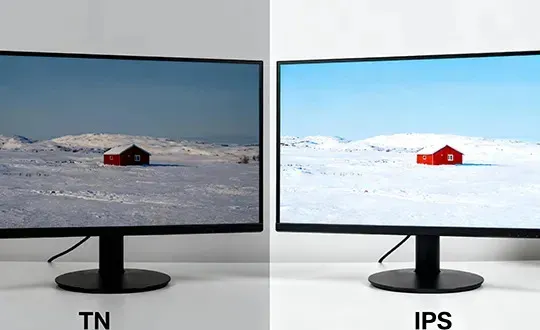
IPS or other wide-viewing-angle TFT technologies may be suitable when consistent image quality from multiple directions is required.
Match the Display Interface with the Main Control System
An automotive display does not operate independently. It needs to communicate with the vehicle’s main controller, processor, or HMI system.
Therefore, the display interface must be compatible with the customer’s hardware platform.
Common display interfaces include:
- RGB
- LVDS
- MIPI DSI
- HDMI
- SPI
- MCU Interface
In addition to the interface type, engineers should confirm:
- Pin definition
- FPC direction
- FPC length
- Connector model
- Resolution
- Timing parameters
- Supply voltage
- Signal requirements
For example, a display may have the correct size, resolution, and brightness but still be unsuitable if the interface or timing cannot work with the customer’s motherboard.
Before ordering samples, it is recommended to provide the display manufacturer with the mainboard interface specification, timing requirements, or existing display datasheet for compatibility evaluation.
Consider the Mechanical Structure of the Automotive Display
An automotive display project often requires more than the LCD panel itself.
Depending on the product design, different levels of integration may be required.
TFT LCD Display Module
A standard TFT LCD module can be integrated into equipment where the enclosure and front panel are designed separately.
LCD + Touch Panel
This solution is suitable for applications requiring touch functionality while allowing the customer to design the final enclosure.
LCD + Touch Panel + Cover Lens
This configuration provides a more complete touch display assembly and is commonly used in integrated HMI products.
For customized automotive display projects, manufacturers may also need to customize:
- LCD dimensions
- Touch panel
- Cover lens
- FPC
- Connector
- Backlight
- PCB
- Mounting structure
- Mechanical outline
- Optical bonding
Defining mechanical dimensions and interface requirements early in the project can help reduce redesign work later in the development process.
Consider Reliability and Environmental Performance
Automotive displays are expected to operate reliably for long periods in demanding environments.
Depending on the application, the display may be exposed to:
- Temperature changes
- Vibration
- Mechanical shock
- Sunlight
- Humidity
- Dust
- Outdoor environments
For this reason, buyers should evaluate more than unit price.
Important supplier and product factors include:
- Product stability
- Batch consistency
- Environmental performance
- Quality control
- Product lifecycle
- Long-term availability
- Custom development capability
- Engineering support
For long-term vehicle programs, product lifecycle is especially important.
A display that becomes unavailable after the product enters mass production may require costly hardware redesign, mechanical changes, and additional validation.
Standard or Custom Automotive Display?
One common question during automotive display selection is whether to use a standard display or develop a customized solution.
Standard Automotive Display
A standard product is often the best choice when the existing size, resolution, interface, and mechanical dimensions meet the project requirements.
Advantages may include:
- Faster development
- Faster sample availability
- Lower development cost
- Easier prototype validation
- Suitable for small-volume projects
Custom Automotive Display
A customized automotive display may be more suitable when the project requires:
- Non-standard dimensions
- Special resolution
- High brightness
- Wide operating temperature
- Special interface
- Customized FPC
- Customized touchscreen
- Customized cover lens
- Optical bonding
- Special mounting structure
For custom projects, the display manufacturer should be able to evaluate not only the LCD panel but also the customer’s mechanical structure, electronic interface, touch requirements, and operating environment.
What Should You Consider for Different Automotive Display Applications?
Different vehicle applications require different display priorities.
| Automotive Application | Key Display Requirements |
|---|---|
| Instrument Cluster | Brightness, viewing angle, wide temperature, reliability |
| Center Information Display | Size, resolution, touch, brightness, interface |
| Rear-View Camera Display | Brightness, viewing angle, response performance |
| Rear Seat Entertainment | Size, resolution, viewing angle, touch |
| Commercial Vehicle Display | Reliability, visibility, long-term availability |
| Construction Machinery | High brightness, wide temperature, touch, protection |
| Outdoor Vehicle Terminal | High brightness, wide temperature, water resistance |
| Special Vehicle Display | Customized size, interface, structure and environmental performance |
There is no single automotive display that is suitable for every vehicle application.
The best automotive display is the one that matches the actual system, installation environment, and user requirements.
Automotive Display Selection Checklist
Before requesting a quotation from an automotive display manufacturer, it is helpful to prepare the following specifications:
| Parameter | Information to Confirm |
|---|---|
| Display Size | Required screen size |
| Resolution | Required pixel resolution |
| Display Type | TFT LCD / OLED / other |
| Brightness | Required luminance |
| Viewing Angle | Required viewing direction |
| Touch Panel | Touch or non-touch |
| Touch Type | PCAP / Resistive |
| Interface | RGB / LVDS / MIPI / HDMI / other |
| Operating Temperature | Required operating range |
| Storage Temperature | Required storage range |
| FPC | Length, direction and structure |
| Connector | Connector model and pin definition |
| Backlight | Brightness and backlight requirements |
| Cover Lens | Standard or customized cover glass |
| Bonding | Air bonding or optical bonding |
| Mechanical Size | Outline and installation dimensions |
| Application | Vehicle or equipment type |
| Quantity | Prototype, pilot run and mass-production volume |
If possible, also provide:
- Existing display datasheet
- Mainboard interface information
- Mechanical drawing
- Installation space
- Product photos
- Touch requirements
- Target operating environment
The more complete the information is, the easier it is for the supplier to determine whether an existing standard automotive display can be used or whether customization is required.
How to Choose an Automotive Display Manufacturer
For simple standard LCD purchases, products can often be compared according to size, resolution, brightness, interface, and price.
However, automotive, commercial vehicle, and construction equipment projects usually benefit from working with a display manufacturer that can provide:
Development + Manufacturing + Customization + Engineering Support + Long-Term Supply
Several factors should be evaluated when selecting an automotive display manufacturer.
Engineering and Customization Capability
The manufacturer should be able to support customization of:
- TFT LCD
- OLED
- Touch Panel
- FPC
- Cover Lens
- Backlight
- Interface
- Optical Bonding
- Mechanical Structure
Manufacturing Capability
The supplier should be able to support different project stages, including:
- Prototype samples
- Engineering verification
- Pilot production
- Mass production
Product Lifecycle
Automotive and industrial programs often require stable supply over an extended period.
Before beginning a long-term project, confirm the expected lifecycle and availability of the selected display.
Technical Support
A professional display manufacturer should also be able to assist with:
- Interface matching
- Touchscreen integration
- Display performance
- FPC design
- Mechanical integration
- Optical bonding
- Environmental requirements
Good engineering support can reduce development time and help avoid compatibility problems during product integration.
HOTHMI Automotive Display Solutions
HOTHMI provides TFT LCD, LCD, OLED, touch panels, and customized display solutions for automotive, industrial, medical, IoT, and other applications.
For automotive display projects, HOTHMI can provide different display configurations according to the required:
- Display size
- Resolution
- Brightness
- Viewing angle
- Touch panel
- Interface
- Operating temperature
- Mechanical structure
For customized projects, HOTHMI can also support the design and integration of:
- Custom FPC
- Connector
- Backlight
- PCAP touchscreen
- Resistive touchscreen
- Cover lens
- Optical bonding
- Mechanical structure
This enables customers to develop a more integrated custom automotive display solution instead of sourcing the LCD, touchscreen, cover glass, and related components from multiple suppliers.
From prototype development and engineering verification to mass production, display design, manufacturing capability, and long-term supply can all affect the success of an automotive display project.
Frequently Asked Questions About Automotive Displays
What is an automotive display?
An automotive display is a display device designed for use in vehicles or vehicle-related equipment. It can be used in instrument clusters, center consoles, navigation systems, rear-view camera systems, commercial vehicles, construction machinery, and other vehicle HMI applications.
What size automotive display should I choose?
There is no single ideal size. The correct size depends on installation space, viewing distance, displayed information, and the intended application.
Smaller displays are commonly used for compact instrument and control applications, while 7-inch, 8-inch, 10.1-inch, and larger displays are often used for center consoles, commercial vehicles, and construction machinery.
How bright should an automotive display be?
The required brightness depends on the ambient lighting conditions.
For displays used in bright outdoor environments or direct sunlight, higher brightness combined with anti-glare, low-reflection treatment, or optical bonding may improve readability.
Which touchscreen is suitable for an automotive display?
PCAP capacitive touchscreens are commonly used in modern vehicle center displays, navigation systems, and smart cockpit interfaces because they support smooth operation and multi-touch.
Resistive touchscreens may still be appropriate for some industrial vehicles and construction equipment depending on glove operation and environmental requirements.
Why does an automotive display need a wide operating temperature?
Vehicles may operate or remain parked in both high-temperature and low-temperature environments.
Selecting an automotive display with a suitable operating and storage temperature range helps improve reliability under changing environmental conditions.
What interfaces are commonly used for automotive displays?
Depending on display size, resolution, and controller platform, interfaces may include RGB, LVDS, MIPI DSI, HDMI, SPI, and MCU interfaces.
The interface should always be matched with the customer’s main control system.
Can an automotive display be customized?
Yes.
Depending on project requirements, customization can include:
- Display size
- Resolution
- Brightness
- Touchscreen
- FPC
- Connector
- Interface
- Backlight
- Cover lens
- Optical bonding
- Mechanical structure
What information should I provide when requesting an automotive display quotation?
It is recommended to provide the display size, resolution, brightness, interface, touch requirements, operating temperature, mechanical dimensions, FPC requirements, connector information, application, and estimated quantity.
Providing an existing display datasheet or mechanical drawing can also help the manufacturer evaluate the project more efficiently.
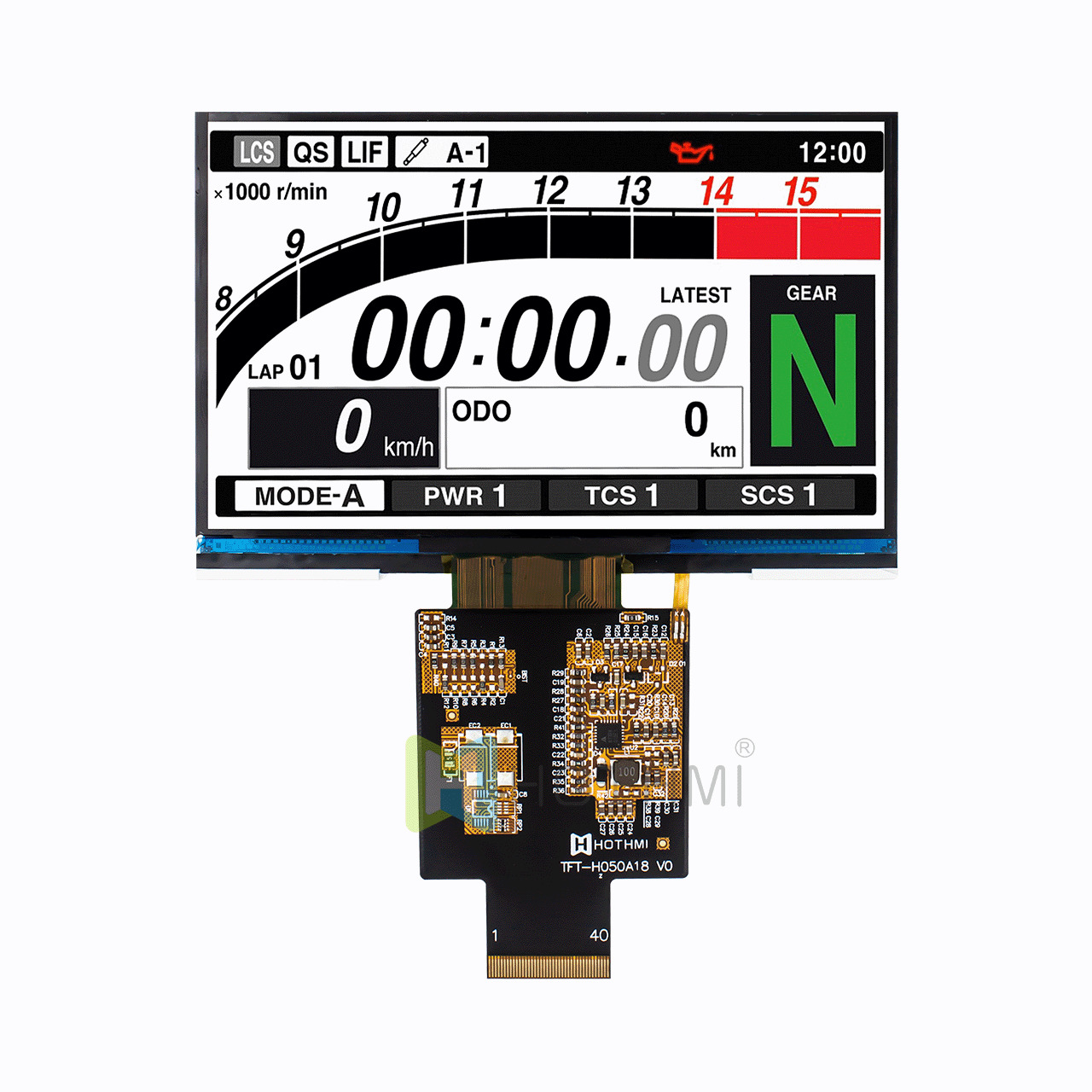
Recommended Automotive Display Solutions
Conclusion: Choose an Automotive Display Based on the Application
Choosing an automotive display involves much more than comparing screen size, resolution, and price.
A suitable display solution should balance:
Application + Size + Resolution + Brightness + Viewing Angle + Touch + Temperature + Interface + Mechanical Design + Reliability + Long-Term Supply
For instrument clusters, center console systems, rear-view camera displays, commercial vehicles, construction machinery, and other vehicle equipment, the display must not only provide clear visual information but also operate reliably in the intended environment.
If you are developing a new vehicle display system, it is recommended to confirm the display specifications, interface, touch requirements, and mechanical structure with an experienced display manufacturer during the early design stage.
HOTHMI supports standard and customized automotive display solutions from prototype development to mass production. If you are looking for an automotive display or need a customized TFT LCD and touch solution for your vehicle project, contact HOTHMI with your display specifications for technical evaluation.
Need Help Choosing an Automotive Display?
Tell us your required display size, resolution, interface, brightness, operating temperature, and touch requirements. Our team can help you evaluate the specifications and recommend a suitable display solution.