Description
2.23 Inch OLED module arduino SPI interface SSD1305
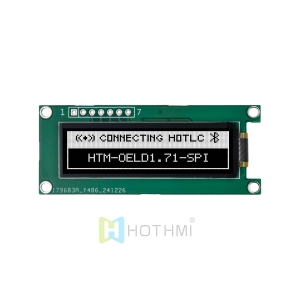
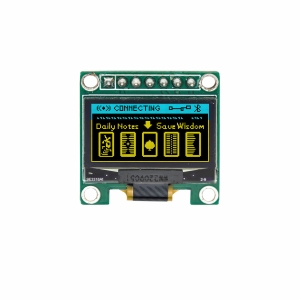
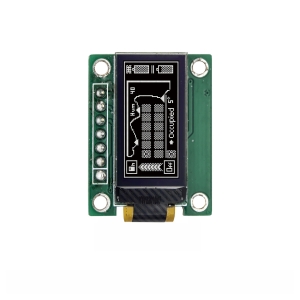
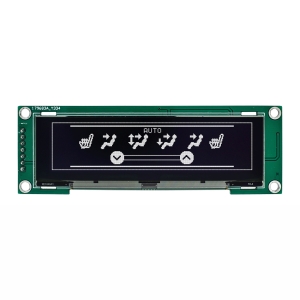
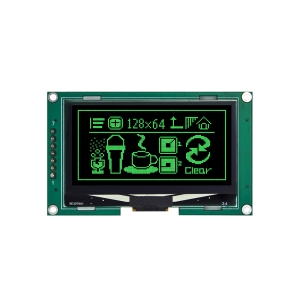
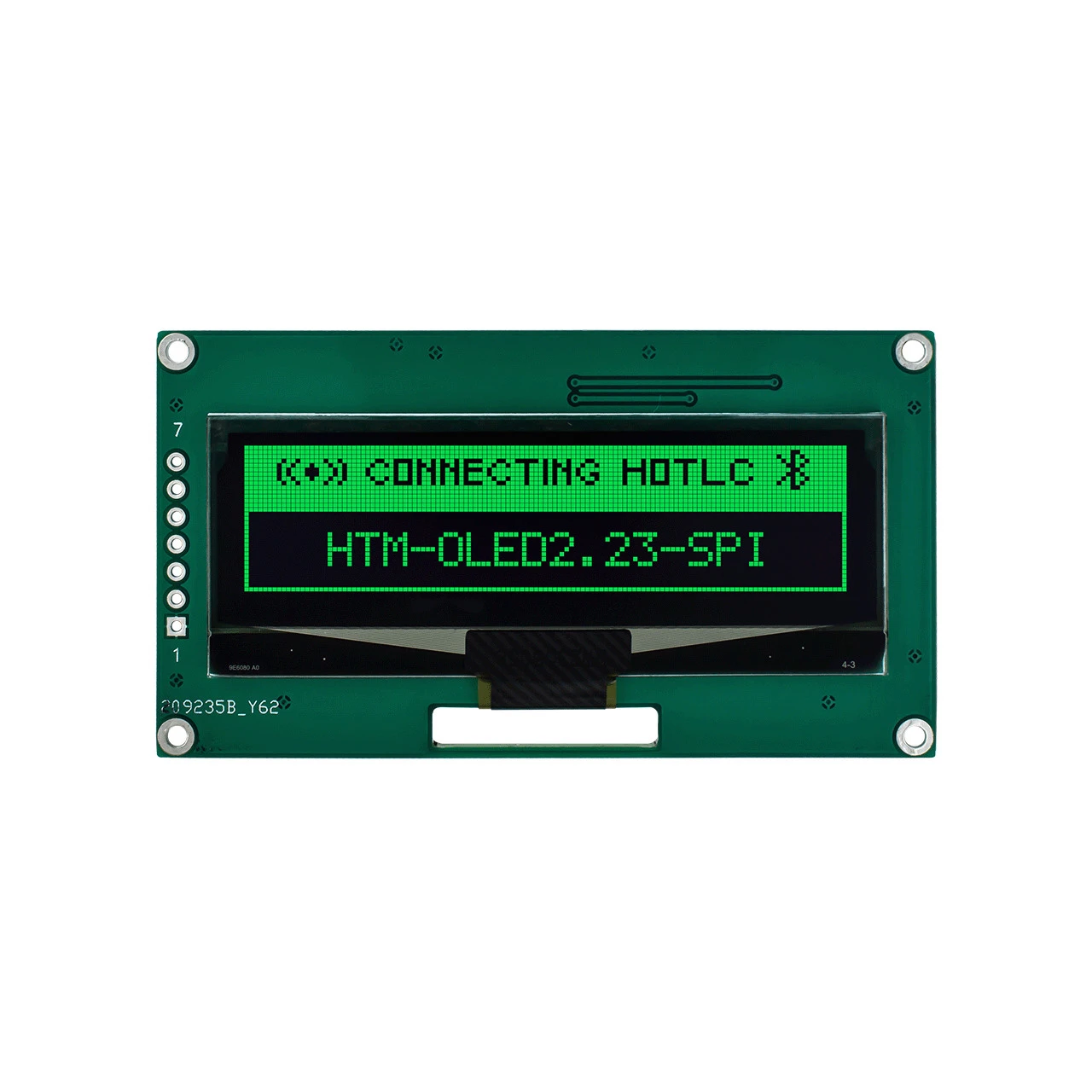
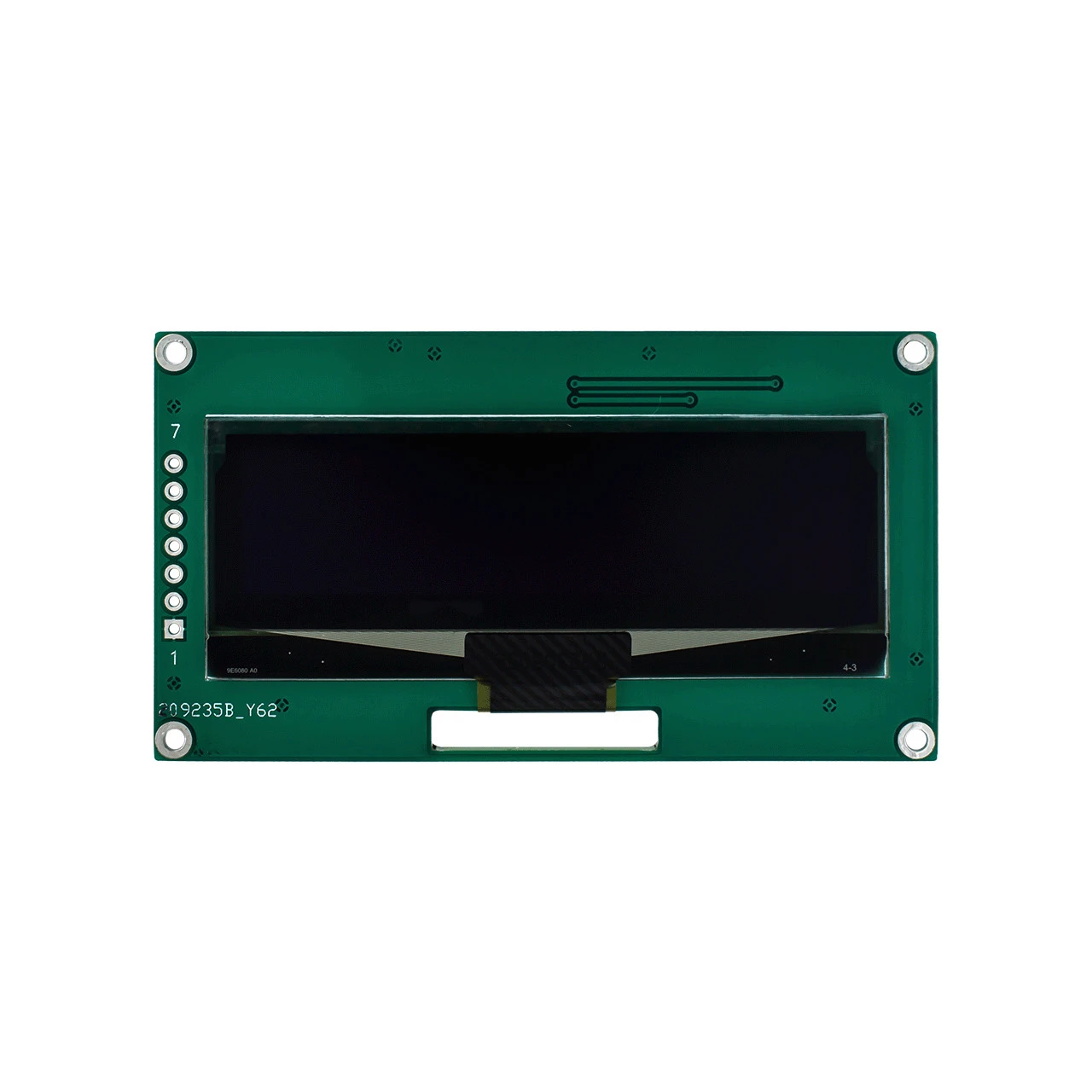
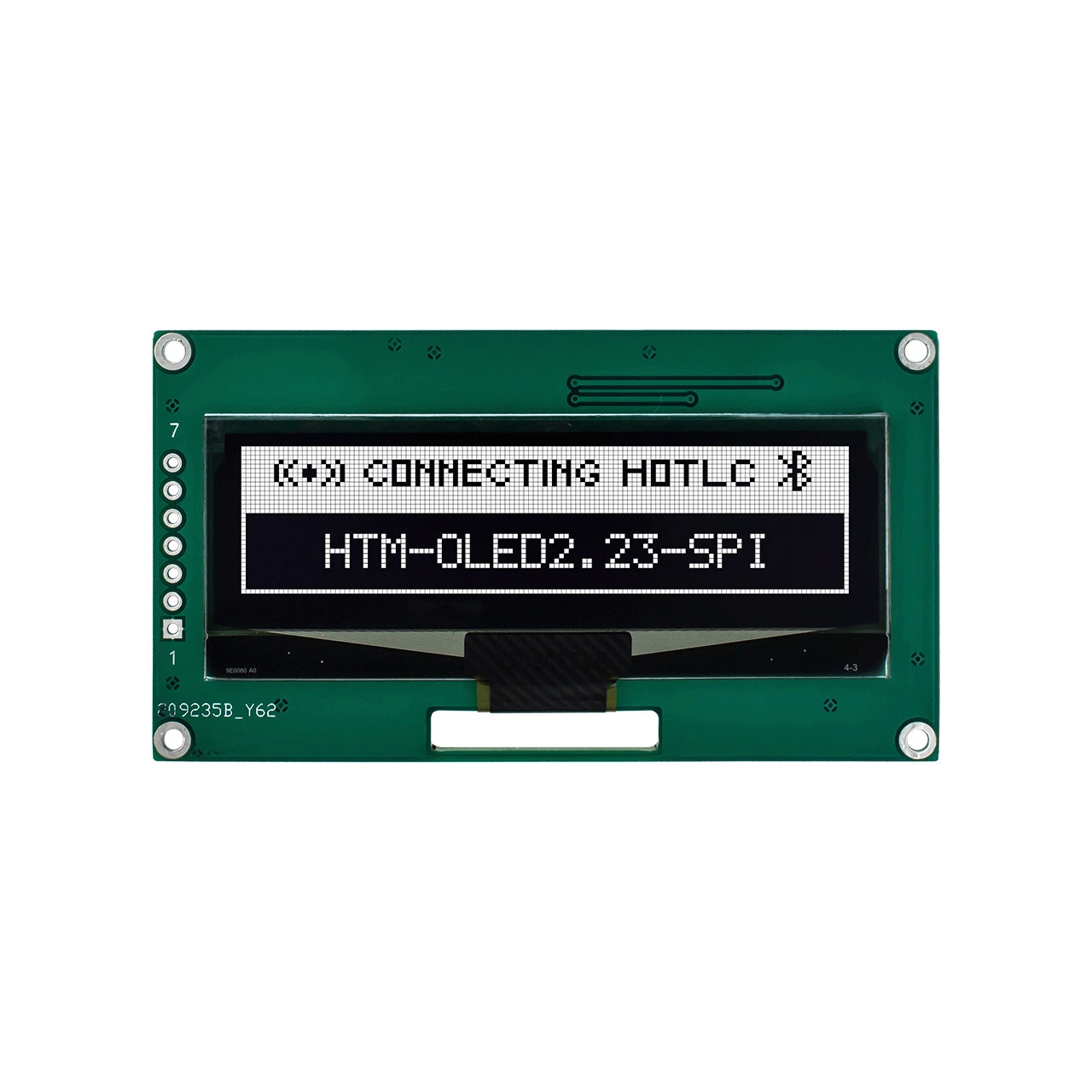
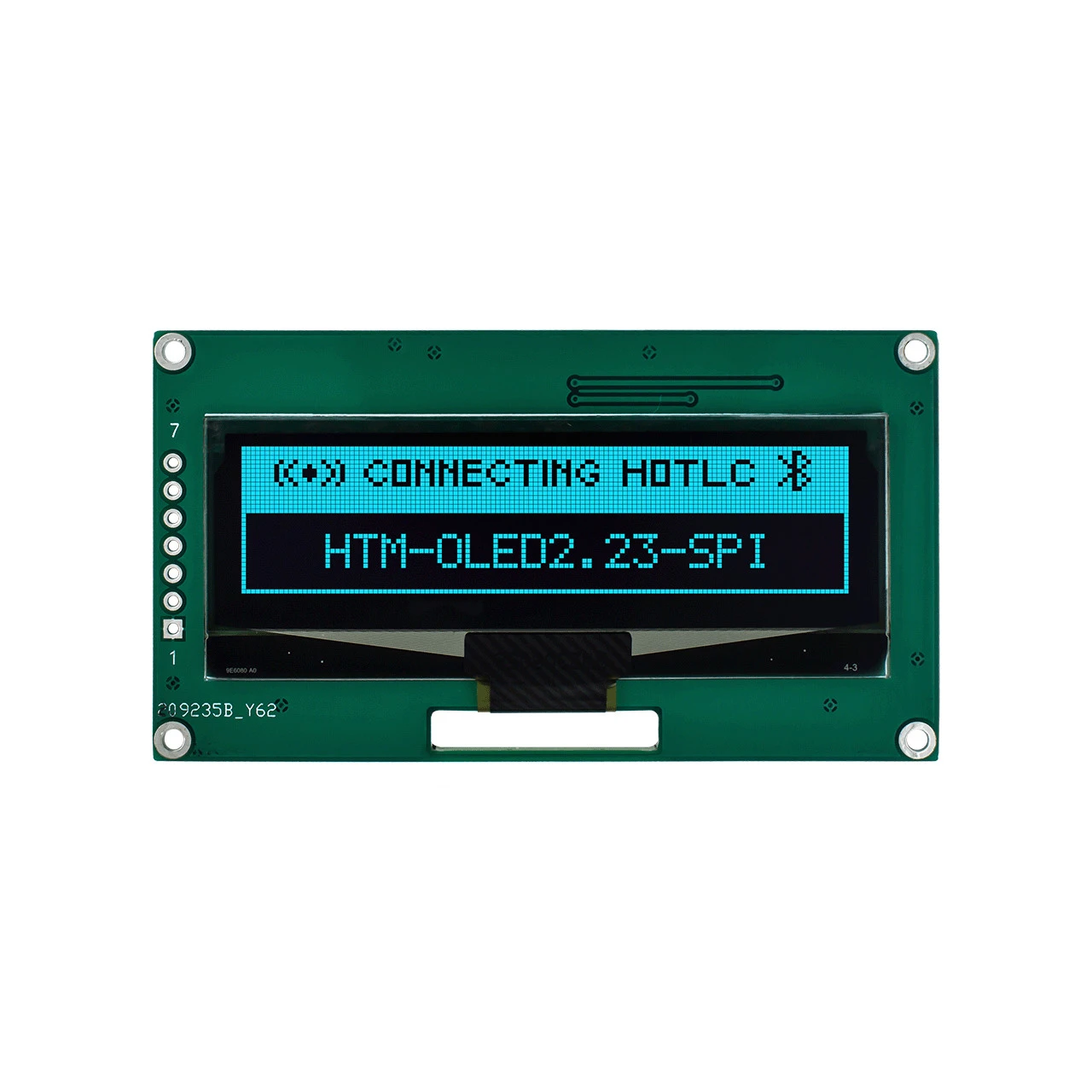
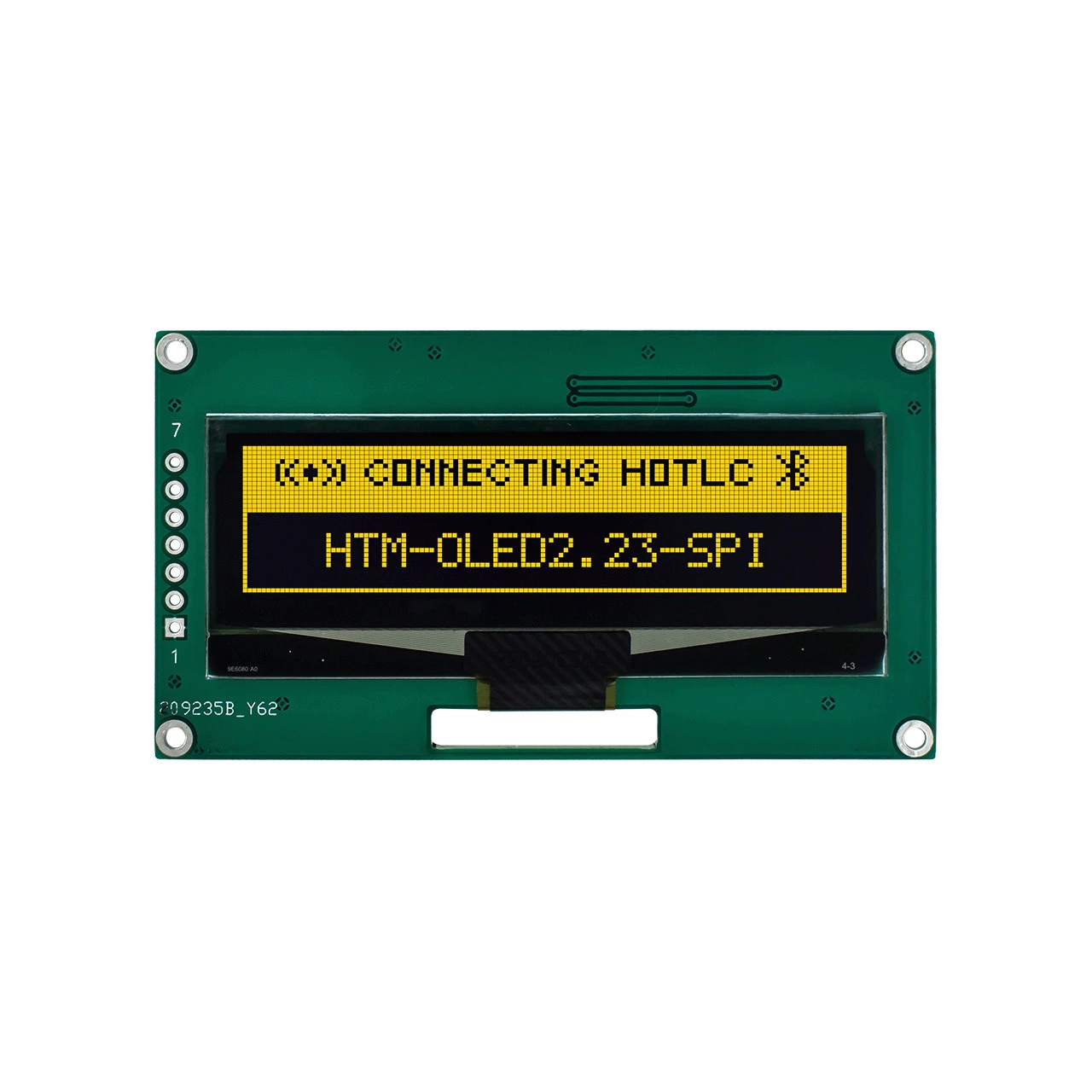
HTM-OLED2.23-SPI OLED module is a monochrome white OLED display module specially designed for embedded development and makers, perfectly compatible with Arduino development boards. Adopting a 4-wire SPI communication interface and equipped with SSD1305 driver IC, this OLED features a 2.23-inch diagonal display area with a dot matrix resolution of 128(W)×32(H).
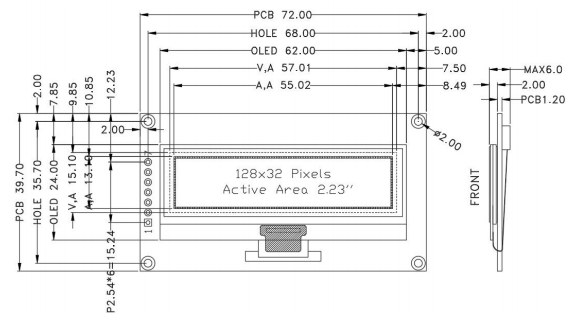
The module adopts a passive matrix OLED display mode with a driving duty cycle of 1/64, an overall size of only 72.0(W)×39.7(H)×6.0(T)mm, and a weight of only 13±10%g. Its ultra-small size and lightweight design can be flexibly integrated into various small devices, meeting the miniaturization development needs of Arduino projects. As a high-cost-performance display choice, this OLED is widely used in industrial control, maker production and intelligent hardware development based on Arduino.
In terms of electrical performance, the working voltage of the HTM-OLED2.23-SPI OLED is 3.3V, which is consistent with the mainstream power supply standard of Arduino, so it can be directly connected without an additional step-down module. The maximum power supply voltage range is 3.0-4.0V, and the logic signal voltage is 2.5-3.3V. Built-in DC-DC voltage conversion circuit, the OLED module does not need an external display drive voltage, which simplifies the wiring process with Arduino.
The module’s brightness can reach 60-90cd/m2, and the dark room contrast ratio is >2000:1. Combined with the full-view display feature, it can ensure clear display effect in different environments such as strong light and dark light. At the same time, the operating temperature range is -40℃ to 80℃, and the storage temperature is -40℃ to 90℃, which has strong environmental adaptability and can be applied to Arduino projects in harsh environments such as outdoors and industry. This makes the OLED module a reliable choice for various Arduino-based application scenarios.
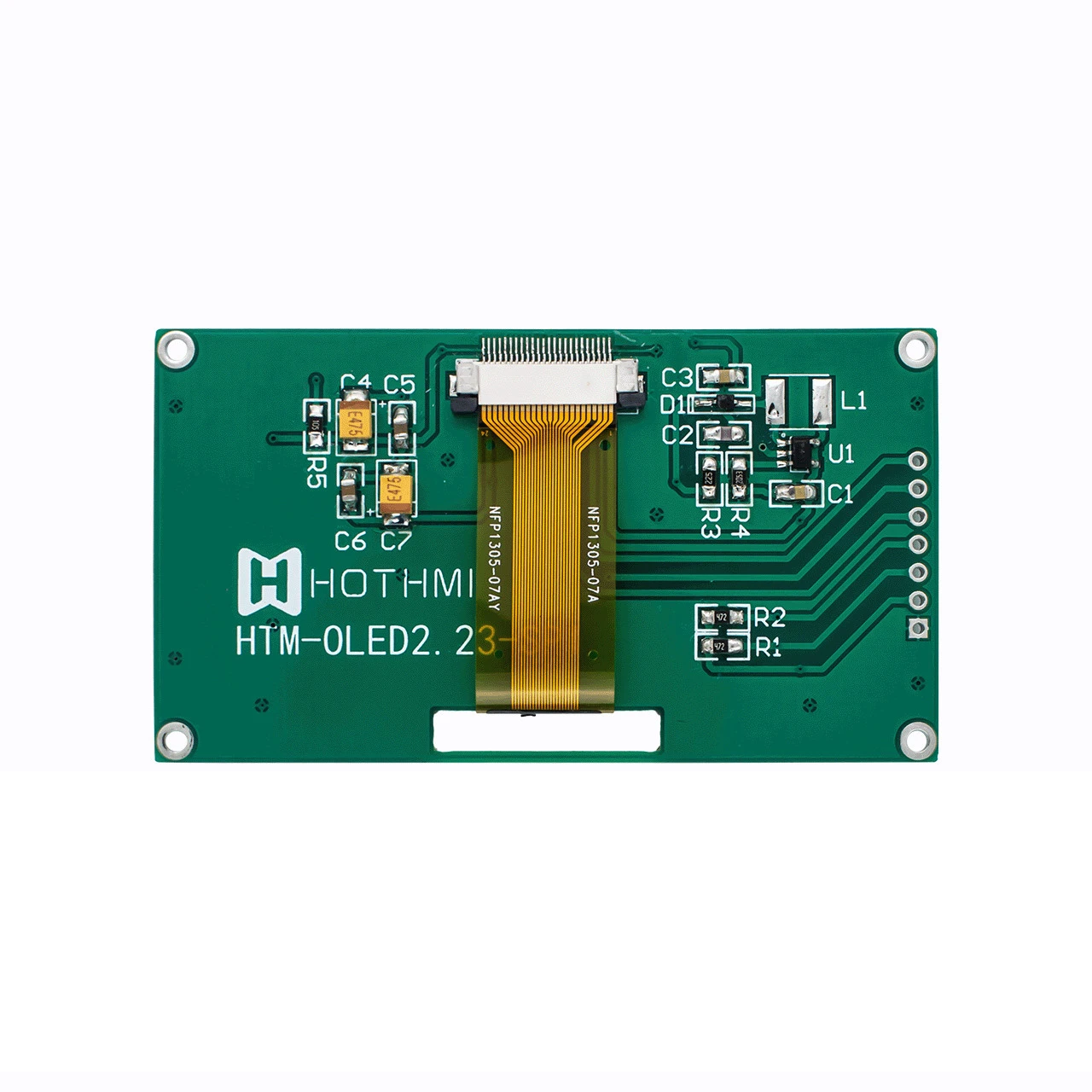
In terms of hardware interface, the OLED module is equipped with 7 pins, which can be directly connected to the SPI pins of Arduino without complex hardware adaptation, so even entry-level makers can quickly complete the wiring. The effective display area of the module is 55.02(W)×13.10(H)mm, the dot size is 0.41(W)×0.39(H)mm, and the dot pitch is 0.43(W)×0.41(H)mm.
With high display accuracy, it can clearly display text, numbers, simple graphics and custom characters, meeting various display needs in Arduino projects. The 7-pin design of the OLED module is optimized for Arduino connection, making the wiring process more convenient and efficient.
Core Product Highlights
Perfectly Compatible with Arduino, Extremely Low Development Threshold
The HTM-OLED2.23-SPI OLED module is optimized for Arduino development. The 3.3V standard power supply is consistent with that of mainstream Arduino development boards such as Arduino Uno, Nano and Mega. The 4-wire SPI interface is fully compatible with the SPI communication protocol of Arduino, and the pins can be directly connected without additional adapter boards or level conversion chips. At the same time, the module is developed based on the SSD1305 driver IC, and there are abundant Arduino driver library resources on the market.
Developers can directly call library functions to realize display control without writing driver code from scratch, which greatly reduces the development difficulty and shortens the project development cycle. This OLED is very friendly to entry-level makers, allowing them to quickly get started with Arduino display projects.
Simplified Hardware Design, Reduced Project Cost
The OLED module has a built-in DC-DC voltage conversion circuit, which can directly generate 12V display drive voltage from 3.3V power supply, eliminating the need for an additional external drive power supply. This reduces the peripheral components of Arduino projects, simplifies the hardware circuit design, and lowers the difficulty of circuit board production.
At the same time, the module adopts 4-wire SPI communication, which only occupies 4 IO ports of Arduino. Compared with the I2C interface, the communication speed is faster; compared with the 8-bit parallel interface, it saves a lot of IO port resources, allowing the remaining IO ports of Arduino to be used to connect sensors, actuators and other devices, improving the expandability of the project. In addition, the cost-effective pricing of the OLED greatly reduces the hardware cost of Arduino maker projects compared with imported OLED modules of the same type.
Ultra-Small Size + Lightweight, Strong Integratability
The overall size of the OLED module is 72.0×39.7×6.0mm, and the weight is only about 13g. Compared with other display modules of the same size, it is smaller and lighter, and can be easily integrated into small Arduino maker projects, such as smart bracelets, mini weather stations, portable detectors, small robots and other devices with strict requirements on size and weight. The module adopts a PCB onboard installation design, equipped with standard mounting holes, which can be fixed by screws or directly soldered on a custom PCB. The flexible installation method is suitable for the structural design of various Arduino projects. The ultra-small and lightweight design of the OLED module makes it an ideal choice for miniaturized Arduino projects.
Industrial-Grade Stability, Strong Environmental Adaptability
As an industrial-grade OLED module, the HTM-OLED2.23-SPI has strong environmental adaptability. The operating temperature covers -40℃ to 80℃, which can work stably in extremely cold and high-temperature environments. Compared with civilian-grade display modules, it is more suitable for outdoor Arduino projects, such as outdoor weather stations, environmental monitoring equipment, industrial control terminals, etc.
The module adopts high-quality OLED luminescent materials and PCB boards, which have strong anti-vibration and anti-impact capabilities. At the same time, it has a built-in overvoltage and overcurrent protection design, which effectively prevents module damage caused by wrong wiring or abnormal power supply, and improves the stability and durability of Arduino projects. This industrial-grade OLED module can provide reliable display solutions for Arduino-based industrial control projects.
Technical Q&A: Common Problems of OLED Module and Arduino Compatibility
Q1: Can the HTM-OLED2.23-SPI be directly connected to the 5V pin of Arduino Uno?
A: No. The standard working voltage of the OLED module is 3.3V, and the maximum power supply voltage does not exceed 4.0V, while the VCC pin of Arduino Uno is 5V. Directly connecting to 5V power supply will cause overvoltage damage to the module. The correct connection method is to connect the VCC pin of the OLED to the 3.3V pin of Arduino Uno, and the GND pin to the corresponding GND pin of Arduino, so that normal power supply can be realized without an additional step-down module. This is a key point to ensure the normal operation of the OLED module and Arduino.
Q2: How to correspond the SPI pins when connecting the OLED to Arduino?
A: The 4-wire SPI interface of the module includes four core pins: SCL, SDA, DC and CS. The corresponding relationship with the SPI pins of Arduino Uno is as follows: the SCL pin of the OLED module is connected to the SCK (pin 13) of Arduino Uno, the SDA pin of the OLED module is connected to the MOSI (pin 11) of Arduino Uno, the DC and CS pins can be freely connected to any digital IO port of Arduino Uno (such as pins 9 and 10), and the RES reset pin can be connected to a digital IO port or directly to 3.3V (it works normally after reset).
After connection, define the pin numbers of DC and CS in the Arduino program, and the SCL and SDA pins need to correspond to the clock and data pins of SPI. Correct pin correspondence is crucial for the normal communication between the OLED module and Arduino.