Display Technology Analysis: Transmissive, Reflective, and Transflective
Liquid crystal display technology is mainly classified into three types based on how it utilizes light sources: transmissive, reflective, and transflective. Each type has its own strengths in terms of application scenarios and power consumption.
Transmissive
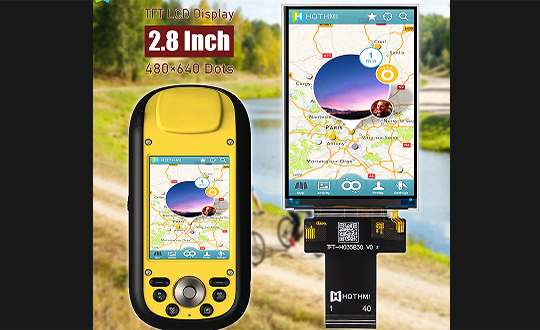
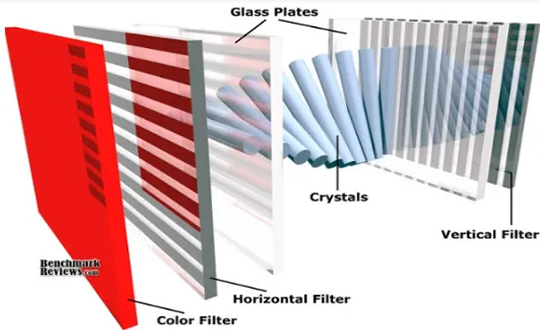
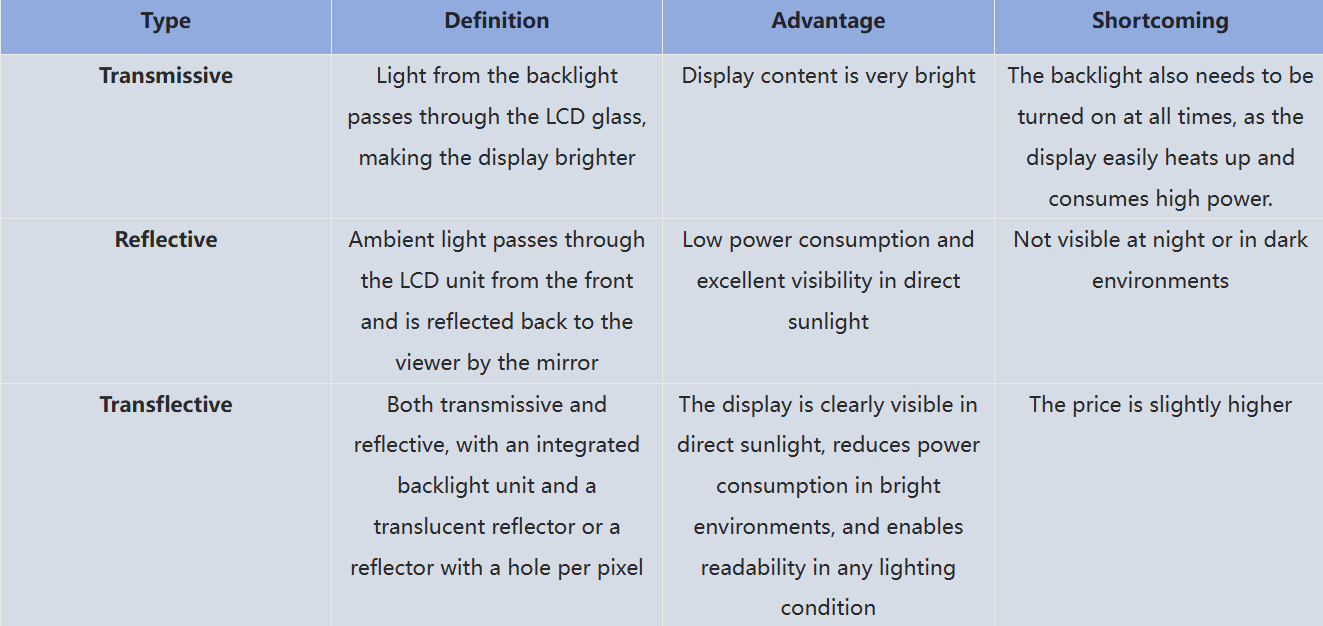
Transmissive displays inherently rely on a built-in backlight to function. The display principle is to let the light emitted by the backlight module pass through the liquid crystal panel and color filters layer by layer, forming images by controlling the amount of light passing through each pixel. Consequently, it delivers bright and clear visuals in normal indoor lighting or even complete darkness. However, this design leads to two distinct characteristics: first, if the backlight is turned off, the screen cannot display any content; second, under intense sunlight, the ambient light will overpower the backlight, degrading readability unless an ultra-high-brightness backlight is used to “counter” the sun. Since backlights consume a large amount of power, these displays are generally unsuitable for power-sensitive devices. The TFT LCD screens in our daily smartphones, tablets, and TVs are typical examples of transmissive displays.
Reflective
Reflective displays take a completely different path. They eliminate the backlight module entirely, opting instead for a layer of reflective material beneath the liquid crystal panel. The display principle relies on ambient light—whether indoor lighting or outdoor sunlight—which hits the screen and reflects back through this material to illuminate the picture. With no backlight, its power consumption is extremely low. Furthermore, the stronger the sunlight, the more intense the reflected light, making the display even clearer and sharper, achieving excellent “sunlight readability.” Yet, its limitations are quite pronounced: once the ambient light dims, the lack of sufficient light to reflect makes the screen blurry and difficult to read, rendering it unusable in dark or low-light environments.
Transflective
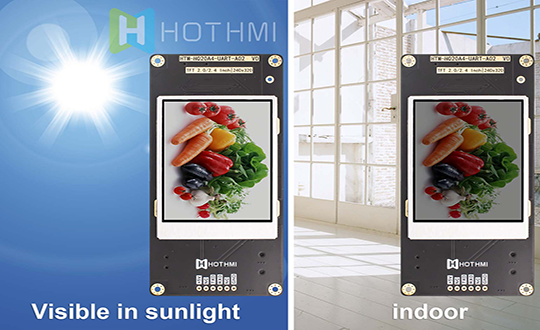
Transflective displays can be seen as a fusion and optimization of the previous two. They feature both a reflective layer and a backlight module within the screen structure, thereby accommodating two working modes. In the presence of ambient light, they function like a reflective screen, relying on reflected light for a clear display, which maintains great readability even under harsh sunlight. When ambient light is insufficient or in total darkness, they can switch on the backlight to provide illumination just like a transmissive screen, ensuring the content remains visible. This “amphibious” capability allows transflective displays to handle any lighting condition smoothly, from direct sunlight to absolute darkness, delivering a stable and clear visual experience in all-weather scenarios.