How to Choose a Medical Equipment Display?
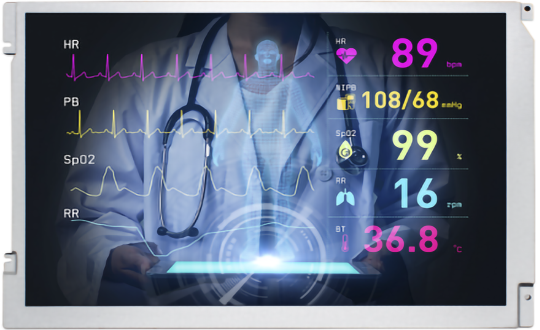
A medical equipment display is an important component of modern medical devices. From patient monitors and ultrasound systems to blood analyzers, ECG equipment, portable diagnostic devices, and medical control terminals, displays often serve as an important interface between medical equipment and doctors, nurses, technicians, or other operators.
Choosing the right medical equipment display is not simply about selecting the right screen size or choosing the highest possible resolution. The display should match the medical device’s application, operating environment, user interaction requirements, system interface, power consumption, and long-term reliability requirements.
So, how do you choose the right display for medical equipment?
This guide explains the key factors to consider when selecting a medical equipment display, including display size, resolution, brightness, viewing angle, touch technology, interface, reliability, mechanical design, and customization options.
What Is a Medical Equipment Display?
A medical equipment display is a display module used in medical and healthcare devices to show data, images, waveforms, charts, and other information. Some medical equipment displays also provide touchscreen functionality for direct user interaction.
Depending on the application, medical devices may use small-size TFT LCDs, high-resolution IPS displays, high-brightness displays, or integrated touchscreen display solutions.
Medical equipment displays can be used in:
- Patient monitors
- Electrocardiogram (ECG/EKG) equipment
- Ultrasound systems
- Blood pressure monitors
- Blood glucose meters
- Blood analyzers
- Infusion pumps
- Portable diagnostic devices
- Medical imaging equipment
- Laboratory equipment
- Medical control terminals
- Medical HMI systems
Different medical devices have different display requirements. Therefore, the first step in selecting a medical equipment display is to clearly define how and where the display will be used.
Choose a Display Based on the Medical Equipment Application
Before determining the technical specifications of a display, first identify the type of medical equipment in which the display will be installed.
A display used in a portable diagnostic device may have very different requirements from a display used in an ultrasound system or patient monitor.
| Medical Equipment | Key Display Requirements |
|---|---|
| Patient Monitor | Wide viewing angle, clear images, good contrast |
| ECG Equipment | Clear ECG waveforms and numerical information |
| Ultrasound System | High resolution, good image quality, wide viewing angle |
| Blood Analyzer | Clear display of text and test results |
| Blood Glucose Meter | Compact size, low power consumption, clear display |
| Portable Medical Device | Compact size, low power consumption, reliable operation |
| Medical HMI | Touch operation, wide viewing angle, stable performance |
| Medical Imaging Equipment | High resolution, high image quality, stable performance |
A suitable medical equipment display should meet the actual requirements of the device while avoiding unnecessary specifications that may increase cost, power consumption, and system complexity.
How Should You Choose the Interface for a Medical Equipment Display?
The display interface must be compatible with the main processor, controller, or system architecture of the medical equipment.
Common TFT LCD interfaces include:
- RGB
- LVDS
- MIPI DSI
- SPI
- MCU
The interface should be confirmed at an early stage of the project. If a display is selected before checking interface compatibility, the development team may later discover that the display cannot work with the selected processor or controller, potentially requiring a hardware redesign.
A more practical selection process is:
Main Processor → Display Interface → Resolution → Display Size → TFT LCD Module
When selecting a medical equipment display, consider:
- Interface type
- Number of lanes
- Data transmission rate
- Connector type
- FPC design
- Operating voltage
- Timing requirements
HOTHMI provides display solutions with different interfaces and customization options to help medical equipment manufacturers simplify system integration.
What Reliability Requirements Should You Consider?
Many medical devices are designed to operate for extended periods, and some may need to run continuously. Therefore, display reliability should be considered at an early stage of the product development process.
Important factors include:
Operating Temperature
First, determine the required operating temperature range of the medical equipment.
If the device will be used in different environments, a display with a wider operating temperature range may provide greater flexibility.
Storage Temperature
In addition to operating conditions, consider the temperature range that the display needs to withstand during transportation and storage.
ESD Protection
Electrostatic discharge (ESD) can affect electronic components and touchscreen operation. Therefore, the display design should be considered together with the ESD protection requirements of the complete medical device.
Long-Term Stability
For medical equipment designed for long-term operation, backlight lifetime and the long-term stability of electronic components are important considerations.
Touchscreen Durability
For touchscreen medical equipment, touchscreen durability should be evaluated according to the expected frequency of use and the actual operating method.
It is important to remember that reliability should be evaluated as part of the complete medical equipment system rather than focusing only on the display module.
How to Choose the Right Display Size for Medical Equipment?
Display size is one of the first parameters engineers consider when selecting a display.
However, bigger does not always mean better. The appropriate display size should be determined by considering:
- Available installation space
- Viewing distance
- Amount of information that needs to be displayed
- UI design
- Whether touchscreen operation is required
- Whether the device needs to be portable
- Power consumption
- Overall mechanical design
Small Medical Equipment Displays
Displays from approximately 2.4 to 5 inches are suitable for compact medical equipment where space is limited and portability is important.
Examples include:
- Handheld diagnostic devices
- Blood glucose meters
- Portable testing equipment
- Small laboratory instruments
- Portable monitoring devices
Medium-Size Medical Equipment Displays
Displays from approximately 5 to 10.1 inches can be suitable for medical equipment that needs to display more information while maintaining a relatively compact form factor.
Examples include:
- Patient monitors
- Medical control terminals
- Portable ultrasound devices
- Laboratory equipment
- Medical HMI systems
Large Medical Equipment Displays
If the equipment needs to display complex graphics, multiple parameters, medical images, or information that must be viewed from a greater distance, a larger display may be appropriate.
The key is not simply to choose the largest screen available. Instead, the display size should match the equipment’s mechanical design, viewing distance, and information requirements.
What Resolution Does a Medical Equipment Display Need?
Resolution determines how much visual information a display can present and how clearly image details can be shown.Medical equipment that mainly displays numbers and simple information may not require an extremely high resolution.
However, equipment that displays ECG waveforms, charts, medical images, or complex graphical user interfaces may benefit from a higher-resolution display.
Common display resolutions include:
- 320 × 240
- 480 × 272
- 480 × 800
- 640 × 480
- 800 × 480
- 1024 × 600
- 1280 × 800
- 1920 × 1080 and above
For example, an ECG monitoring device needs to display waveforms and numerical parameters clearly, while ultrasound systems and medical imaging equipment may require higher image detail.
Resolution should also be evaluated together with:
- Display size
- Viewing distance
- Main processor or controller
- Interface type
- Memory requirements
- Power consumption
- System performance
- Cost
Therefore, higher resolution is not always better. The ideal resolution is the one that matches the overall requirements of the medical equipment system.
Why Are IPS Displays Commonly Used in Medical Equipment?
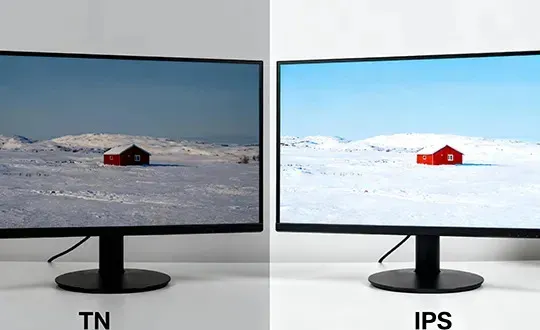
Viewing angle is an important consideration for medical equipment because users may not always view the screen directly from the front.Doctors, nurses, technicians, or equipment operators may view the display from different positions and angles.
IPS TFT displays can provide wide viewing angles and relatively consistent image performance from different viewing directions. This makes IPS technology suitable for many medical equipment applications.
Advantages of IPS medical displays may include:
- Wide viewing angle
- Stable image performance
- Good color reproduction
- Clearer viewing from different angles
- Better visibility when multiple people need to view the screen
For applications such as patient monitors, medical HMI systems, diagnostic equipment, and laboratory instruments, a wide viewing angle can improve the user experience.
When selecting an IPS medical TFT display, also consider:
- Brightness
- Contrast ratio
- Color performance
- Response time
- Power consumption
How Bright Should a Medical Equipment Display Be?
Brightness is another important factor when selecting a medical equipment display. The required brightness depends largely on the actual operating environment.
If the equipment is mainly used indoors under controlled lighting, a medium-brightness display may be sufficient. If the device is used under strong ambient light, a higher-brightness display may be required.
Indoor Medical Equipment
For medical equipment used primarily indoors, a display with approximately 300–500 cd/m² brightness may be sufficient for many applications.
Indoor Environments with Strong Ambient Light
If the equipment is used in an environment with strong ambient lighting, a display with approximately 500–800 cd/m² may be considered.
Outdoor or High-Light Environments
For equipment used outdoors or under very strong ambient light, displays with 800 cd/m² or higher may be appropriate, depending on the application.
However, brightness is not simply a case of “higher is better.”Higher brightness can increase backlight power consumption and generate additional heat. Therefore, brightness should be selected according to the actual operating environment rather than simply choosing the highest available specification.
Does Medical Equipment Need a Touchscreen?
More and more medical devices are using touchscreen interfaces. A touchscreen allows users to directly operate menus, adjust parameters, view charts, and control equipment.
However, not every medical device needs a touchscreen.
When selecting a medical touchscreen display, consider:
- Is touchscreen operation actually required?
- Will users operate the equipment while wearing medical gloves?
- Is single-touch or multi-touch operation required?
- How frequently will the touchscreen be used?
- Is protective glass required?
- Is a special surface treatment required?
Resistive Touchscreen
Resistive touchscreens can be suitable for applications where users need to operate the equipment with gloves, a stylus, or other objects.
For some medical control equipment and industrial control applications, resistive touch technology remains a practical option.
Capacitive Touchscreen
Capacitive touchscreens are widely used in modern human-machine interfaces. They can provide a smooth touch experience and, depending on the design, support multi-touch operation.
For medical HMI systems that require a user experience similar to smartphones or tablets, capacitive touchscreens can be a suitable choice.
Non-Touch Display
Some medical equipment only needs to display information and does not require direct screen operation.
For these applications, a non-touch TFT LCD can simplify the structure and help control costs.
Therefore, touch technology should be selected according to the actual operating method of the medical equipment.
Should Medical Equipment Displays Use Optical Bonding?
For some medical equipment applications, optical bonding can improve display performance and readability.
In a conventional display structure, there may be an air gap between the LCD, touchscreen, and protective glass. Optical bonding uses optical adhesive to bond these layers together.
Potential benefits include:
- Reduced internal reflections
- Improved screen readability
- Better perceived contrast
- Reduced reflections caused by air gaps
- Improved structural stability
If medical equipment needs to maintain good readability under strong ambient light, or if a higher-quality display experience is required, optical bonding may be considered.
However, optical bonding also increases manufacturing complexity and cost. Therefore, it should be selected according to the actual application requirements rather than being treated as a mandatory feature for every medical device.
What Mechanical Dimensions Should You Consider?
Even if a display has excellent technical specifications, it cannot be used effectively if it does not fit inside the equipment.
Before selecting a medical equipment display, confirm:
- Overall module dimensions
- Active Area (AA)
- Viewing Area (VA)
- Module thickness
- FPC position
- Connector position
- Mounting holes
- Bezel dimensions
- Touchscreen dimensions
- Cover glass dimensions
The display should be considered as part of the overall mechanical design.
If the available internal space is very limited, it may be more practical to consider a customized display module rather than significantly modifying the equipment structure to accommodate a standard display.
Should You Choose a Standard or Customized Medical Equipment Display?
This is an important question during medical equipment development.
Standard Display
If a standard TFT LCD meets the required size, resolution, interface, brightness, and mechanical requirements, it can be a practical choice.
A standard display may be suitable when:
- The size meets the requirements
- The resolution is appropriate
- The interface is compatible
- The mechanical dimensions fit
- The standard touchscreen configuration is sufficient
The main advantages of a standard product are generally a shorter development cycle and lower initial development costs.
Customized Display
If a standard display cannot meet the actual requirements of the medical equipment, a customized display solution may be considered.
Customization may include:
- Custom display size
- Custom resolution
- Custom brightness
- Custom FPC
- Custom connector
- Custom touchscreen
- Custom cover glass
- Optical bonding
- Anti-glare treatment
- Anti-reflection treatment
- Custom backlight
- Special operating temperature requirements
For medical equipment manufacturers, a customized display solution can make the display better fit the mechanical and electronic design of the complete device instead of forcing the equipment design to accommodate a standard display.
How to Choose a Medical Equipment Display Supplier?
Choosing the right display supplier is just as important as choosing the right display specifications.
A reliable display supplier should ideally be able to support customers from the early stages of product development through sample development, testing, and mass production.
Key capabilities to evaluate include:
- TFT LCD development
- IPS technology
- Touchscreen integration
- FPC customization
- Backlight customization
- Optical bonding
- Mechanical customization
- Display interface adaptation
- Reliability testing
- Sample development
- Mass production
- Engineering and technical support
It is also important to understand whether the supplier can help adjust the display solution based on actual test results during product development.
A good display supplier should not simply provide a product model. The supplier should understand the customer’s application requirements and help select an appropriate display solution.
Medical Equipment Display Selection Checklist
Before purchasing a medical equipment display, use the following checklist:
| Parameter | Questions to Confirm |
|---|---|
| Application | What type of medical equipment will use the display? |
| Display Size | What size fits the equipment structure? |
| Resolution | How much information and image detail needs to be displayed? |
| Display Technology | Is IPS TFT suitable for the application? |
| Brightness | How much brightness is required for the operating environment? |
| Viewing Angle | Will users view the display from different angles? |
| Touch Function | Is touchscreen operation required? |
| Touch Technology | Should you choose resistive or capacitive touch? |
| Interface | Is the display compatible with the main controller? |
| Operating Temperature | What temperature range is required? |
| Mechanical Design | Can the display module be installed in the equipment? |
| Optical Bonding | Is improved readability or reduced reflection required? |
| Reliability | What are the lifetime and environmental requirements? |
| Customization | Can the supplier customize the display according to project requirements? |
How to Choose a Medical Equipment Display? A 7-Step Selection Process
If you are developing a new medical device, the following seven steps can simplify the display selection process.
- Step 1 Define the Application:Determine how the display will actually be used and what information the equipment needs to show.
- Step 2 Determine the Display Size:Consider available internal space, viewing distance, and the amount of information that needs to be displayed.
- Step 3 Determine the Resolution:Select a resolution based on actual image and UI requirements. Avoid unnecessarily high resolution that may increase system requirements and cost.
- Step 4 Determine Brightness and Viewing Angle:Choose the required brightness based on the operating environment and determine whether an IPS wide-viewing-angle display is needed.
- Step 5 Select the Touch Technology:Choose between a non-touch display, resistive touchscreen, or capacitive touchscreen according to the equipment’s operating method.
- Step 6 Confirm the Interface and Mechanical Design:Make sure the display is electrically compatible with the main controller and physically compatible with the overall equipment structure.
- Step 7 Evaluate Reliability and Customization Requirements:Confirm operating temperature, ESD requirements, backlight lifetime, touchscreen durability, optical bonding requirements, and other special specifications.
Following this process can help medical equipment manufacturers reduce compatibility problems during product development.
HOTHMI Recommended Medical Equipment Display Solutions
Different medical devices require different display sizes, resolutions, interfaces, brightness levels, and touch technologies.
Based on these requirements, HOTHMI provides a range of TFT LCD and touchscreen display solutions that can be considered for medical equipment development.
HOTHMI 5-Inch 800×480 IPS TFT LCD Display
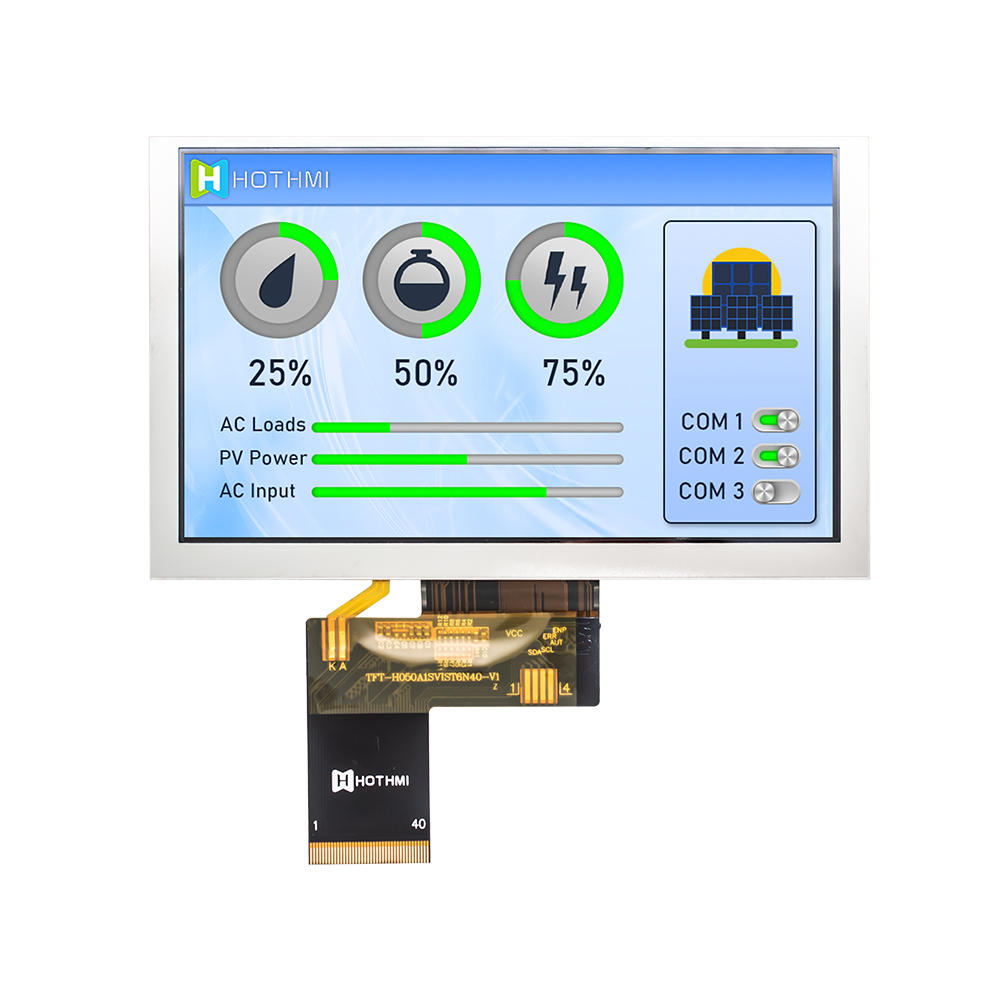
Model: TFT-H050A1SVIST6N40
This 5-inch TFT LCD display is designed for compact applications where space is limited but clear and reliable information display is required.
Key features:
- 5.0-inch display
- 800 × 480 resolution
- IPS / full viewing angle
- 600 cd/m² brightness
- RGB interface
- -30°C to +80°C operating temperature
- Multiple touch configurations available
Suitable applications may include:
- Portable diagnostic devices
- Patient monitoring equipment
- Laboratory equipment
- Compact medical equipment
- Medical control panels
Best for: Compact medical equipment requiring a small, clear, and flexible TFT LCD solution.
HOTHMI 10.1-Inch 1024×600 High-Brightness IPS Display
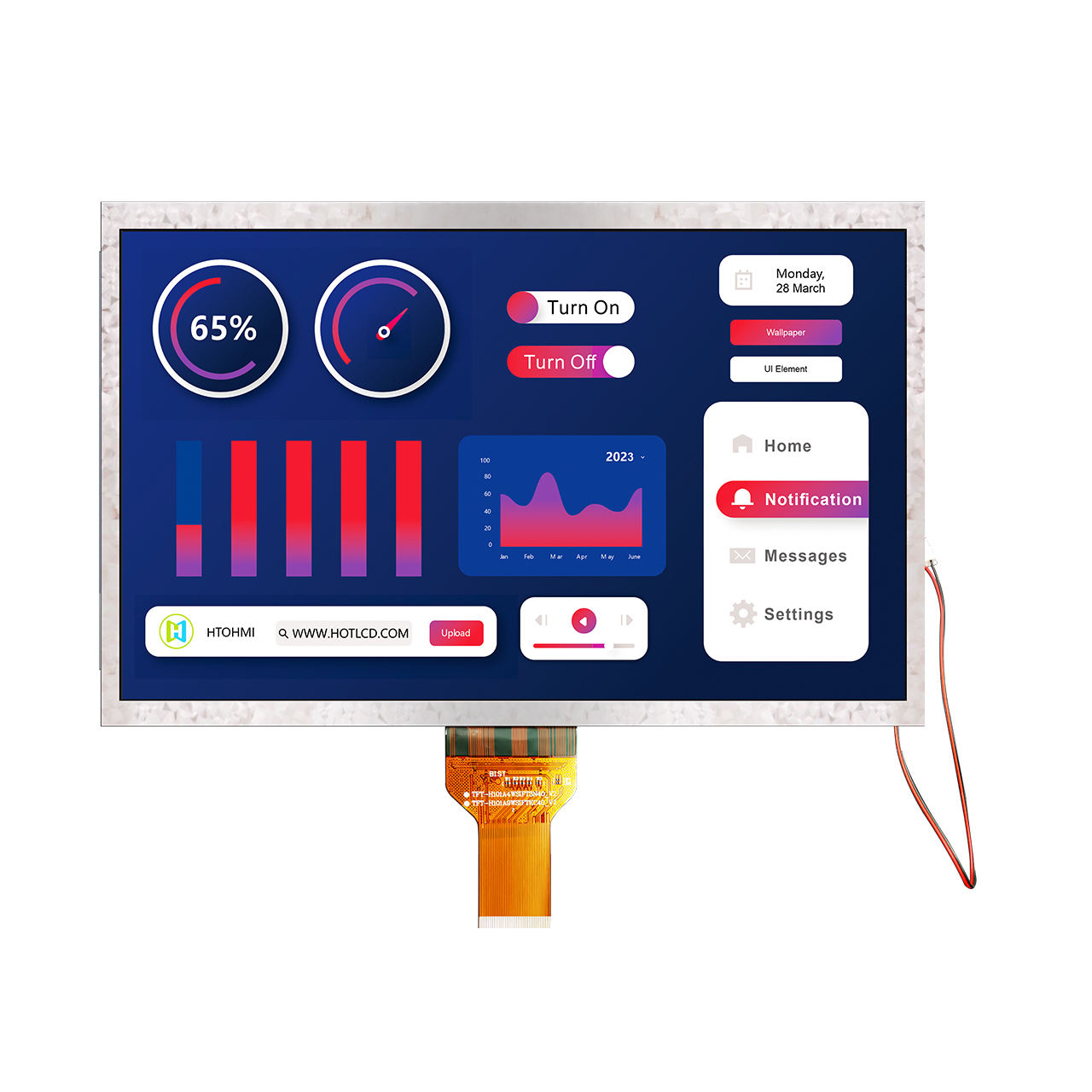
Model: TFT-H101A9WSIFTKN40
For medical equipment used in bright environments, display brightness and viewing angle can have a major impact on readability.
This 10.1-inch IPS TFT display provides 1000 cd/m² brightness and a wide operating temperature range, making it a suitable option for applications where stronger ambient light or broader environmental conditions need to be considered.
Key features:
- 10.1-inch display
- 1024 × 600 resolution
- IPS / full viewing angle
- 1000 cd/m² brightness
- LVDS interface
- -30°C to +80°C operating temperature
- Capacitive or resistive touchscreen options
- Air bonding and optical bonding options
Suitable applications may include:
- Patient monitors
- Medical HMI systems
- Mobile medical equipment
- Medical control terminals
- Diagnostic equipment
- Medical equipment used in bright environments
Best for: Medical equipment requiring high brightness, wide viewing angles, and flexible touchscreen or bonding options.
HOTHMI 10.1-Inch 1920×1200 High-Resolution Display
Model: TFT-H101D16WUIWZKN30
For medical equipment that needs to display detailed images, complex graphics, multiple data windows, or information-rich user interfaces, a higher-resolution display may be more appropriate.
This 10.1-inch display provides 1920 × 1200 resolution and 1000 cd/m² brightness, making it suitable for applications where both image detail and readability are important.
Key features:
- 10.1-inch display
- 1920 × 1200 resolution
- 1000 cd/m² brightness
- eDP interface
- -20°C to +70°C operating temperature
- 2.35 mm module thickness
- Capacitive, resistive, and non-touch configurations available
Suitable applications may include:
- Advanced medical HMI systems
- Medical information terminals
- Diagnostic equipment
- Medical imaging-related equipment
- Equipment requiring high information density
Best for: Medical equipment requiring high resolution, detailed graphics, and high information density.
Quick Comparison of HOTHMI Recommended Displays
| HOTHMI Model | Size | Resolution | Brightness | Interface | Recommended Application |
|---|---|---|---|---|---|
| TFT-H050A1SVIST6N40 | 5.0″ | 800 × 480 | 600 cd/m² | RGB | Compact medical equipment |
| TFT-H101A9WSIFTKN40 | 10.1″ | 1024 × 600 | 1000 cd/m² | LVDS | Medical equipment in bright environments |
| TFT-H101D16WUIWZKN30 | 10.1″ | 1920 × 1200 | 1000 cd/m² | eDP | High-resolution medical equipment |
These three displays cover different medical equipment requirements, from compact displays to high-brightness and high-resolution solutions.
Frequently Asked Questions About Medical Equipment Displays
What type of display is suitable for medical equipment?
TFT LCD displays, especially IPS TFT displays, are suitable for many medical equipment applications. They can provide clear images, wide viewing angles, and flexible options for different display sizes and interfaces.
What display size is commonly used in medical equipment?
The appropriate size depends on the type of equipment. Small portable medical devices may use displays below 5 inches, while patient monitors, medical HMI systems, and larger medical equipment may use displays from 5 to 10.1 inches or larger.
Is an IPS display suitable for medical equipment?
Yes. IPS displays are suitable for many medical equipment applications that require wide viewing angles, stable image performance, and good color reproduction. However, the final display technology should always be selected according to the specific application and system requirements.
Does a medical equipment display need a touchscreen?
Not necessarily. Some medical devices only need to display information and do not require touchscreen operation. Medical HMI systems and control terminals, however, may benefit from resistive or capacitive touchscreen technology.
How bright should a medical equipment display be?
The required brightness mainly depends on the operating environment. Indoor medical equipment may not require extremely high brightness, while equipment used under strong ambient light may require a high-brightness display.
Can medical equipment displays be customized?
Yes. Depending on the display supplier’s capabilities, customization may include display size, resolution, brightness, interface, FPC, connector, touchscreen, cover glass, optical bonding, backlight, and other specifications.
How do you choose a medical equipment display supplier?
Evaluate whether the supplier has capabilities in TFT LCD development, touchscreen integration, display customization, reliability testing, engineering support, and mass production.
For companies developing new medical equipment, a supplier that can provide both standard products and customized display solutions can offer greater flexibility during product development.
Conclusion: Choose a Medical Equipment Display Based on the Complete Application
Choosing the right medical equipment display is not simply a matter of comparing screen size and price.
The display should match the complete requirements of the medical equipment, including:
- Application
- Display size
- Resolution
- IPS technology
- Brightness
- Viewing angle
- Touch technology
- Display interface
- Mechanical dimensions
- Operating environment
- Reliability
- Customization requirements
For simple medical equipment, a standard TFT LCD may be sufficient.For more advanced medical HMI systems, a high-resolution IPS TFT display, capacitive touchscreen, high-brightness backlight, or optical bonding solution may be considered.
The most important principle is:Do not simply choose the highest specification. Choose the medical equipment display that best matches the actual application requirements.
Looking for a Medical Equipment Display?
If you are developing a new medical device and need to select a suitable medical LCD display, medical TFT display, or medical touchscreen display, contact HOTHMI with your display size, resolution, interface, brightness, touch technology, operating temperature, and other technical requirements.
HOTHMI can provide standard TFT LCD products and customized display solutions based on the specific requirements of your medical equipment project.