
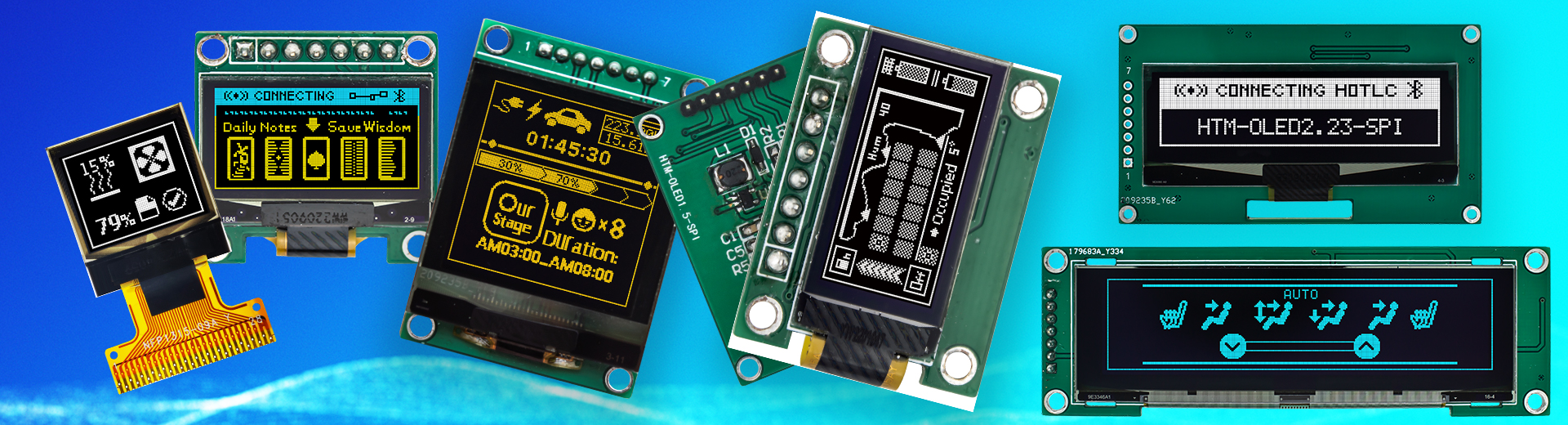
What is OLED Display?
OLED display is an advanced display technology that achieves illumination through the self-emissive properties of organic materials. Each pixel in an OLED display is an independent “miniature colored light bulb,” lighting up when powered and turning off when unpowered.The key characteristic of OLED displays is their self-emissive nature, eliminating the need for a backlight. This allows OLED displays to achieve ultra-thin and lightweight designs, reduce power consumption, and offer a wide viewing angle (>175°), high contrast, and fast response time, making them an ideal choice for monochrome display technology.
Showing all 7 results
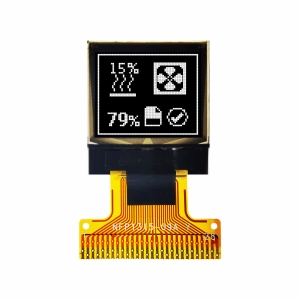
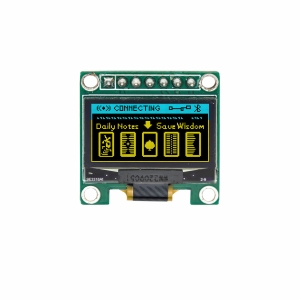
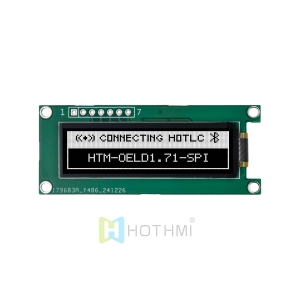
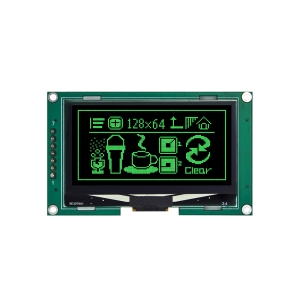
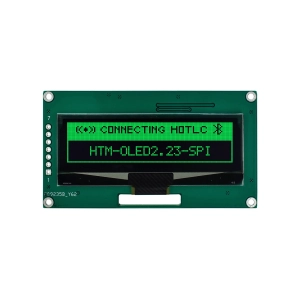
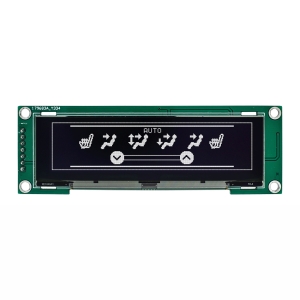
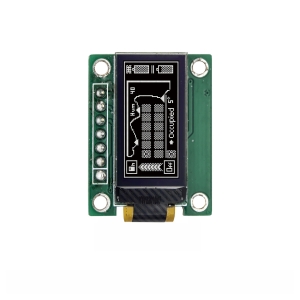
What are the Features and advantages of OLED displays?
- Self-Illuminating Pixels: Each individual pixel is a microscopic light source that generates its own light, eliminating the need for a separate backlight.
- Perfect Blacks and Infinite Contrast: OLED displays’pixels can be completely turned off to achieve true, absolute black. This allows for an infinite contrast ratio, making images appear incredibly deep and vibrant.
- Superior Picture Quality: The OLED display technology offers wider viewing angles, more vibrant and accurate colors, and faster response times than LCDs, virtually eliminating motion blur.
- Thin and Flexible Design: The lack of a backlight unit allows for exceptionally thin, lightweight, and even flexible or foldable screen designs, enabling new form factors for devices.
- Energy Efficient: Displaying dark content or black areas consumes less power, as those pixels are simply off. This is particularly beneficial for devices with dark modes and battery-powered portables.
- Ultra-wide operating temperature range: The operating temperature of OLED displays is typically -40℃ to +90℃, making it ideal for use in areas with extreme environments.
What are the application areas of OLED displays?
The following pie chart visualizes the distribution of OLED displays technology across its key application sectors, based on current market penetration and revenue data.

As we can see from the chart, OLED displays are widely used in consumer electronics due to their advantages such as high contrast and color performance, self-emissive characteristics, low power consumption, ultra-wide operating temperature (-40℃~+90℃), and thinness and flexibility. OLED displays are widely used in consumer electronics, automotive electronics, industrial equipment and wearable products, and continue to expand into emerging fields.
The difference between OLED displays and LCD displays
LCD vs. OLED Display Technology Comparison
| Dimension | LCD | OLED displays |
| Technology | Requires backlight unit, liquid crystals act as shutters | Self-emissive pixels, each pixel emits its own light |
| Black Level | Appears as dark gray (backlight always on) | Perfect black (pixels turn off completely) |
| Contrast Ratio | Limited/Moderate | Essentially Infinite |
| Thickness | Relatively thick (requires backlight) | Extremely thin and lightweight |
| Flexibility | Rigid | Flexible, foldable, and rollable form factors possible |
| Response Time | Slower, potential for motion blur | Extremely fast, virtually no motion blur |
| Power Consumption | Constant (backlight always on) | Content-dependent (efficient with dark images) |
| Lifespan | Backlight gradually degrades | Organic materials degrade over time; risk of burn-in |
| Cost | Mature manufacturing, generally lower cost | Complex processes, generally highe |
By comparing various aspects of LCD and OLED displays, we can see that OLED displays have better color contrast than LCD displays. Their self-emissive nature makes them consume less power and are thinner and lighter than LCDs. However, in terms of lifespan, OLED is more suitable for consumer-grade products.
What OLED displays product lines can HOTHMI offer you?
At HOTHMI, we not only offer OLED displays ranging in size from 0.32 inches to 5.5 inches, but we also provide complete OLED display solutions, including driver modules. HOTHMI’s strong R&D and design team will save you time and effort.
FAQ about OLED displays
Q1:Can OLED displays achieve multi-color capabilities?
Answer:Excellent question. The answer is a definitive yes—this is one of OLED display’s core strengths and a fundamental reason it has become the dominant display technology for high-end devices.Unlike LCD/LED screens that use a single white backlight and color filters, each individual pixel in OLED displays is its own light source. By combining sub-pixels of different colored materials, a full-color display is created.However, due to the high cost of OLED displays, monochrome OLED displays are the most commonly used in industrial equipment.
Q2:Will OLED displays overheat and malfunction when used for extended periods?
Answer:Yes.Therefore, users should pay attention to the following when using OLED displays:
- Avoid extreme environments: Never use OLED displays at high brightness for extended periods in direct sunlight or in hot, enclosed environments (such as under blankets or in a car exposed to direct sunlight).
- Make good use of automatic brightness: Allow the system to automatically adjust the brightness according to ambient light, avoiding prolonged manual setting to the highest brightness.
- Embrace dark mode: This is one of the most effective habits for protecting OLED displays and reducing heat and power consumption.
- Ensure ventilation: Ensure sufficient space for heat dissipation at the back.