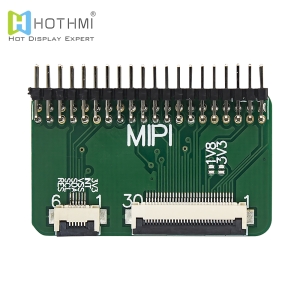
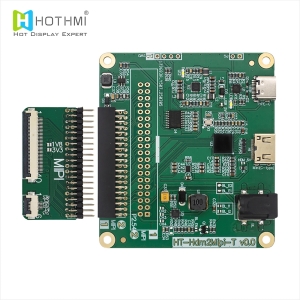
Description
Product Introduction
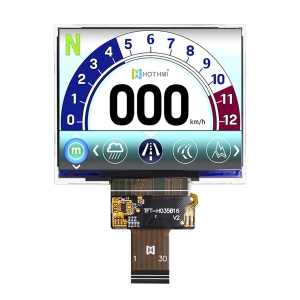
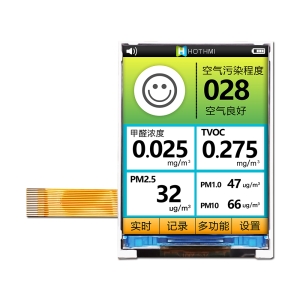
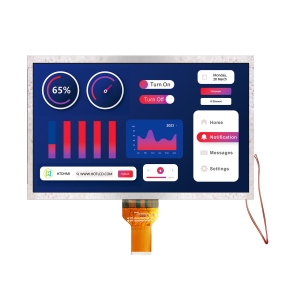
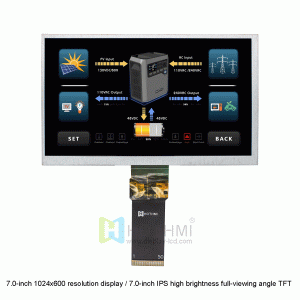
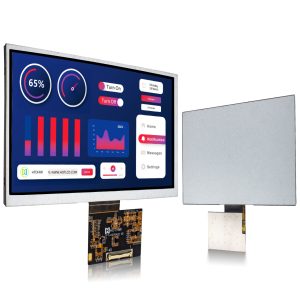
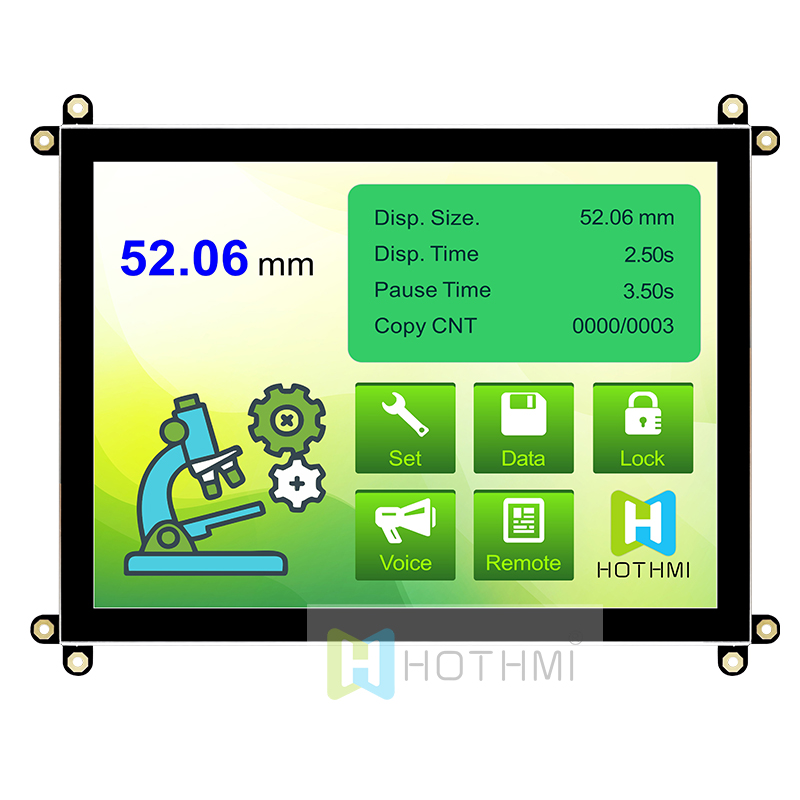
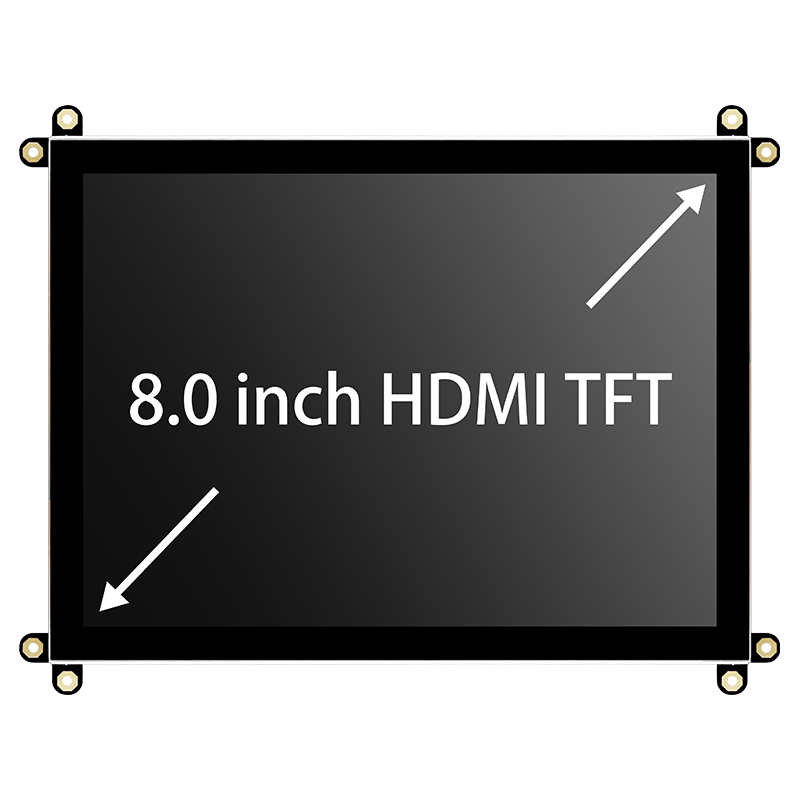
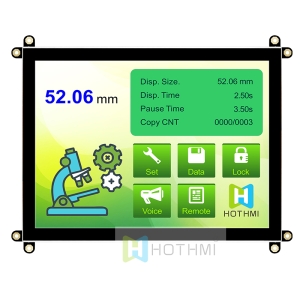
The HOTHMI industrial display model HTM-H080A2-HI-A03 is an 8.0-inch Raspberry Pi LCD Display module featuring 1024×768 (XGA) resolution, a 500:1 contrast ratio, and support for 16.7 million rich colors. With a brightness of 800 cd/m² and a backlight system rated for 30,000 hours of long-life operation, this unit remains stable in wide-temperature industrial environments ranging from -20°C to +70°C. It offers high compatibility and practicality, supporting VGA and HI 1.4a signal inputs, and includes on-board OSD control keys (menu supports Chinese/English switching) for easy adjustment of screen settings to suit various application scenarios.
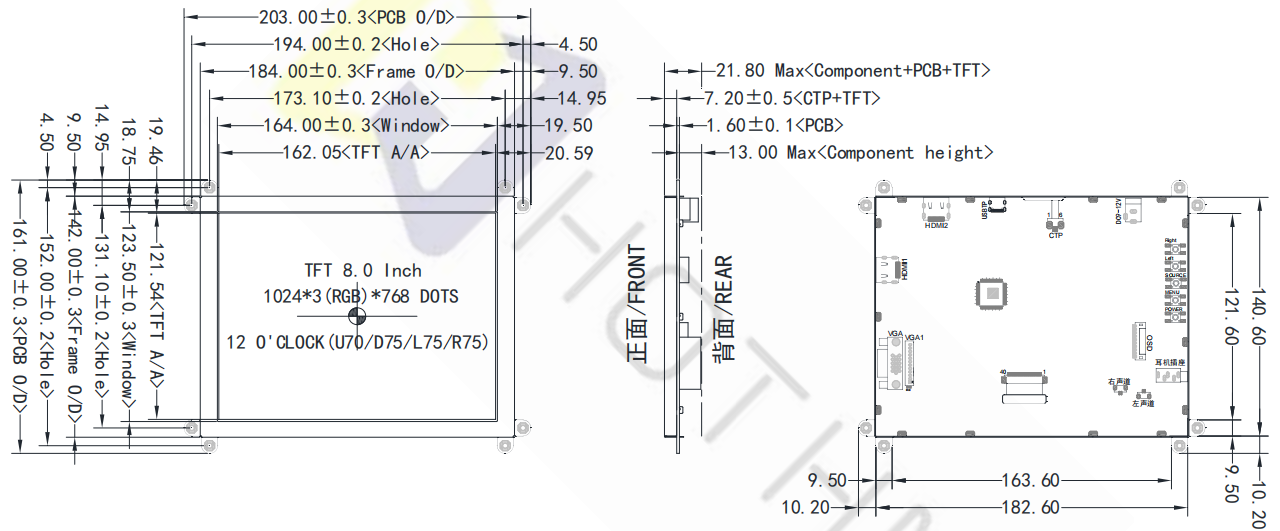
Physically, it weighs approximately 310 grams, with external dimensions of 203.00mm × 161.00mm × 21.80mm, and adopts a convenient panel-mount embedded design—users only need 4 screws to secure the PCB for quick installation and maintenance. Additionally, it is widely compatible with DOS, Windows, Linux, and other mainstream and embedded operating systems, making it ideal for various professional industrial display and control equipment.
Thanks to its native HI/VGA dual-interface architecture, high-brightness backlight system, and excellent electromagnetic compatibility design, this module has become a preferred choice for industrial HMI, smart devices, and Raspberry Pi LCD Display solutions.
Key Features
From a hardware engineering and device reliability perspective, this Raspberry Pi LCD Display module offers the following outstanding design advantages:
- Industrial-grade high-brightness backlight with extended lifespan:
Without a touch panel, the front-of-screen brightness reaches 800 cd/m². The Raspberry Pi LCD Display module uses a custom high-efficiency white LED array, with an LED lifespan of no less than 30,000 hours (to 50% brightness decay) under normal ambient temperatures. In large-sample tests, brightness decay after 5,000 hours of operation is only about 8%, far superior to consumer-grade displays, perfectly meeting the needs of semi-outdoor, direct sunlight, or high-transparency enclosure applications. - Wide-temperature environmental adaptability:
To suit diverse industrial site conditions, this Raspberry Pi LCD Display module has passed rigorous temperature tolerance tests. Its operating temperature ranges from -20°C to +70°C, and storage temperature from -30°C to +80°C. On-board drive circuits use low-leakage, long-life solid capacitors and high-efficiency DC-DC topologies, ensuring no flickering or system crashes due to thermal drift in extreme cold or high-temperature sealed enclosures. - Comprehensive OSD control and fine image adjustment:
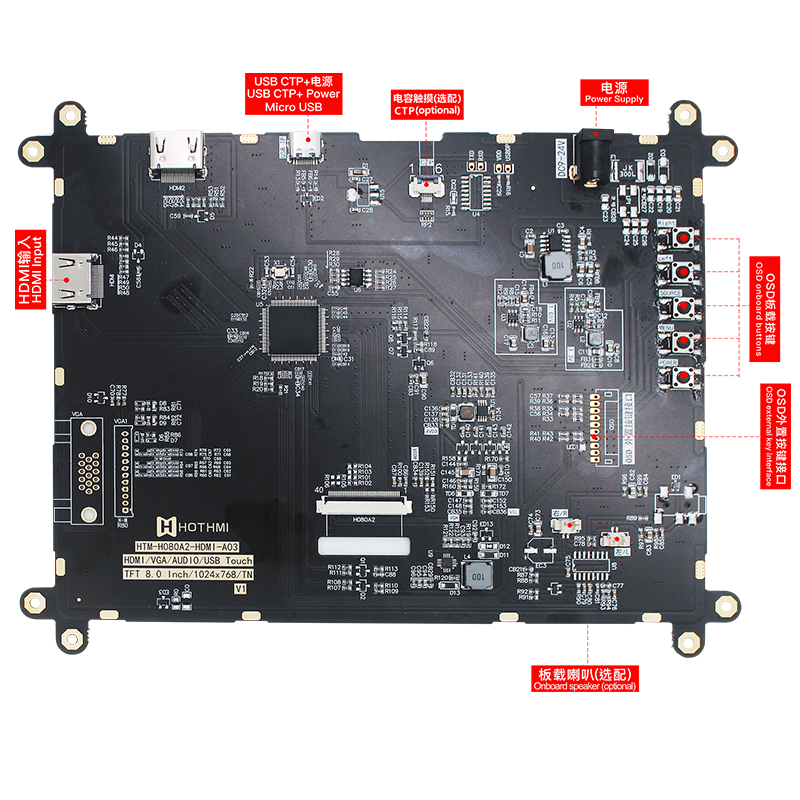
On-board native OSD control keys include POWER, MENU, SOURCE, LEFT, and RIGHT micro-switch controls. The built-in firmware supports bilingual menu switching (Chinese/English), allowing hardware engineers to precisely adjust saturation, contrast, brightness, and backlight current against specific enclosure reflectivity or color temperature requirements, and lock these settings before factory shipment. - Minimalist embedded structural integration:
The structural design fully considers industrial panel mounting needs. Four standard positioning holes are precisely arranged at the edges of the PCB. When designing electromechanical equipment enclosures, OEMs need only cut the corresponding display window and secure the PCB to the metal or plastic panel with 4 screws—greatly reducing assembly time.
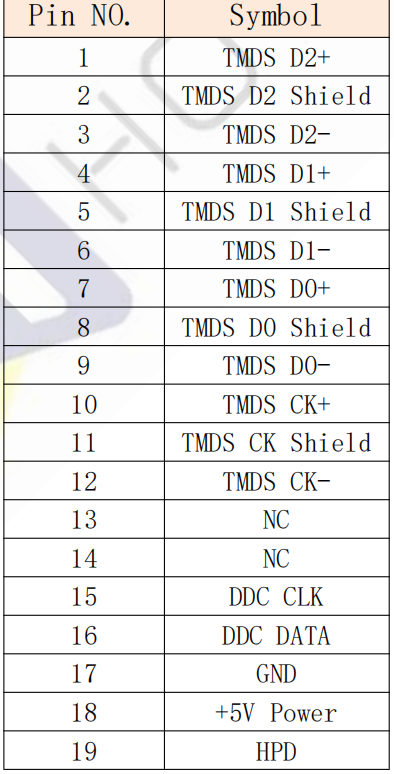
HI Type A Connector Pin Definition
Typical Product Application Scenarios
Thanks to its excellent system versatility and seamless integration as a universal Raspberry Pi LCD Display, this monitor is widely deployed in the following engineering fields:
- Raspberry Pi ecosystem and IoT gateway terminals:
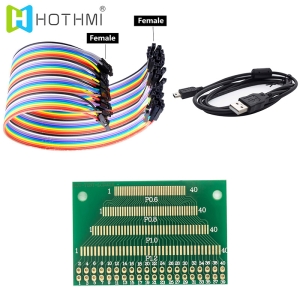
Open-source hardware developers and industrial gateway manufacturers can directly connect this module to Raspberry Pi via HI cables and headers. No complex kernel driver compilation is required in Linux/Raspbian systems—it automatically detects 1024×768 resolution upon boot, ideal for lightweight edge computing nodes and data concentrator visualization panels. - Industrial human-machine interfaces and automation control cabinets:
With 800 cd/m² backlight brightness, the Raspberry Pi LCD Display module is perfect for embedding into CNC machines, central control cabinets on automated production lines, and DCS system operator panels. Its rugged panel-mount structure (with just 4 screws) withstands frequent mechanical vibration and shock. - Smart medical equipment and laboratory instruments:
With its industrial-grade reliability and stable wide-temperature operation, this Raspberry Pi LCD Display module precisely renders fine medical charts, physiological monitoring waveforms, or biochemical analyzer curves, meeting the high-fidelity and high-reliability requirements of medical engineering for data display. - Commercial self-service terminals and security monitoring:
Compatible with Windows, Linux, DOS, and other mainstream OS, it serves perfectly as the graphic output unit for self-service vending machines, parcel lockers, power distribution monitoring screens, and vehicle-mounted surveillance display terminals.
Engineering Technical Q&A
Q1: When using this module as a Raspberry Pi LCD Display, do I need to install specific system drivers?
A1: No third-party driver installation is required. The module supports standard HI 1.4a protocol and DDC (Display Data Channel). Host boards like Raspberry Pi can automatically read the module’s EDID information via DDC, recognize the native 1024×768 @ 60Hz optimal resolution, and output directly.
Q2: What is the typical power consumption at maximum backlight brightness? How can power be reduced via hardware or software for low-power embedded systems?
A2: Under extreme conditions with signal input and backlight at maximum (800 cd/m² full output), the Raspberry Pi LCD Display module draws up to 1100 mA. At 12V DC supply, maximum total power consumption is approximately 13.2 watts.
Power optimization strategies:
- Indirect software control: Industrial sites rarely require sustained 800 cd/m². Engineers can use the on-board OSD menu (press MENU to enter image adjustment) to reduce backlight brightness to a suitable typical value (e.g., around 500 cd/m²). When dimmed to the lowest level, operating current drops significantly to 104 mA, reducing power consumption by over 90%.
- System-level standby: When the host system (e.g., Raspberry Pi) enters sleep mode or actively turns off HI signal output, the module’s automatic no-signal detection puts the entire display into standby, with standby current as low as 39–70 mA—excellent for industrial equipment requiring energy efficiency certification.