LCD Positive Mode vs. Negative Mode: Which One Should You Choose?
We often pay attention to LCD panel types such as TN, STN, FSTN, and VA, as these do have a significant impact on display performance. However, even with the same panel type, positive and negative display modes can deliver markedly different user experiences. Below is a breakdown of the key differences between the two, aimed at helping you make a more informed choice based on your specific needs.
Let’s start with positive mode LCDs
Positive mode displays are characterized by a brighter background, making them clearly viewable under ambient light without necessarily relying on a backlight. These screens typically use semi-transflective or reflective polarizers, consume less power overall, and are well-suited for battery-powered devices. In outdoor or naturally lit environments, the displayed content remains sharp and legible.
Now, let’s look at negative mode LCDs
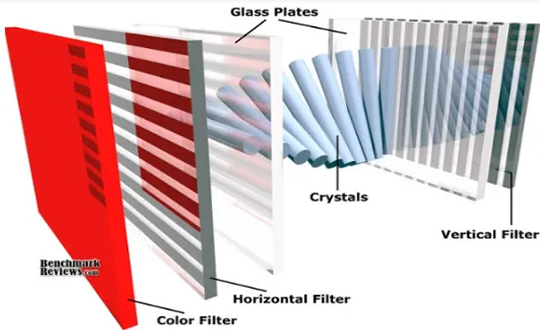
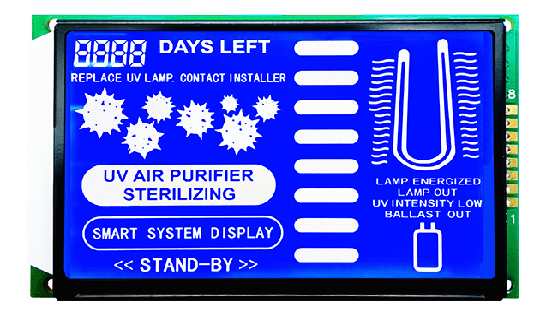
Negative mode displays, on the other hand, require a backlight to render images and usually employ full-transmissive polarizers. In indoor or low-light conditions, they offer superior contrast and wider viewing angles, with slightly better readability for text and graphics.
However, in bright environments—especially under direct sunlight—negative mode screens tend to wash out and become difficult to read. To maintain visibility in strong light, backlight brightness often needs to be boosted to 800 nits or higher, which significantly increases power consumption.
So, which one is better?
In reality, neither is universally superior; each has its own strengths depending on the intended use case.
Advantages of positive mode LCDs:
- More cost-effective;
- Lower power consumption when running on battery;
- Well-suited for outdoor or brightly lit settings;
- Good contrast and clarity under normal lighting conditions;
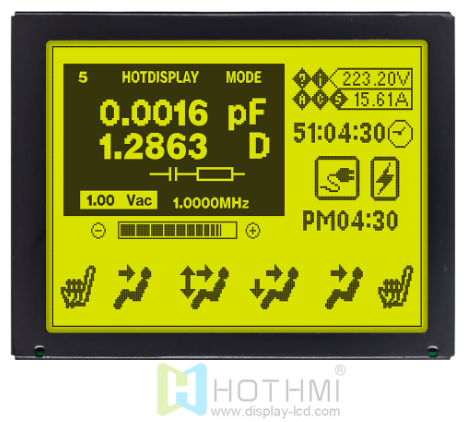
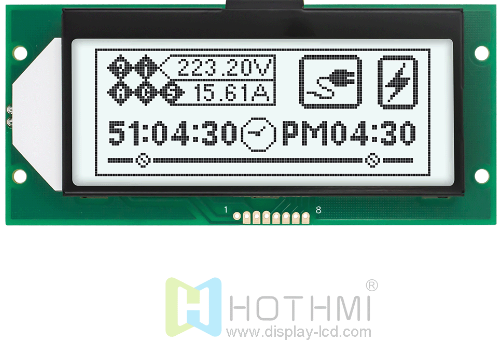
- Typically feature dark text on a light background—for example, black text on a yellow-green background (yellow-green screens) or on a grayish-white background (FSTN screens)—which makes them particularly readable in sunlight.
Advantages of negative mode LCDs:
- Better adapted for indoor or dimly lit environments;
- Enhanced detail rendering, with improved viewing angles and contrast;
- Commonly found in night-use devices with green or black backgrounds, such as aviation control panels and bedside alarm clocks;
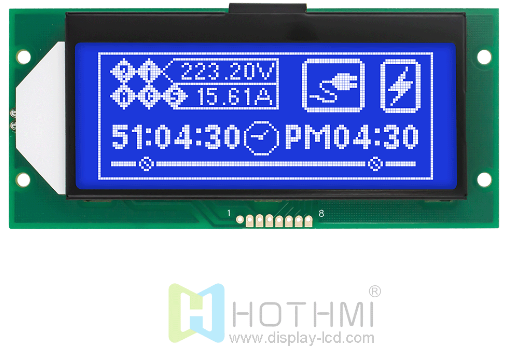
- Typically feature light text on a dark background, usually requiring a backlight for optimal effect in low light;
- Can be color-matched to devices like watches for a striking visual appearance, with less glare and a more subdued, stealthy look.
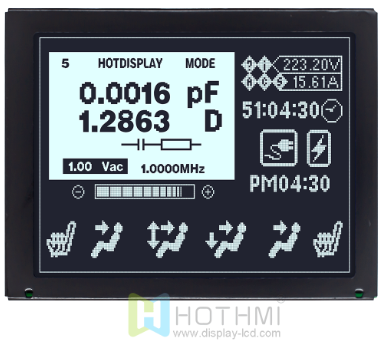
It’s worth noting that the concepts of positive and negative modes are not limited to monochrome LCDs (such as character LCDs, graphic dot-matrix LCDs, etc.). They also apply to color displays and even other display technologies. A general categorization by display type is as follows:
Positive mode displays include:
- Positive TN LCD
- HTN LCD
- Yellow-green STN LCD
- Gray STN LCD
- Positive FSTN LCD
Negative mode displays include:
- Negative TN LCD
- Blue STN LCD
- Negative FSTN (film-compensated) LCD
- VA LCD
- Dual-film FSTN LCD
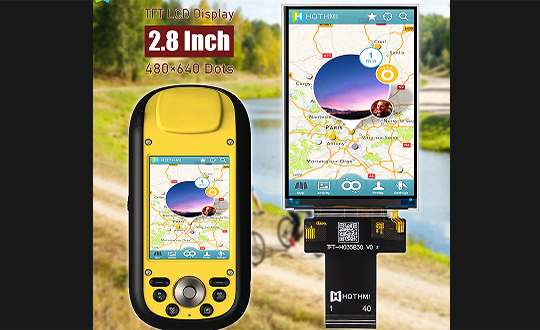
- TFT LCD
- IPS LCD
- AFFS LCD
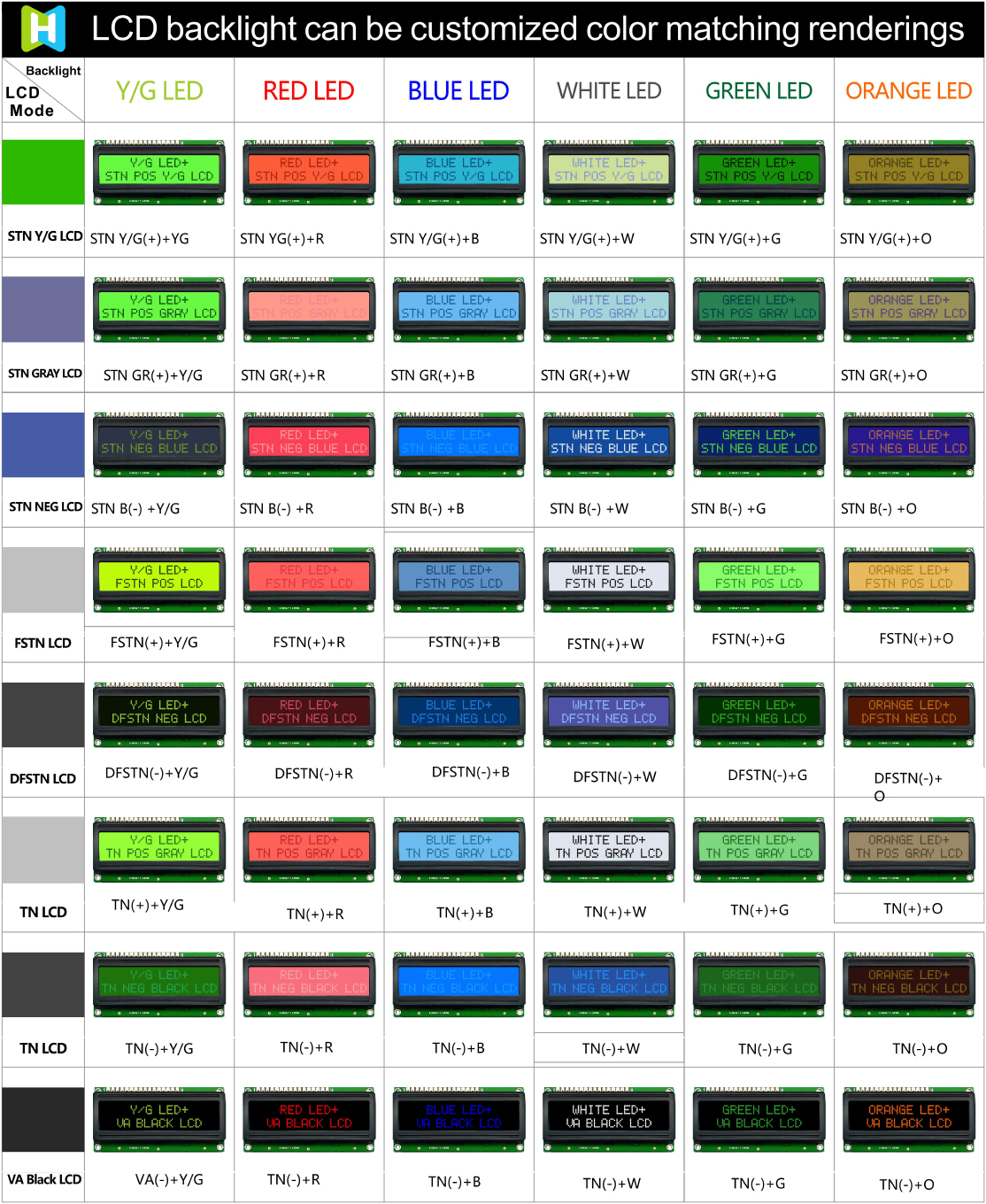
Taking monochrome LCDs as an example, the visual differences between positive and negative display modes are illustrated below.
All the above product types are available at Hot Display. For further inquiries, feel free to contact us at any time.