Description
Product Introduction of the Anti-Glare Display
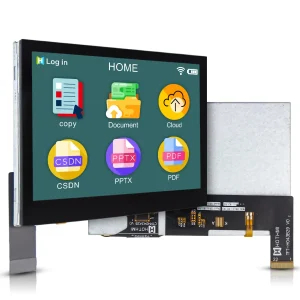
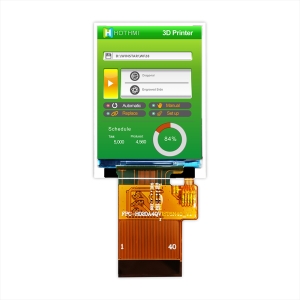
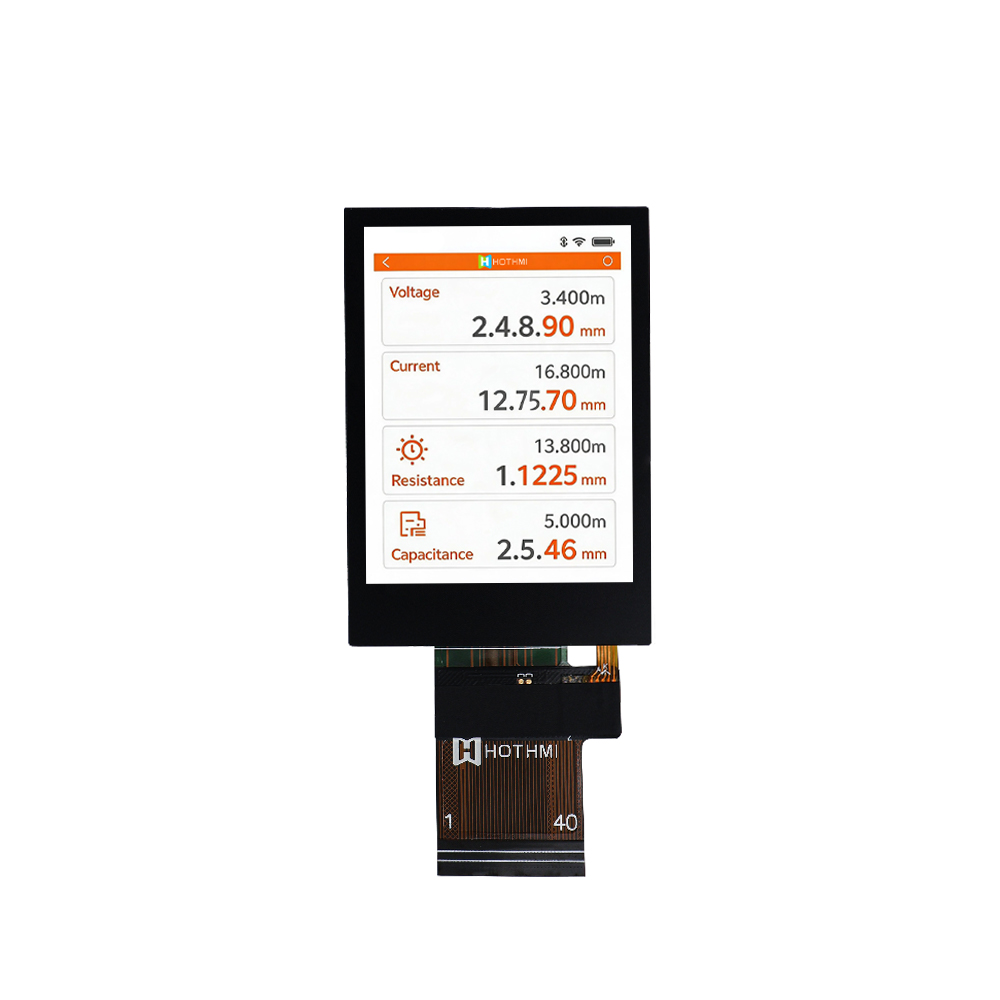
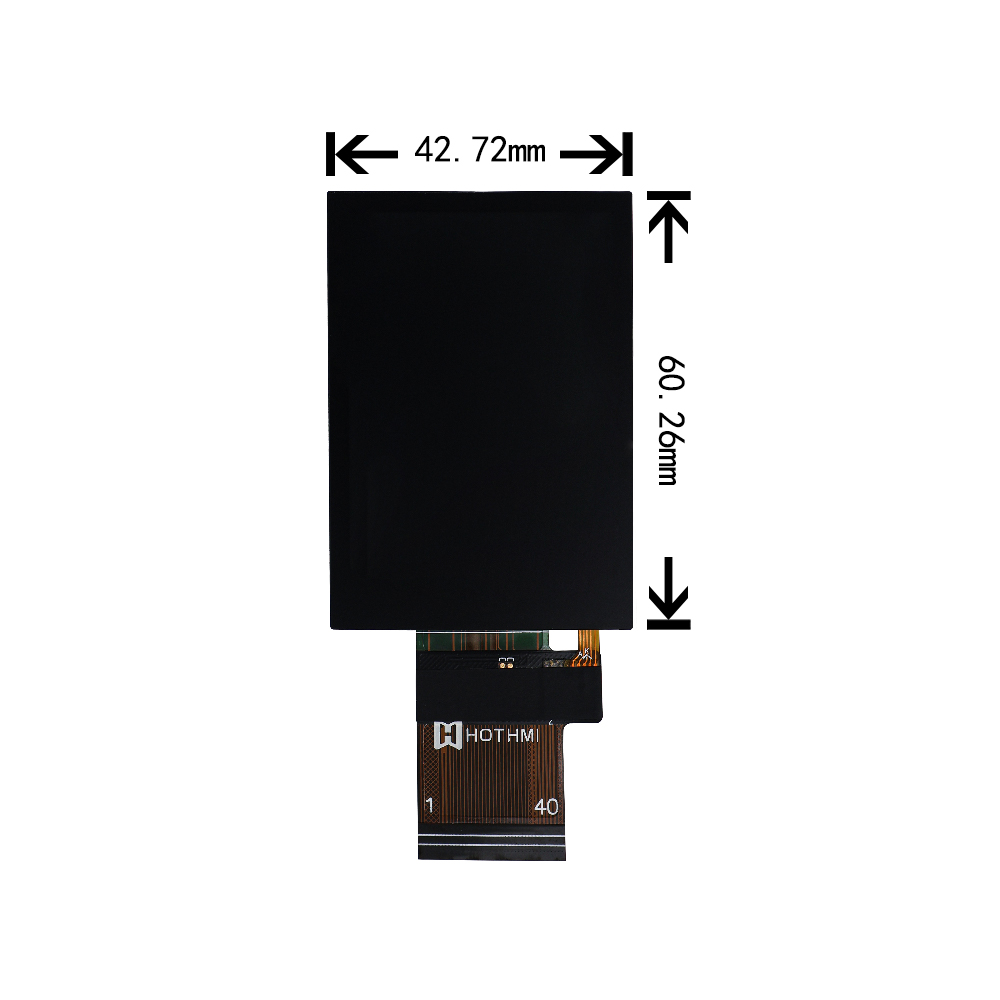
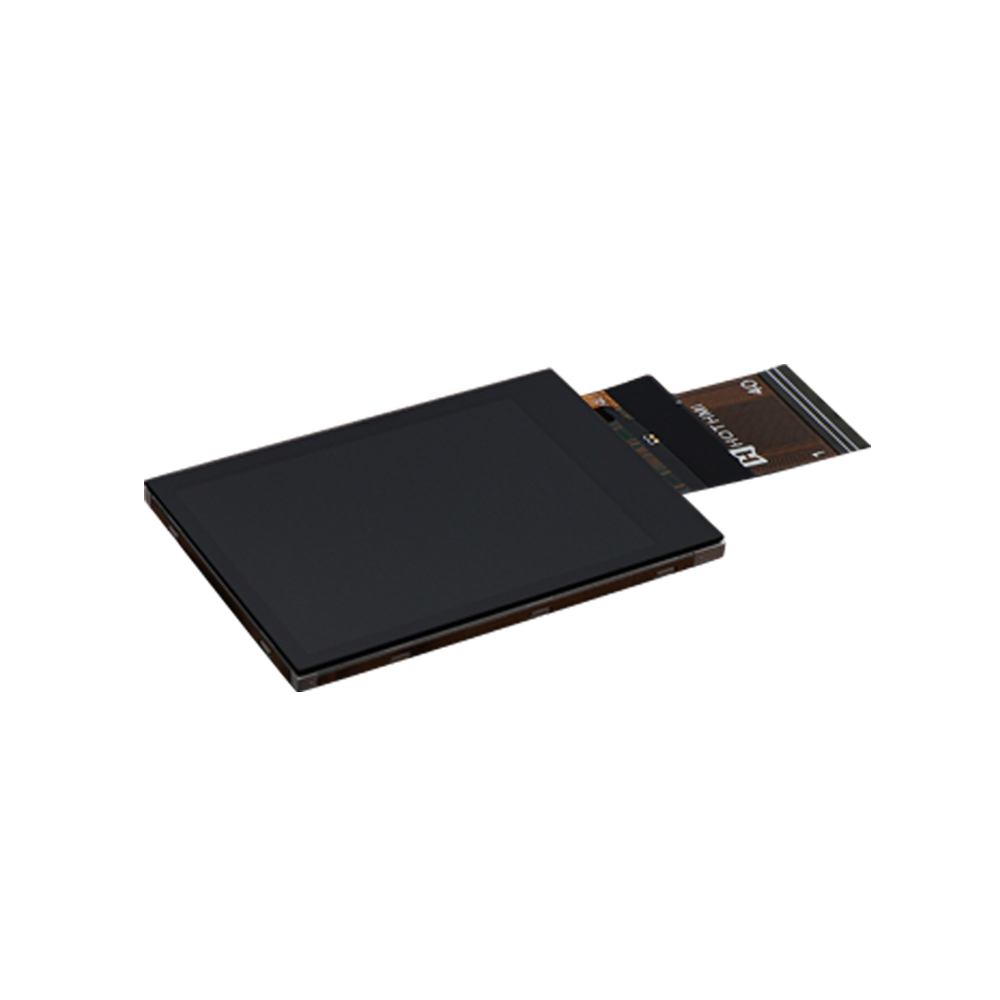
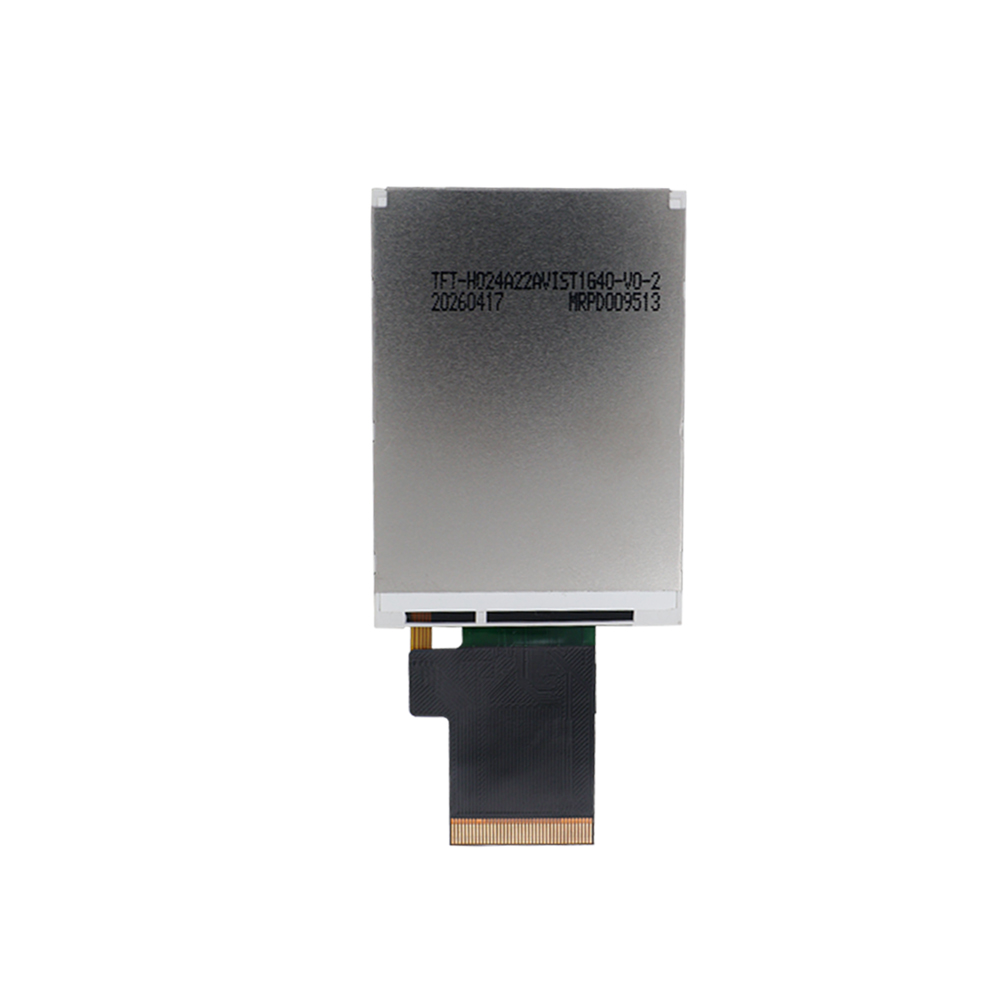
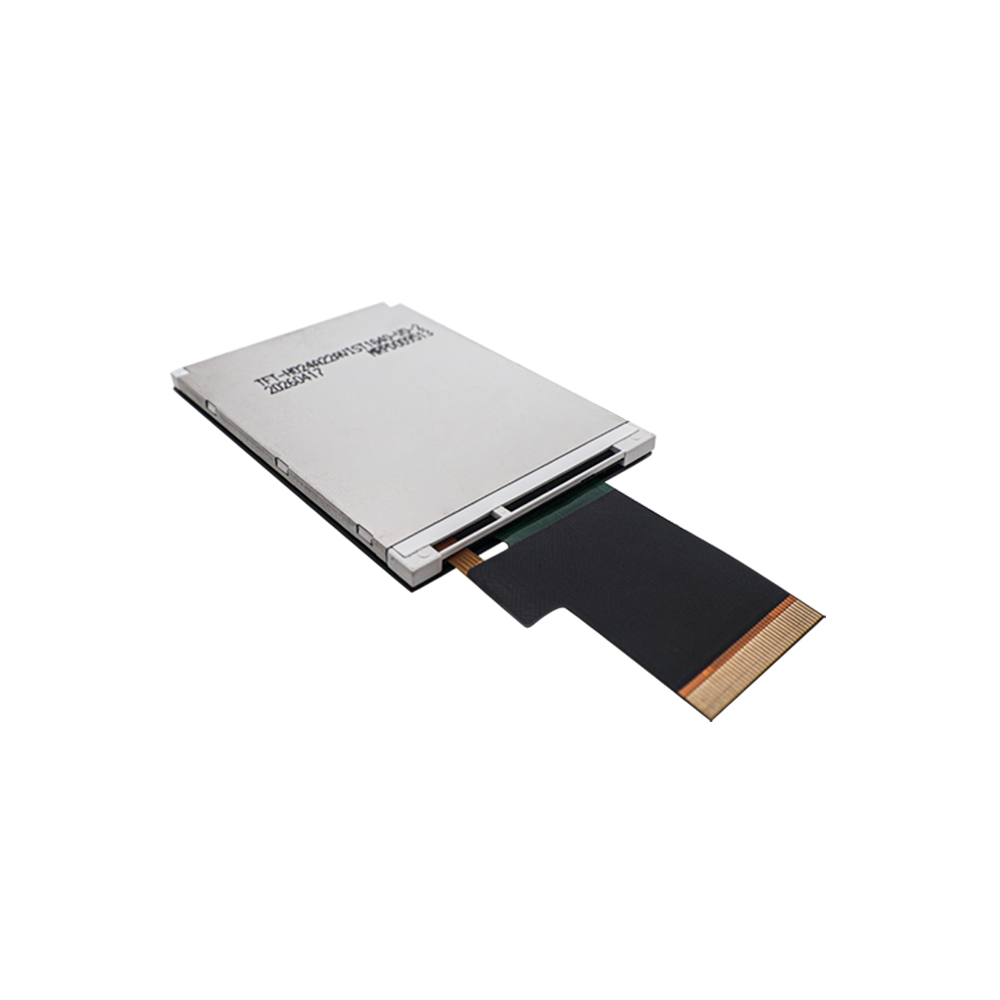
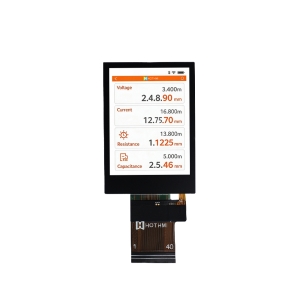
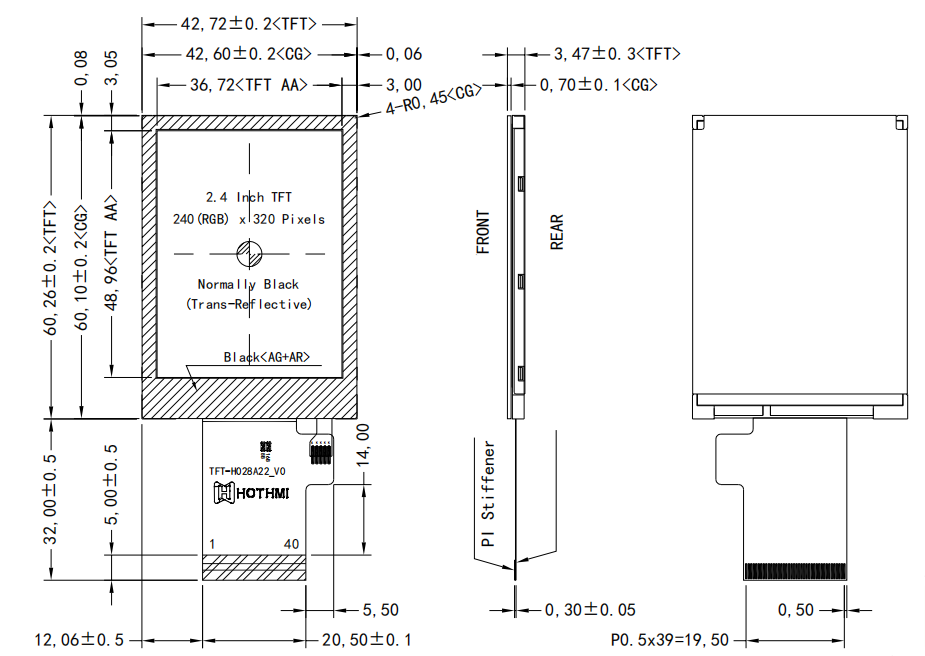
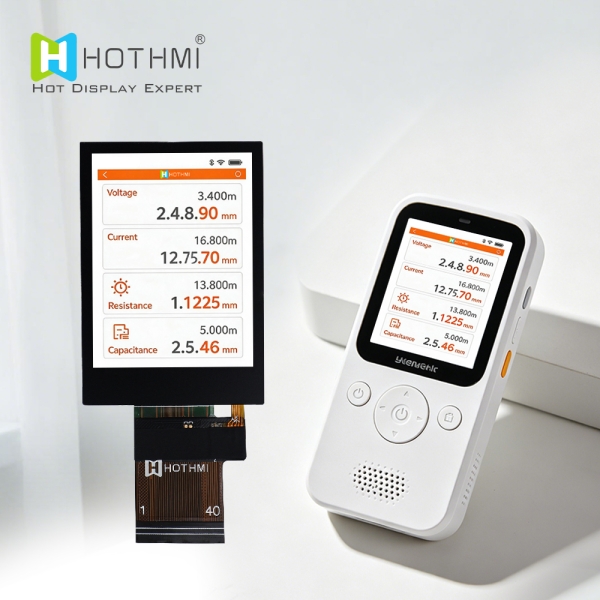
This product, model TFT-H024A22AVIST1G40, is a 2.4-inch transflective TFT LCD module designed and manufactured by HOTHMI. It features a resolution of 240(RGB) x 320 pixels, adopts a Normally Black display mode, and comes with a black appearance design incorporating anti-glare and anti-reflection (AG+AR) coatings. The module is equipped with the ST7789 driver chip and supports a default MCU 16-bit interface, while also being compatible with 8-bit mode. Its operating voltage VCI is 3.0±0.3V. Backlight driving conditions are voltage 3.0±0.3V and current 80mA, providing a module brightness of 100±30 cd/m² under constant current testing. In terms of durability, this product delivers excellent performance, with an operating temperature range from -30°C to +80°C and a storage temperature range from -40°C to +90°C.
Core Highlights of the Anti-Glare Display
In outdoor strong light, direct sunlight, or complex industrial lighting environments, ordinary screens often become mirrors, making it impossible for operators to see the screen content clearly and even leading to operational errors.
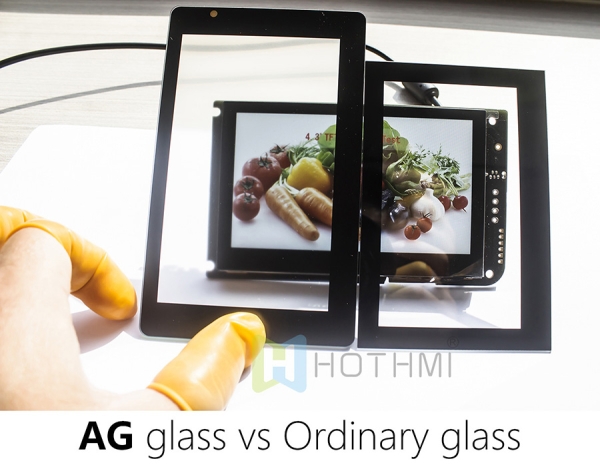
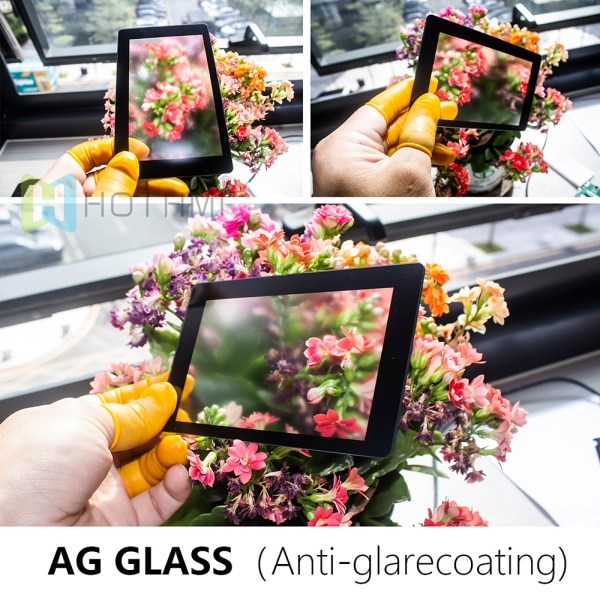
- Core Anti-Glare Display Technology: The surface of this module integrates a high-level anti-glare and anti-reflection (AG+AR) dual black coating, effectively scattering concentrated reflected glare and greatly reducing environmental stray light interference.
- Transflective Technology: Unlike conventional transmissive screens, this Anti-Glare Display module features unique ambient light adaptability. Indoors or in dim conditions, it relies on its built-in LED backlight to provide a clear image. When moved outdoors into direct strong light, it cleverly uses external sunlight as a reflective light source — the stronger the ambient light, the clearer the screen becomes.
- Full-Temperature Range Rugged Durability: The Anti-Glare Display operates across a temperature range from -30°C to +80°C, with a storage temperature rating reaching -40°C to +90°C, with standing extreme heat and cold.
Pin Description
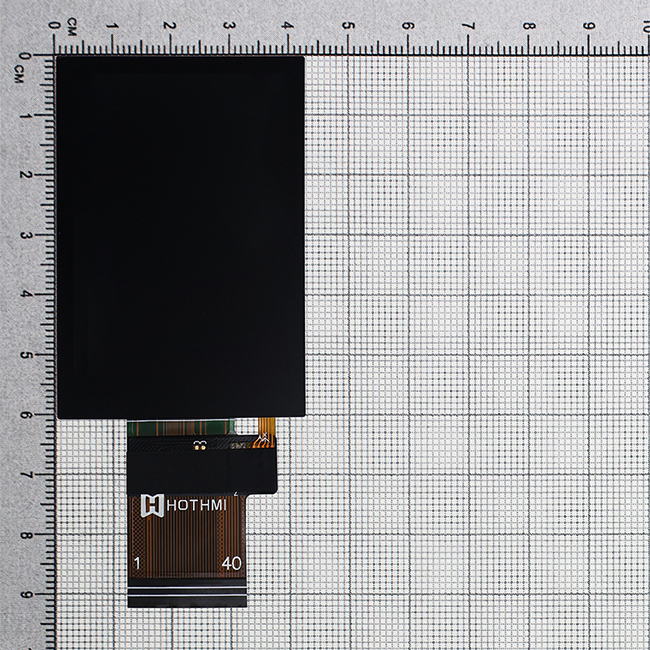
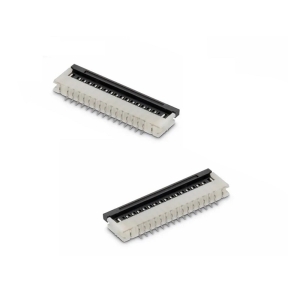
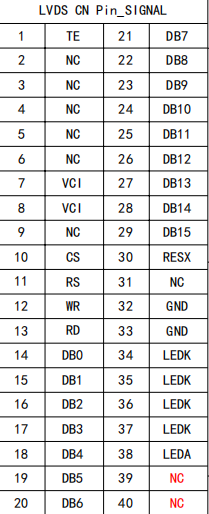
The Anti-Glare Display module uses a high-density 40-pin, 0.5mm pitch flexible printed circuit (FPC) interface, equipped with a PI (polyimide) stiffener. This design not only prevents cable loosening during long-distance transportation or severe vibration but also ensures the integrity of high-frequency signal transmission.
Backlight Driving Characteristics
The backlight system of the Anti-Glare Display module has been carefully optimized to achieve a perfect balance between long life and low power consumption:
- Standard driving voltage: 3.0V ± 0.3V
- Constant driving current: 80mA
- Module surface brightness: Under constant current test conditions, the brightness output is 100 ± 30 cd/m². Thanks to the Anti-Glare Display coating and transflective structure, this brightness delivers excellent contrast outdoors while consuming far less power than traditional 500 cd/m² pure transmissive industrial screens.
Application Scenarios
With the dual advantages of Anti-Glare Display technology and transflective design, the TFT-H024A22AVIST1G40 module is widely used as a core display component in the following visually demanding fields:
- Outdoor handheld surveying and GPS instruments: such as geographic survey devices, forest inspection instruments, and high-precision outdoor GPS. Even under direct midday sunlight, operators can read data clearly without needing to shade the screen with their hands.
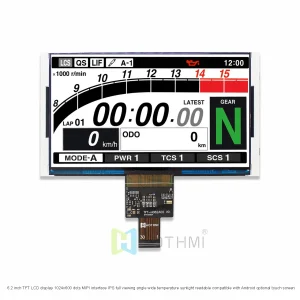
- Two-wheel electric vehicle and motorcycle smart dashboards: During riding, ambient light conditions are complex and changing. The anti-glare screen perfectly eliminates reflections from streetlights and sunlight, ensuring critical safety data such as speed and battery level are clearly visible at a glance.
- Vehicle-mounted industrial control panels: For open-air operator consoles on excavators and agricultural machinery, this module operates stably at high frame rates under extreme natural environments ranging from severe cold to intense heat.
Technical FAQ for Anti-Glare Display
Q1: What is an Anti-Glare Display, and what are its physical advantages over ordinary screens?
A1: An Anti-Glare Display is achieved by applying fine chemical etching or mechanical micro-texturing to the outermost surface of the LCD module, transforming the originally smooth, mirror-like surface into a microstructure that diffuses light. When external strong light sources (such as sunlight or fluorescent lights) shine onto the screen, an ordinary screen produces high-brightness, localized specular reflections, whereas the anti-glare screen scatters these concentrated rays uniformly in all directions. This not only eliminates glaring hot spots but also significantly improves all-weather contrast and color saturation. Over long-term use, it effectively alleviates visual fatigue for operators.
Q2: With a resolution of 240×320 on this 2.4-inch screen, how can image refresh be kept smooth without lag when using the 16-bit MCU interface?
A2: The ST7789 driver chip built into the Anti-Glare Display module has extremely strong bus throughput capability. When you enable the 16-bit parallel MCU interface (16-bit 8080 parallel bus), the data lines can write a full pixel’s 16-bit RGB data directly into the display buffer in a single operation. Compared to SPI serial interfaces, which require 8 or even 16 clock pulses to transmit one pixel, the 16-bit parallel interface achieves transmission efficiency more than ten times higher. As long as your microcontroller has sufficient clock speed, you can easily achieve a smooth refresh rate of 60 frames per second, perfectly eliminating lag in dynamic images.