Description
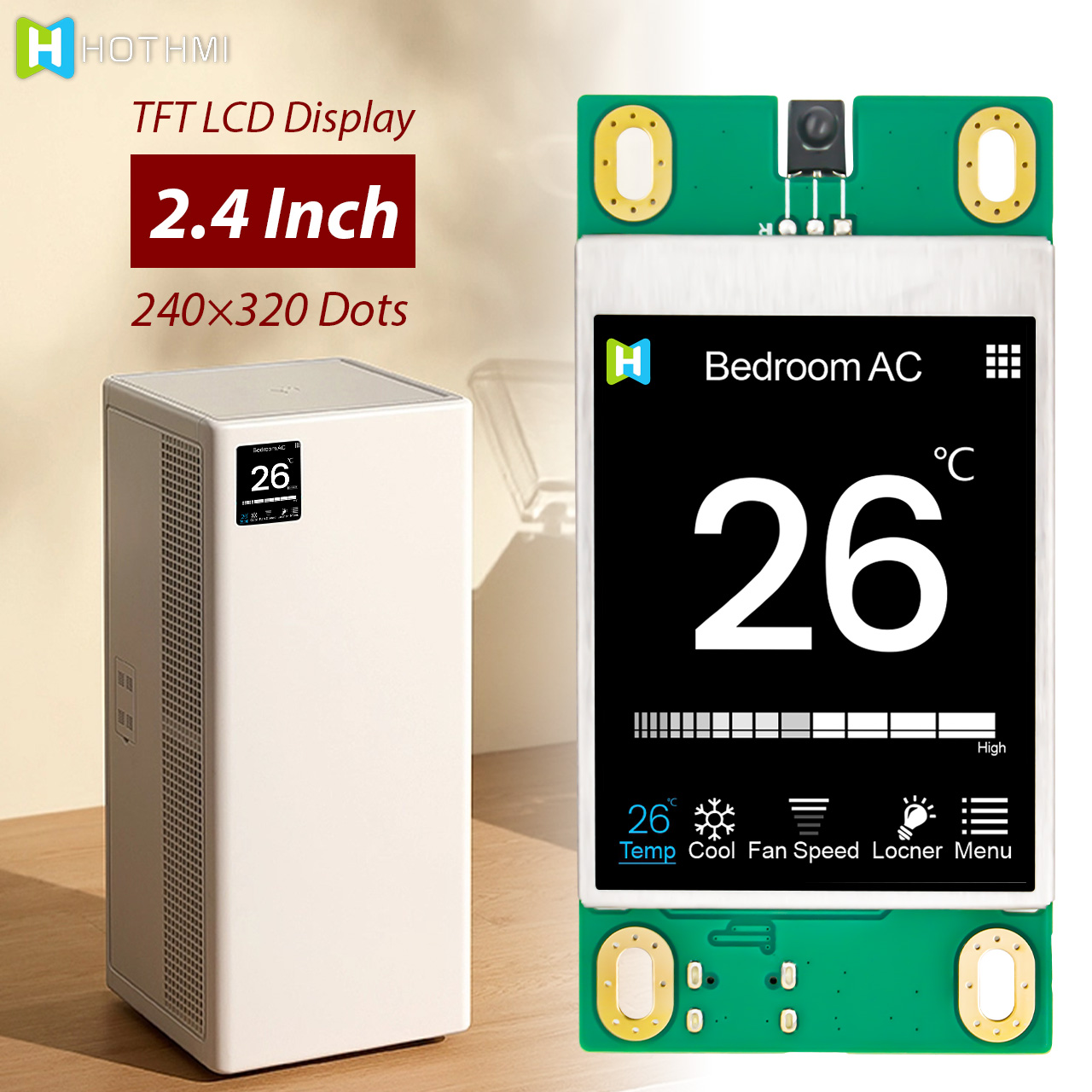
Comprehensive Overview of the 2.4-inch Arduino RS485 Smart Serial Screen
In the rapidly evolving landscape of IoT and industrial automation, Arduino RS485 communication has become a standard for small to medium-sized HMI development. This is due to its exceptional anti-interference capabilities and long-distance transmission advantages. Today, we provide a detailed analysis of a precision-engineered interaction tool: the HTM-H024B25-UART-A01 2.4-inch industrial-grade smart serial screen.
Users can also choose their own development platform. The TFT LCD display associated with this module, without a driver board, is the TFT-H024B25QVTST4N40, which supports common development platforms such as Arduino and C8051. Supports the capacitive touch version: TFT-H024A16QVIST4C10, and the resistive touch version: TFT-H024B26QVTST3R18.
Product Introduction: A High-Integration Control Hub
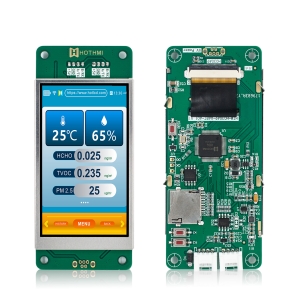
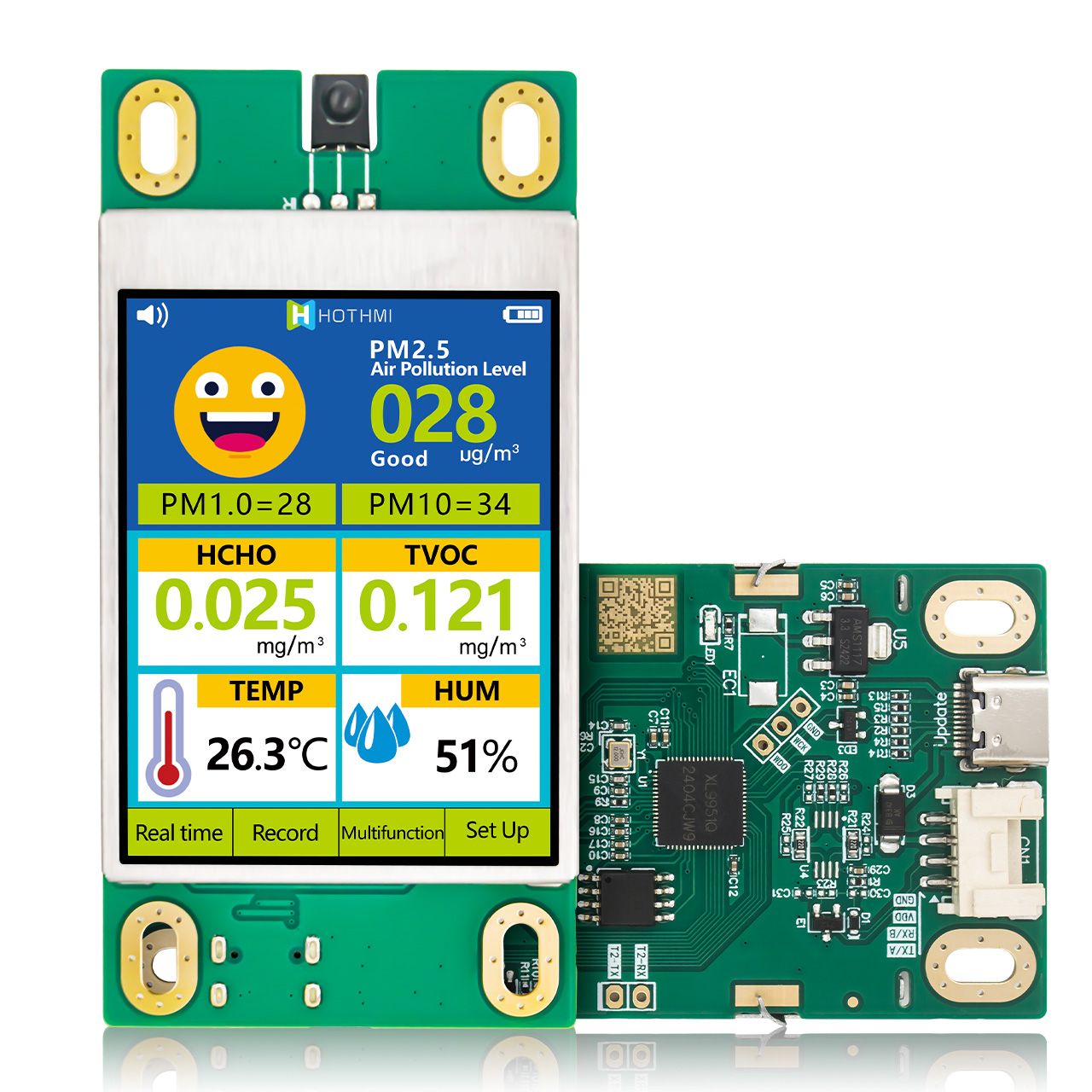
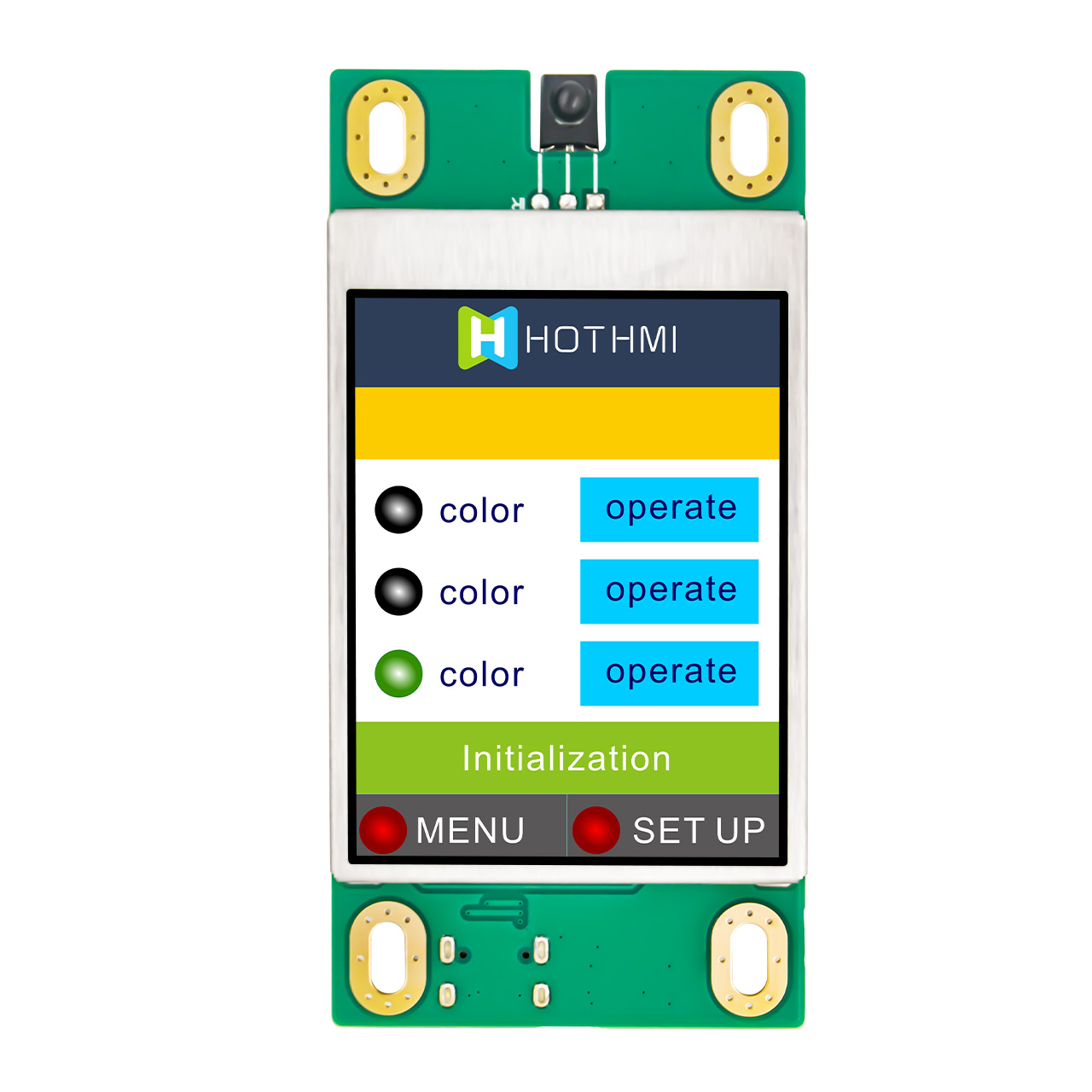
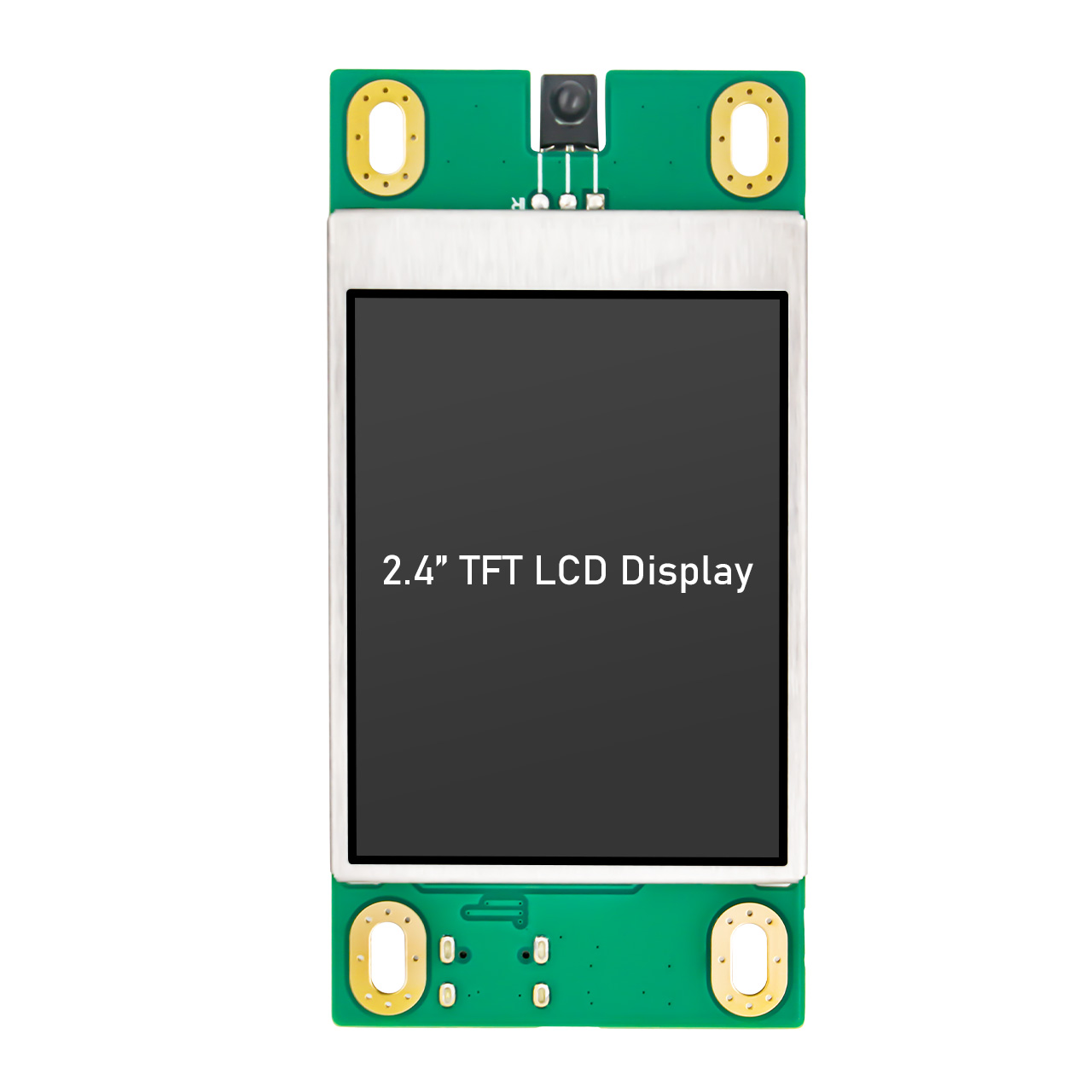
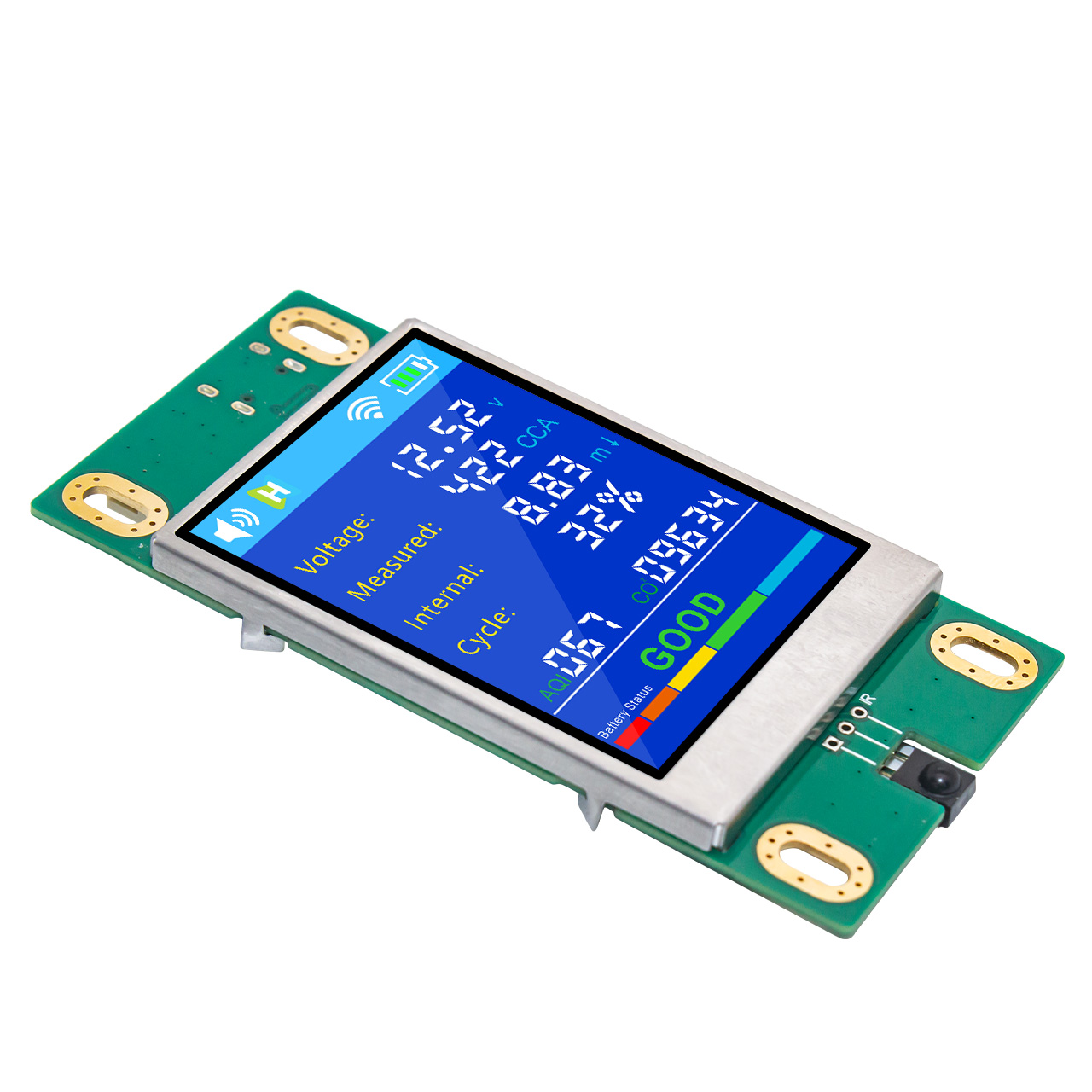
The HTM-H024B25-UART-A01 is a 2.4-inch Arduino RS485 TFT LCD module featuring a high-performance graphics engine. With a 240×320 resolution and a typical brightness of 350 cd/m², it ensures clear visual presentation even in complex lighting environments. The core strength of this module lies in its high integration and flexible interface compatibility.
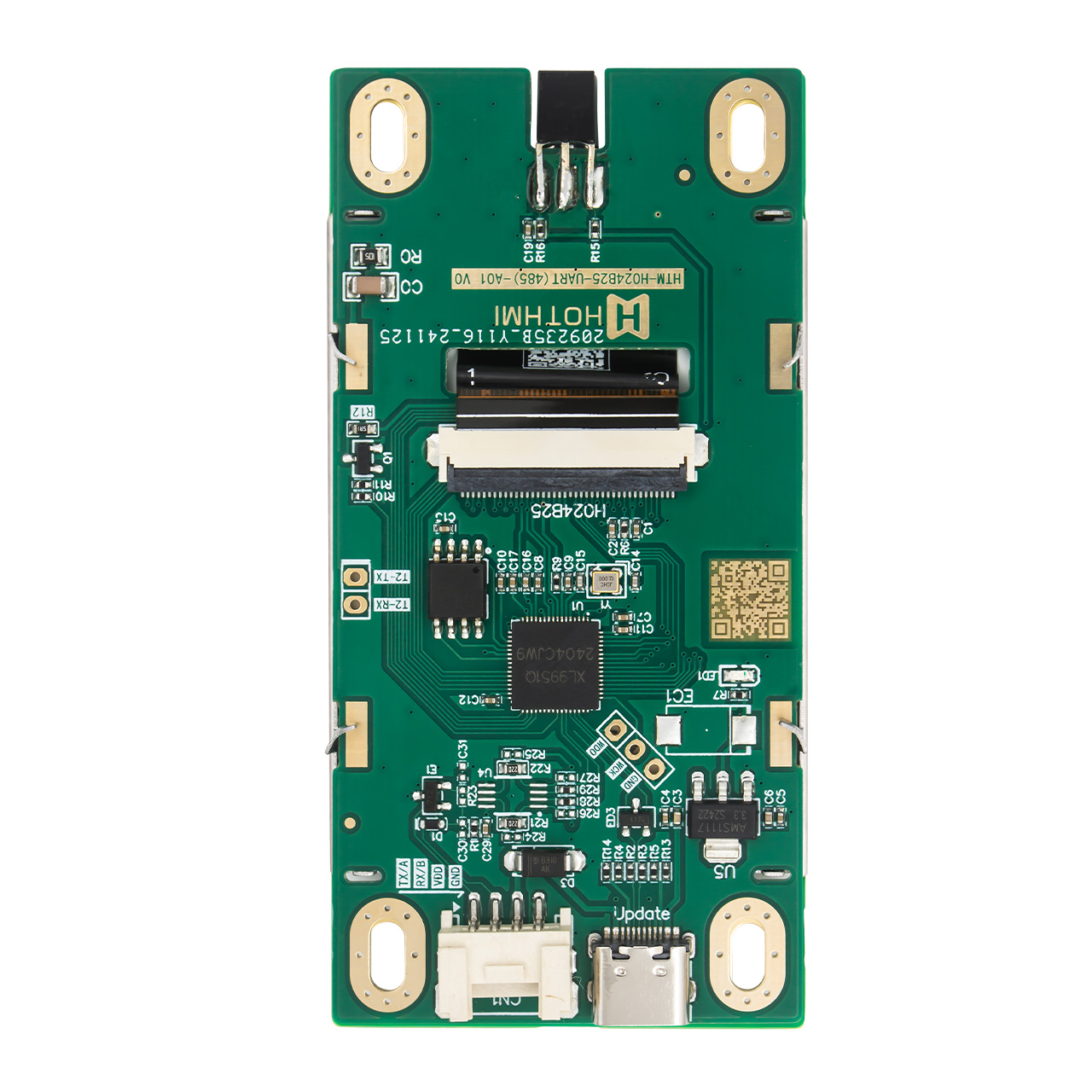
This module supports standard UART (TTL) communication and features a PCB design that is fully compatible with the RS485 interface. This allows developers to integrate it into existing industrial bus systems, implementing graphics switching, text display, and real-time data monitoring through simple instruction sets.
Key Highlights: Why Choose the HTM-H024B25?
- Multi-Protocol Support for the Arduino RS485 Ecosystem
The product natively supports both UART and RS485. When paired with an Arduino controller, developers can leverage mature libraries to achieve high-reliability data interaction over long distances. - Industrial-Grade Temperature Resilience
The operating temperature ranges from -20°C to +70°C, with storage temperatures reaching -30°C to +80°C. It is designed to remain stable in both cold monitoring sites and high-temperature industrial workshops. - Versatile Resource Management
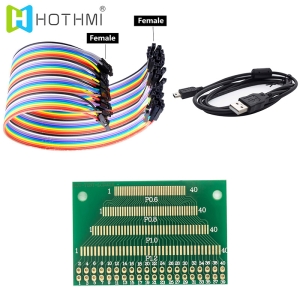
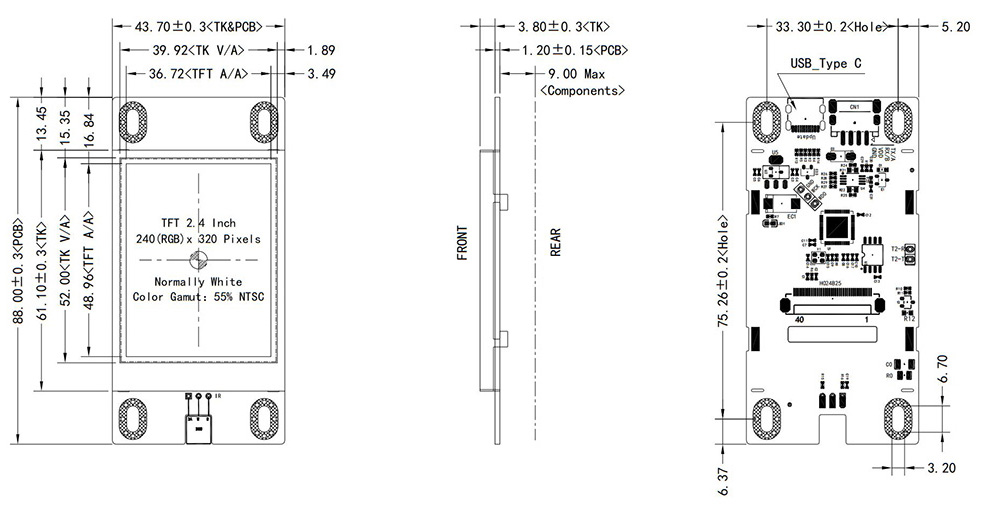
It offers 1G-Bit or 128M-Bit resource storage capacity and supports updates via USB Type-C, TF Card, or a dedicated download PCB, ensuring rapid iteration of UI assets. - Space-Efficient Design
With PCB dimensions of 88.00mm x 43.70mm, it optimizes internal space for handheld devices or compact control panels without sacrificing display quality.
Core Application Scenarios
- Industrial Automation Control Panels: Functioning as a terminal display for PLCs or microcontrollers via Arduino RS485 modules to monitor parameters like motor speed in real-time.
- Medical Diagnostic Equipment: Utilizing the 240×320 pixel pitch and 55% NTSC color gamut for portable pulse oximeters and ECG displays.
- Energy Storage Systems: Monitoring charging status and configuring system parameters in EV charging piles and battery storage stations.
- Environmental Monitoring Terminals: Serving as a centralized management screen for sensor collection systems at remote monitoring nodes.
Technical Q&A
Q1: How does this screen interface with Arduino RS485 for long-distance communication?
A: The product features a PCB design compatible with RS485. On the Arduino side, you use a TTL to RS485 module connected to the serial port. The screen’s CN1 interface provides TX/A and RX/B pins, enabling stable communication over hundreds of meters via a two-wire differential signal.
Q2: How can graphical resources like images and fonts be updated?
A: The product supports three convenient update methods: connecting to a PC via the onboard USB Type-C interface, using a TF Card for offline updates, or batch programming via the dedicated download PCB interface.
Q3: What are the power requirements for stable operation?
A: The Arduino RS485 typical operating voltage is +4.7V to 5.3V. Its industrial-grade components and anti-interference circuit design effectively filter high-frequency noise from the bus, ensuring stable logic operation within the VDD range.
Q4: Is the 2.4-inch resolution sufficient for complex data visualization?
A: Yes. Despite its compact size, the 240(RGB)x320 resolution combined with the Normally White display mode provides detailed pixel performance. The 1024K-Byte memory space is sufficient to support smooth interface transitions and dynamic graphics rendering.