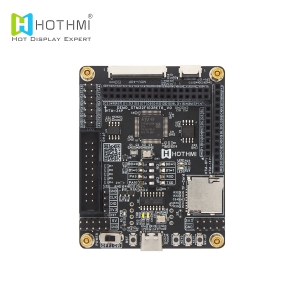
Description
Product Detailed Introduction and Specifications
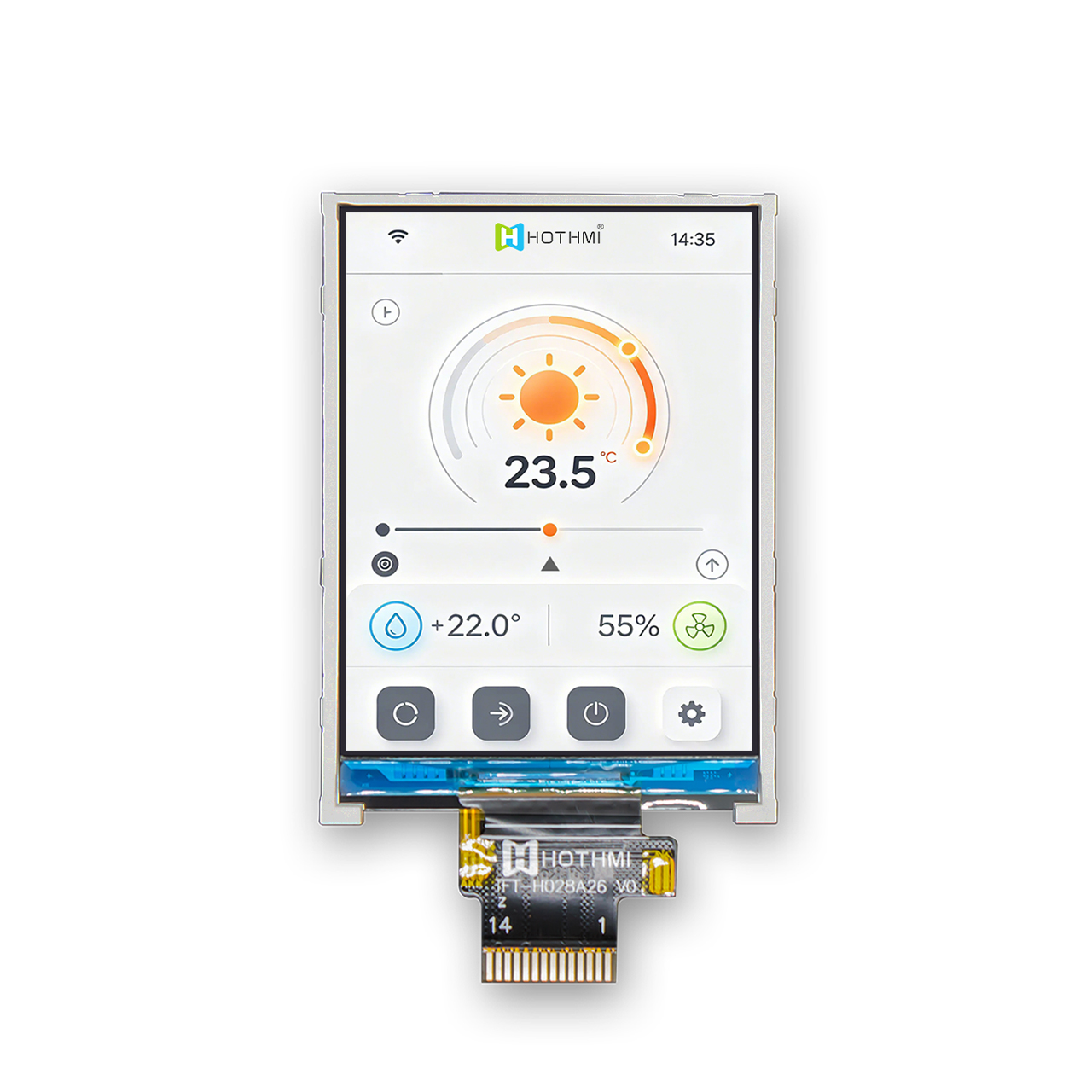
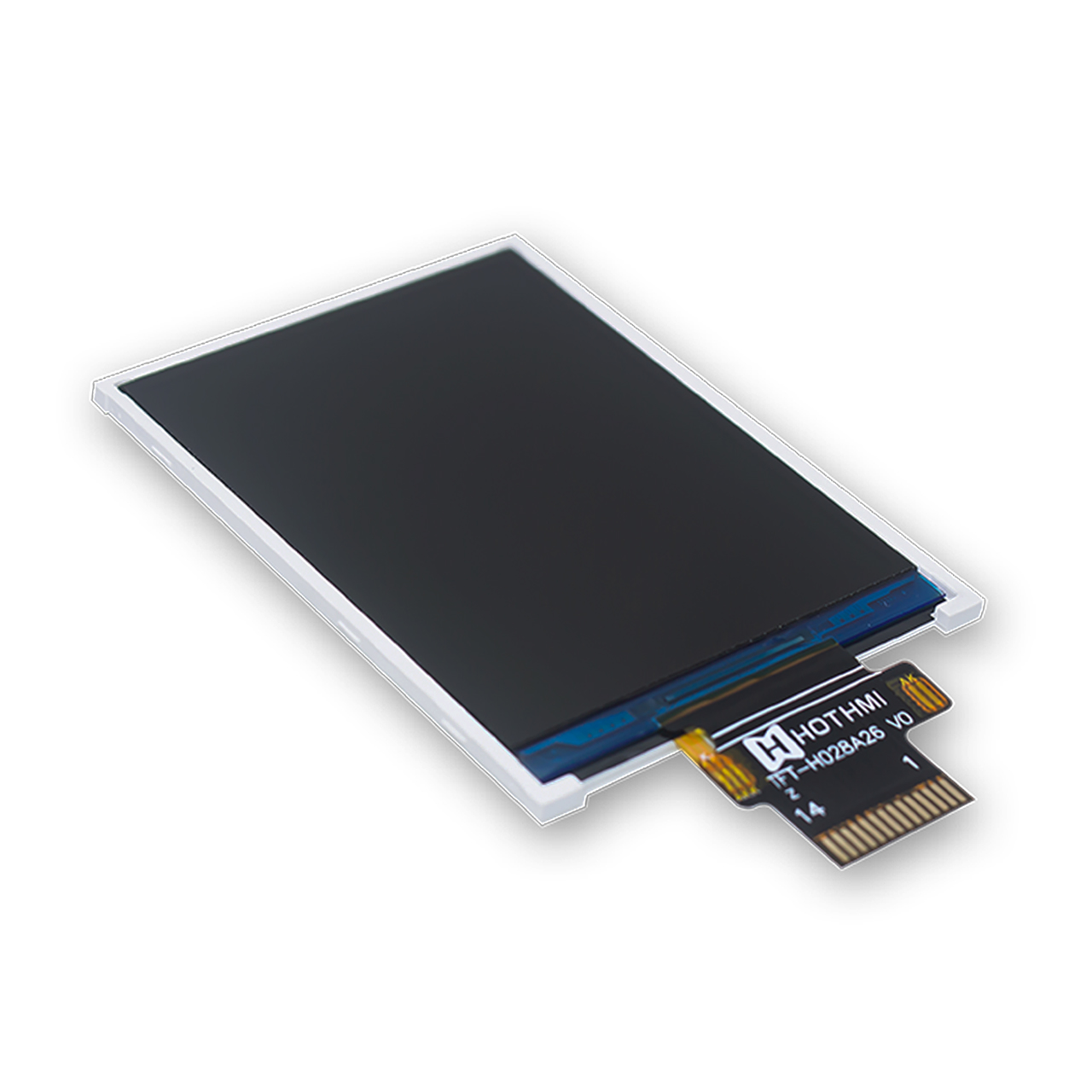
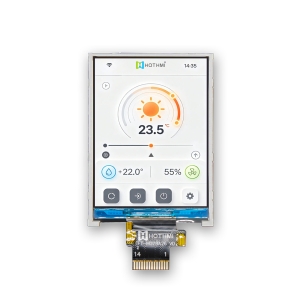
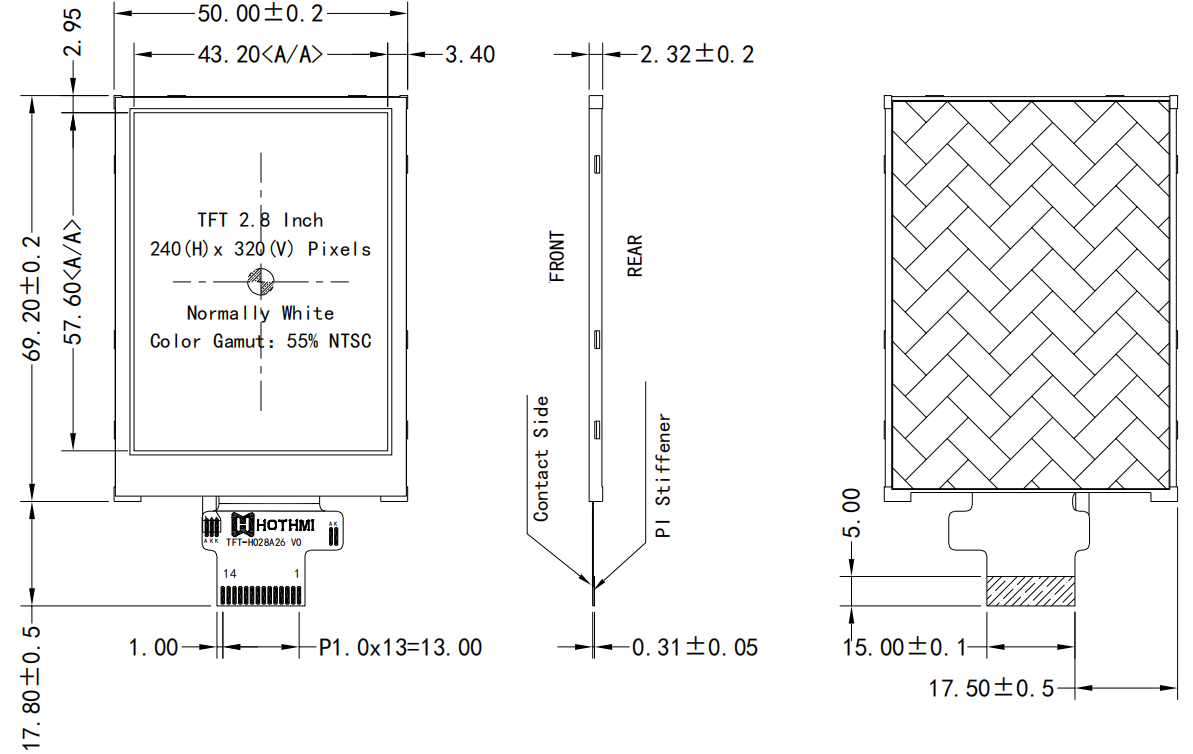
This 2.8-inch SPI LCD module is a high-performance color active-matrix TFT liquid crystal display (model: TFT-H028A26QVTST3N14). It features a screen resolution of 240(H) x 320(V) pixels and adopts a Normally White display mode, delivering vivid colors with a color saturation of 55% NTSC.
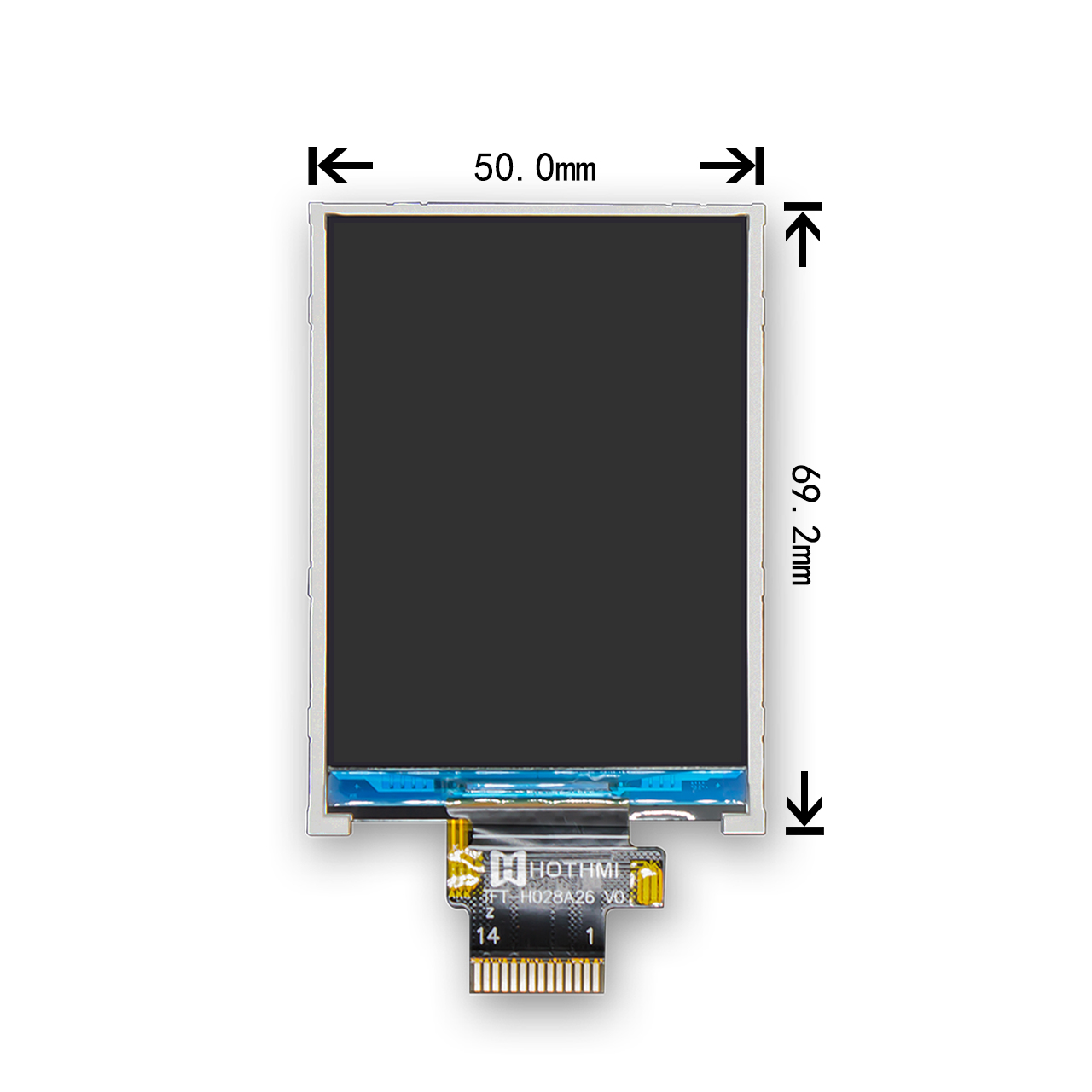
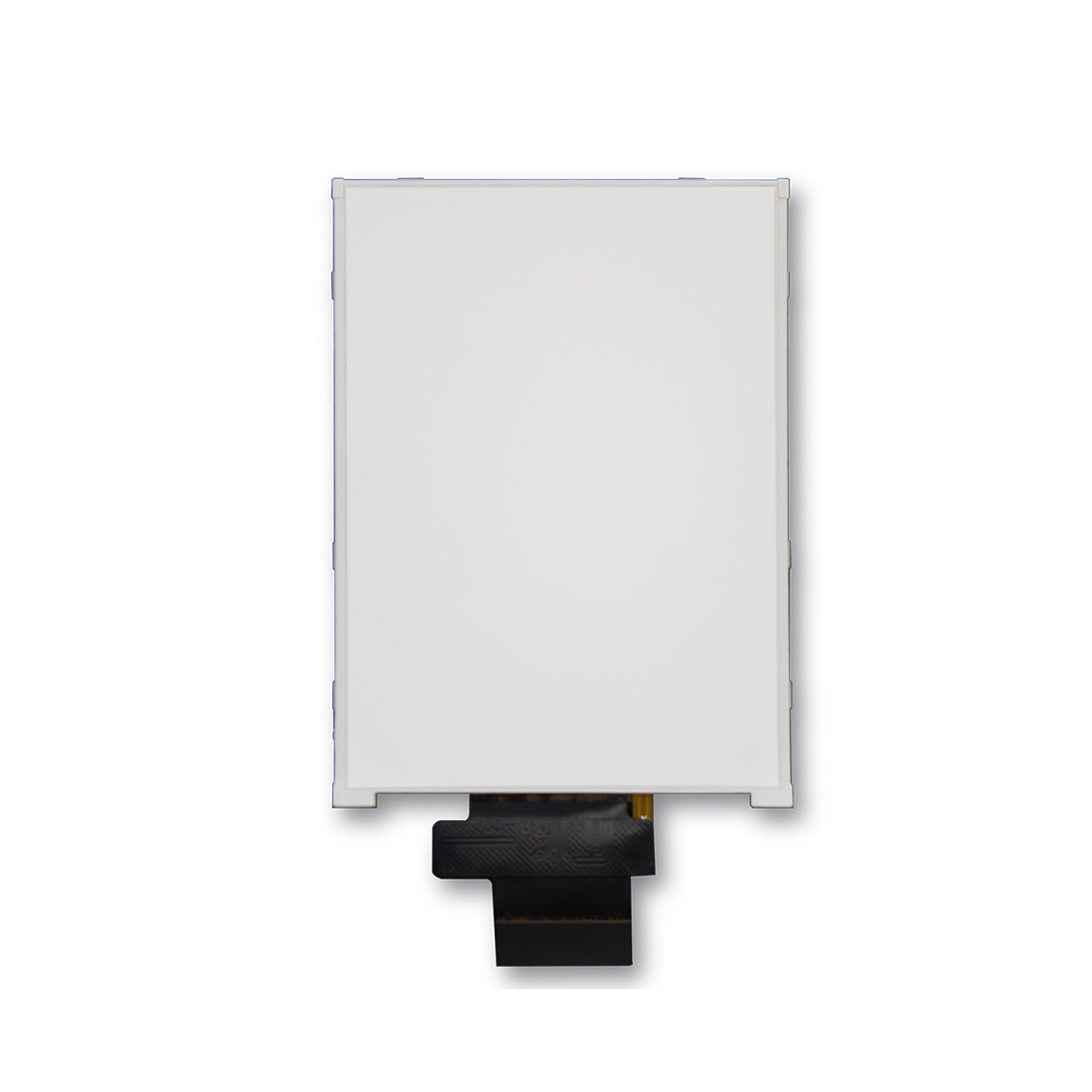
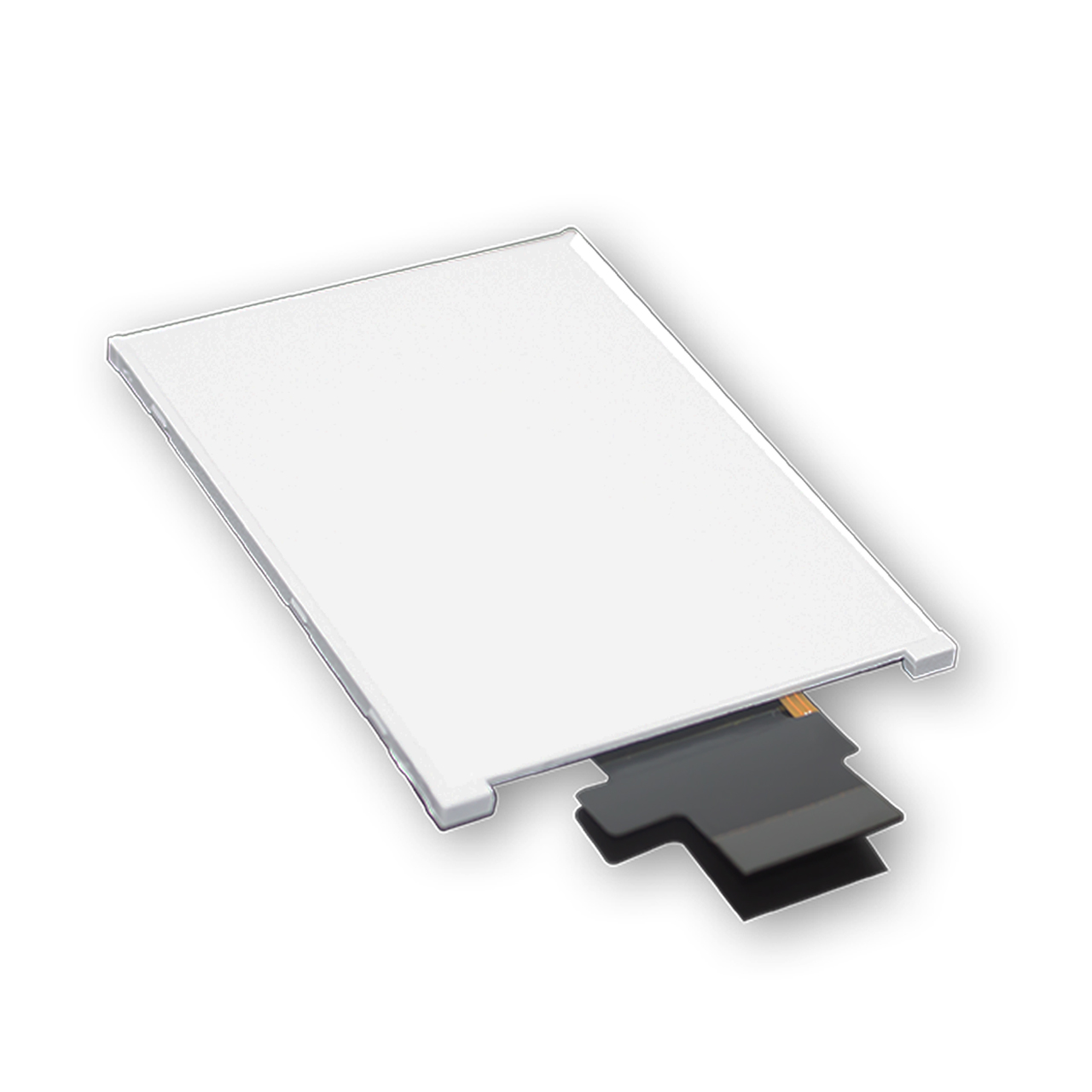
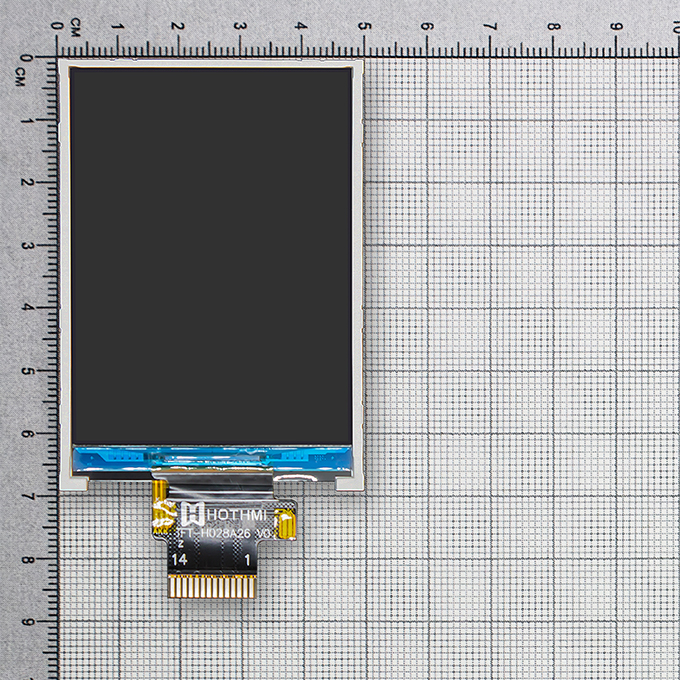
The module is built around the ST7789 driver IC and supports an efficient 4-wire SPI serial interface. In terms of electrical performance, the operating voltage is 3.0±0.3V. Under constant current testing, the backlight operates at Vf=3.0±0.3V and If=80mA, providing a stable brightness output of 300±50 cd/m². Its compact mechanical outline measures 50mm x 69.2mm in external dimension with a slim thickness of just 2.32mm. The active display area is 43.2mm x 57.6mm, and it is equipped with a 14-pin flexible flat cable (pitch 1.0mm) with PI-reinforced gold fingers.
Furthermore, this SPI LCD module offers excellent environmental tolerance, with a wide operating temperature range of -20℃ to +70℃ and a storage temperature range of -30℃ to +80℃. Its typical viewing angles are U50/D20/R45/L45, making it well suited for industrial control, handheld devices, and smart hardware display applications.
Key Highlights of the SPI LCD
- High-Speed 4-Wire SPI Serial Bus: Traditional parallel interface screens often require 8 or 16 data lines plus several control lines. In contrast, this SPI LCD adopts a 4-wire serial communication protocol, needing only clock, data, chip select, and data/command toggle pins. This significantly frees up I/O resources on the host microcontroller.
- Industrial-Grade Temperature Tolerance: Manufactured with high-standard industrial materials and packaging processes, this SPI LCD module operates reliably across a wide temperature range from -20℃ to +70℃, and can be stored between -30℃ and +80℃. Whether deployed in cold outdoor environments or hot industrial machine rooms, it maintains stable, 24/7 uninterrupted operation.
- High Brightness and Excellent Readability: Under constant current test conditions, the module achieves a brightness of 300±50 cd/m². Combined with an optimized backlight light-guide plate, this SPI LCD offers good resistance to ambient light interference, ensuring superior text readability in various complex lighting conditions.
- Highly Reliable Flexible Flat Cable with PI Reinforcement: The 14-pin connector at the bottom uses a PI-reinforced gold finger process. The reinforcement thickness is controlled at 0.31±0.05 mm, greatly enhancing the cable’s resistance to pulling and bending during assembly, and reducing contact failures caused by production handling and insertion.
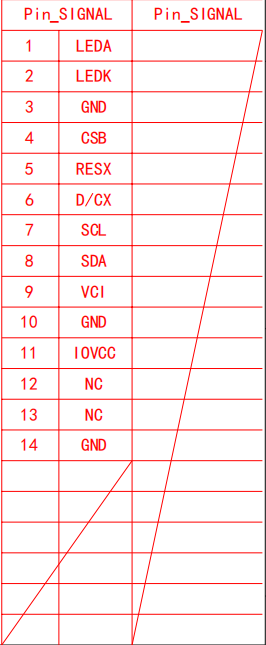
Pin Definitions
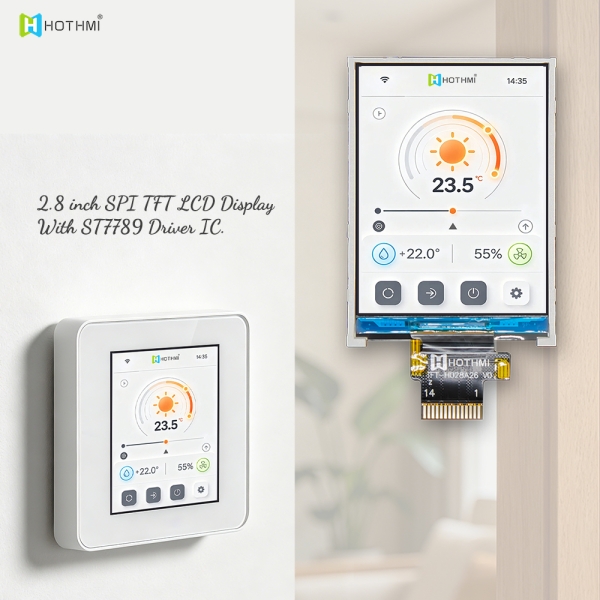
Typical Application Scenarios for the SPI LCD
- Industrial Intelligent Control Terminals: Industrial instrumentation, smart automated production line display panels, and power monitoring equipment. The -20℃ to +70℃ temperature range perfectly suits the demanding and changing conditions found in factory environments.
- Handheld Portable Devices: Handheld infrared thermometers, portable gas detectors, and handheld barcode scanners (PDAs). The ultra-slim 2.32mm thickness allows more internal space for high-capacity batteries.
- Smart Home and IoT Gateways: Smart wall switch panels, environmental monitoring displays, and smart appliance control screens.
- Medical Assistive Devices: Portable pulse oximeters, electronic blood pressure monitors, and compact medical analyzers. The high-contrast normally white display clearly presents patient health data with excellent visual clarity.
Technical Q&A for SPI LCD
Q1: When using the ST7789-driven 4-wire SPI LCD, what is the function of the D/CX pin?
A1: In 4-wire SPI communication, because there are no separate read/write control lines as found in parallel interfaces, the chip relies on the D/CX pin’s logic level to distinguish the type of data being transmitted on the bus. When the host pulls D/CX low, the transmitted data is recognized by the ST7789 as a “control command” (such as setting the display area or waking the screen). When D/CX is pulled high, the data is interpreted as “display parameters or RGB color pixel data”. If this pin is incorrectly wired or misconfigured, the microcontroller will fail to initialize the SPI LCD properly.
Q2: The module operating voltage VCI is 3.0±0.3V. If my microcontroller uses 5V TTL logic, can I connect it directly?
A2: No, direct connection is not allowed. The maximum analog and interface logic voltage for this SPI LCD module is generally recommended to be within 3.3V (VCI = 3.0±0.3V). Applying 5V logic signals directly may cause overvoltage damage to the internal pins of the ST7789 driver IC. When used in a 5V control system, it is mandatory to insert level shifters (such as the 74LVC245) or build resistor divider networks on signal lines including SCL, SDA, CSB, and D/CX to convert the 5V logic levels down to the safe 3.3V range before connecting to the display module.