Description
Empowering Intelligent Vision: Deep Analysis of the 2.8 Inch High-Performance UART LCD Display
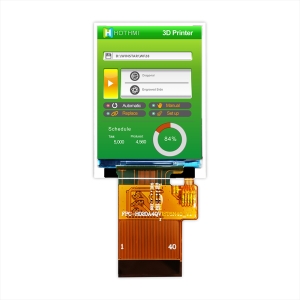
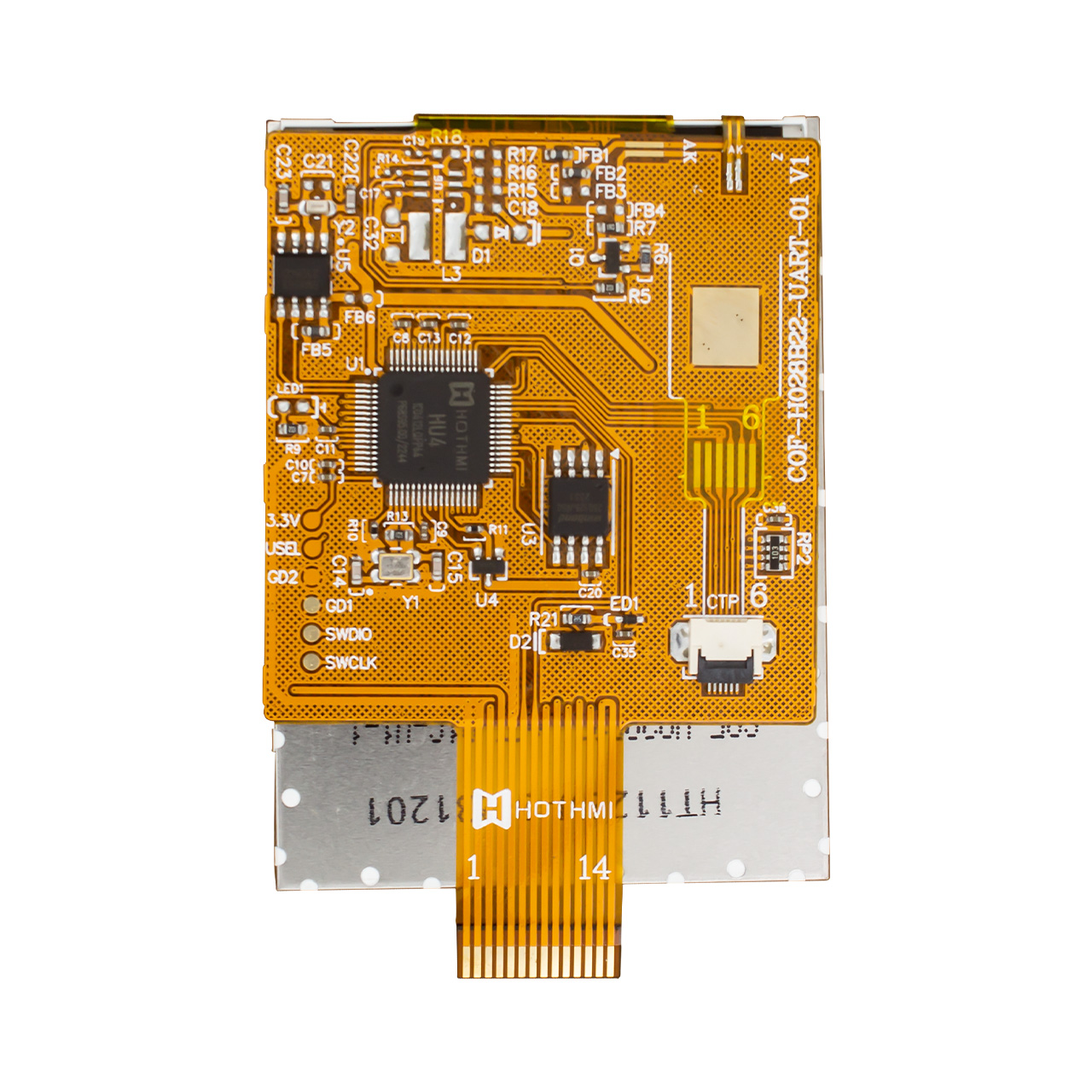
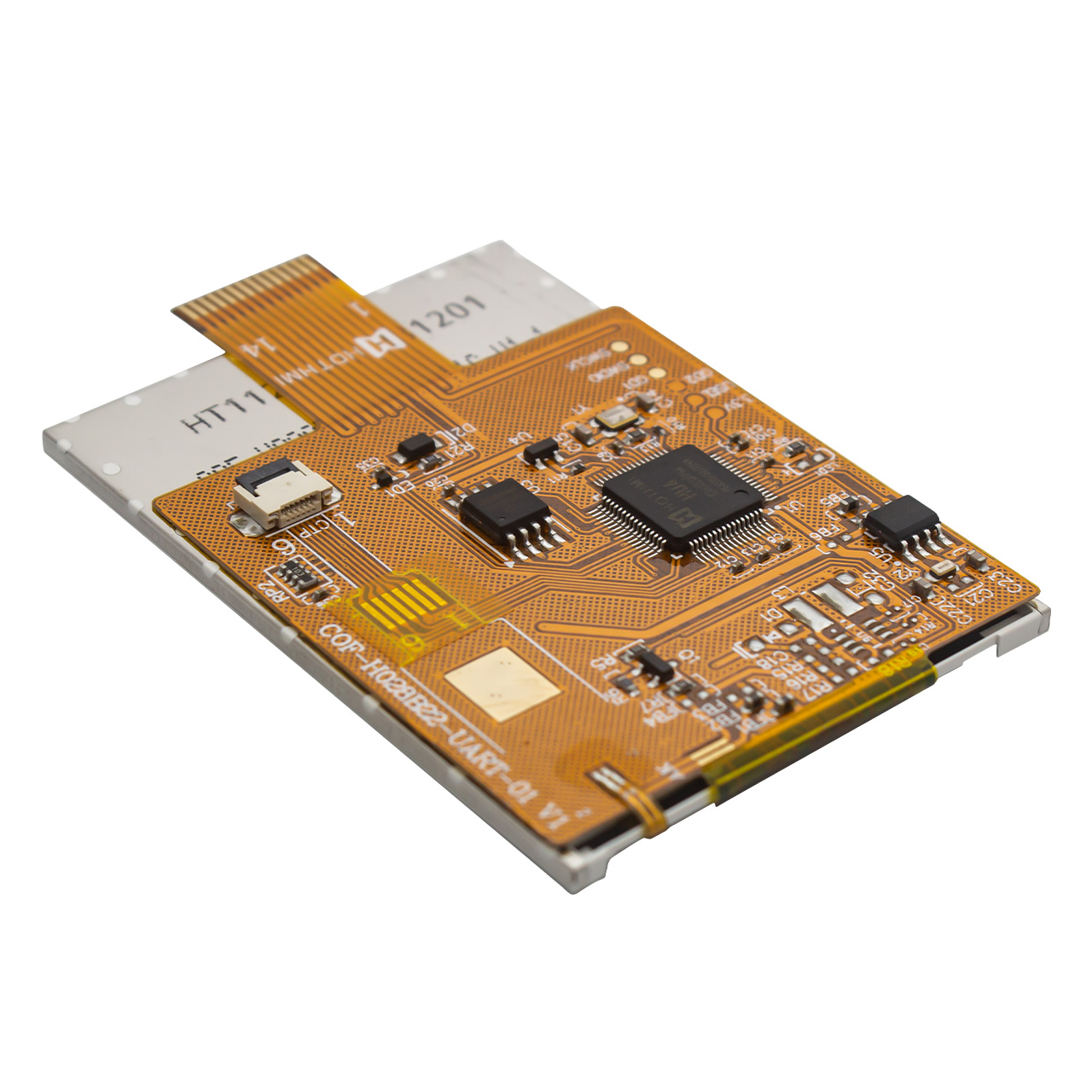
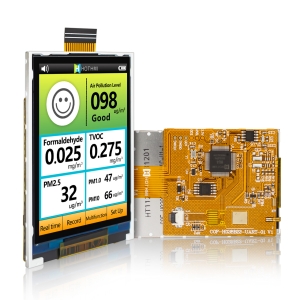
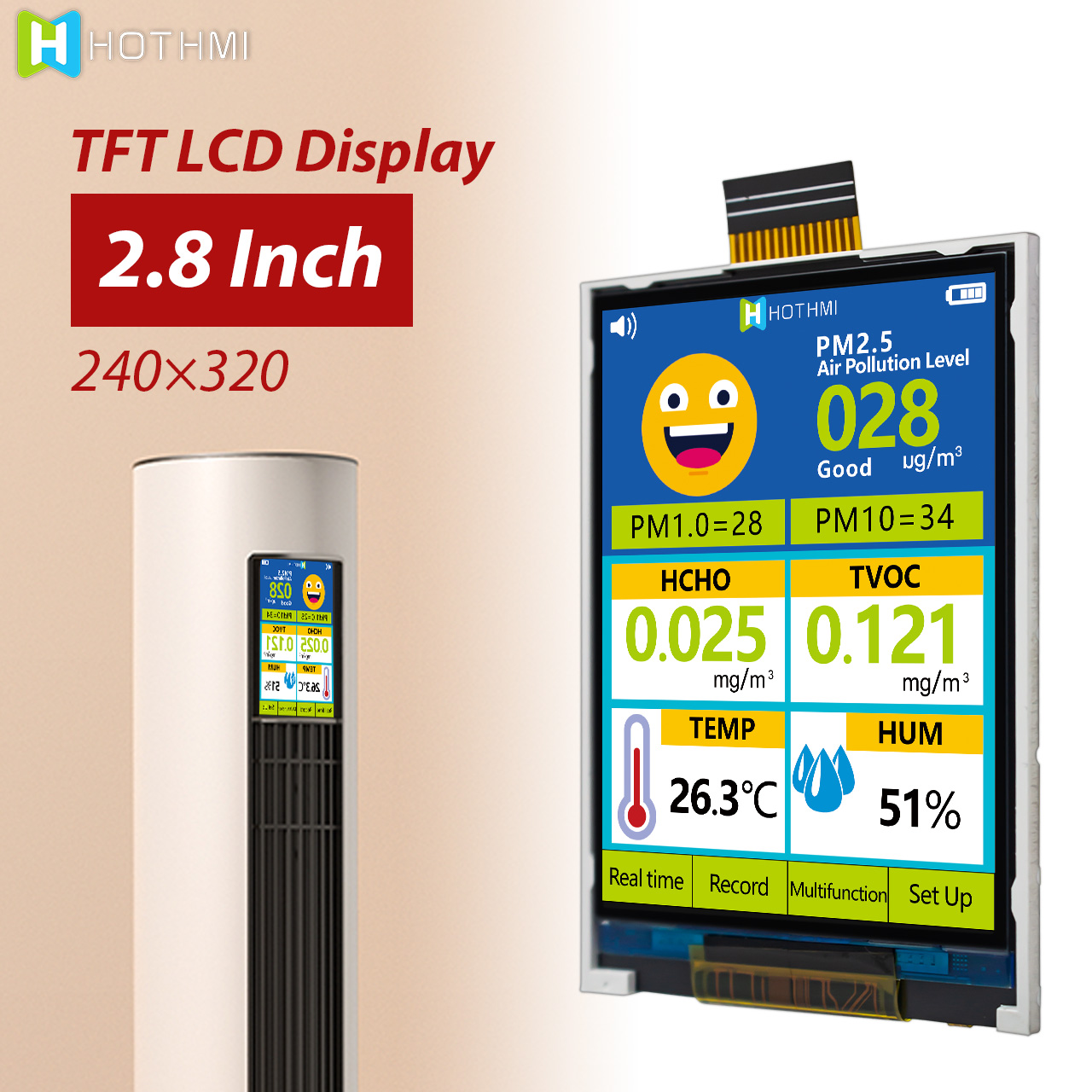
In the rapidly evolving landscape of Industrial IoT and Smart Human-Machine Interface (HMI), display modules are no longer just output windows but core components of system integration. The COF-H028B22-UART is a 2.8 inch UART LCD Display specifically designed for high efficiency and low development barriers. Utilizing advanced Chip-on-Film (COF) technology, it integrates the high-performance controller directly onto the flexible circuit, optimizing space for compact embedded devices.
UART LCD Display Product Overview
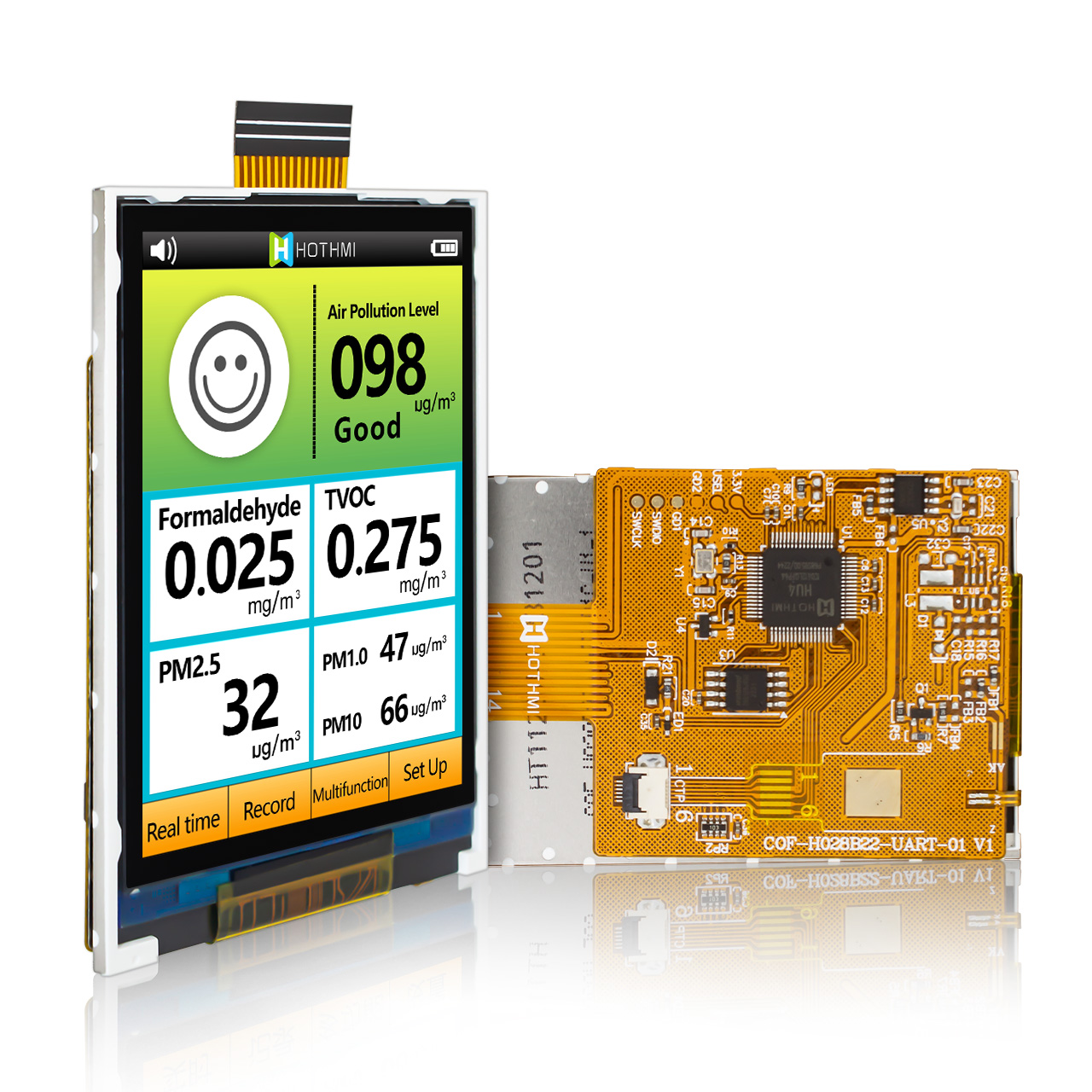
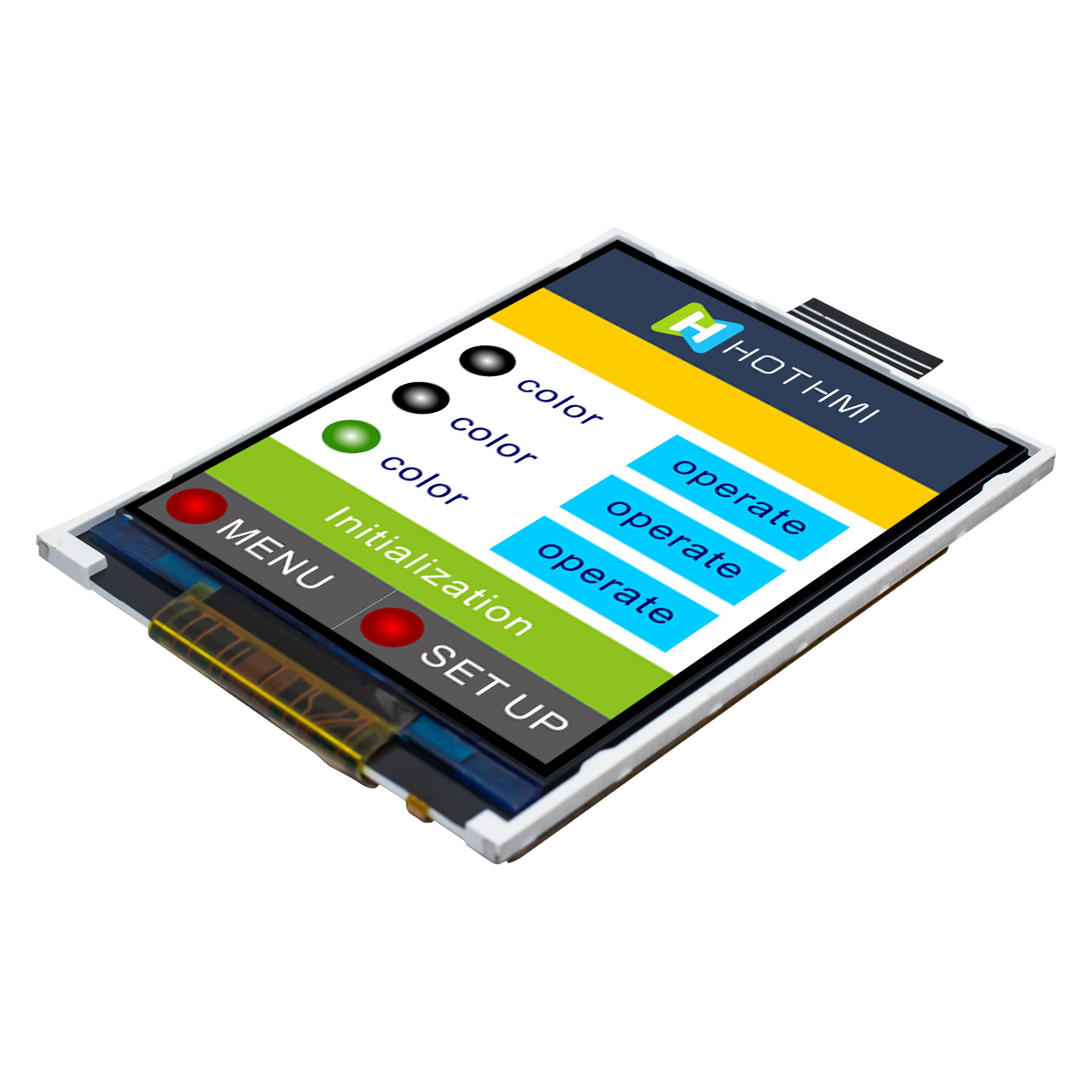
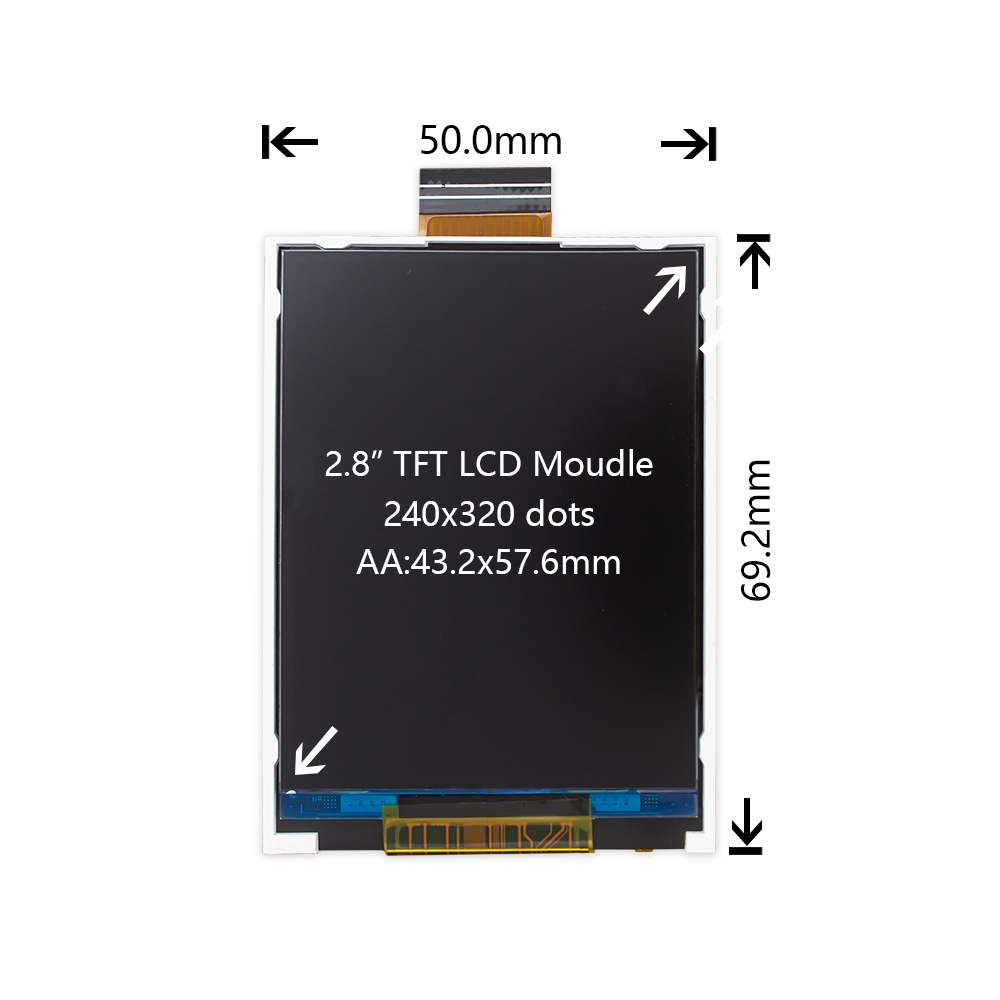
The COF-H028B22-UART features a crisp 240×320 resolution with support for 16.7M colors. With a high brightness of 500 cd/m², it ensures sharp visual performance in various lighting conditions. The core advantage lies in its UART (TTL) interface. Developers can control screen transitions, text rendering, and icon updates through simple command sets, bypassing complex LCD timing protocols and significantly reducing Time-to-Market (TTM).
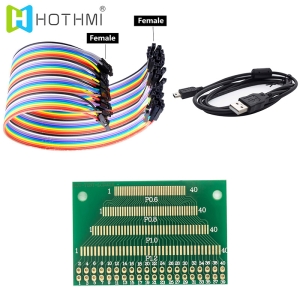
This module offers a Full View, ensuring consistent color and contrast from any viewing angle. It includes a massive 16-MByte onboard storage capacity for icons, fonts (supporting Bold typefaces), and UI assets. Resource updates are made easy via USB (Mini-B) or TF Card, providing maximum flexibility for field upgrades.
Core Highlights and Competitive Advantages
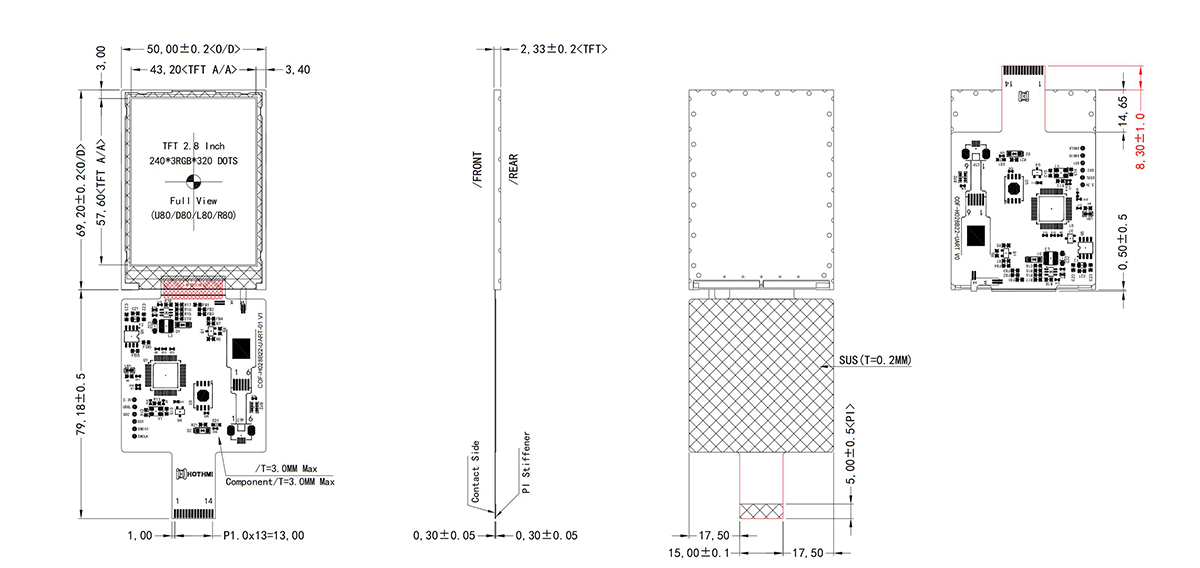
Highly Integrated COF Packaging: The COF process results in an ultra-thin module. The rear side is designed to accommodate a 20x20mm heat sink, effectively managing thermal output during high-intensity processing.
- Simplified Development Workflow: Featuring a standard UART TTL interface and supporting 3.3V logic, it is compatible with mainstream MCUs such as STM32, ESP32, and Arduino.
- Industrial Reliability: The operating temperature range spans -20°C to 70°C, making it suitable for rigorous industrial environments.
- Image Retention Prevention: Specifically optimized for normally black panels, the module includes logic to prevent burn-in. It is recommended to refresh static content every 2 minutes or use moving screen savers.
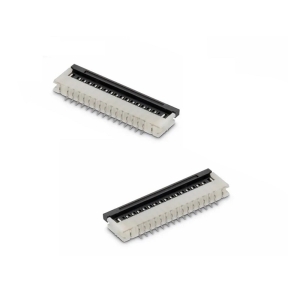
- Modular Interface Design: The 14-pin layout is clearly defined, covering GND, Uart-TX/RX, MCU-RES, TF card interfaces, and a dedicated V33RTC power pin for real-time clock stability.
UART LCD Display Target Applications
- Smart Home Control: Thermostats, boiler controllers, and air purifier interfaces.
- Medical Devices: Portable monitors, infusion pump panels, and pulse oximeters.
- Industrial Instrumentation: Power monitoring meters, PLC touch terminals, and environmental stations.
- Automotive Electronics: Motorcycle smart clusters, EV charging pile displays, and OBD diagnostics.
Technical FAQ for Developers
Q1: What are the distinct advantages of the COF structure over traditional COG UART LCD Display modules?
A: The Chip-on-Film (COF) structure places the driver IC on the flexible FPC rather than the glass substrate (COG). This significantly reduces the display’s bottom bezel (the chin), allowing for a larger screen-to-body ratio in a 2.8 inch form factor. Furthermore, the flexible connection provides better mechanical shock resistance for handheld or vibrating industrial equipment. The design also allows for a 20x20mm heat sink area, ensuring heat is dissipated away from the liquid crystal layer to prolong the panel’s lifespan.
Q2: How can UART communication stability be optimized for high-interference environments?
A: To ensure a robust UART LCD Display connection, we recommend keeping signal lines under 15cm and using shielded cables if longer distances are required. From a power perspective, ensure the V33MCU pin receives at least 500mA to handle inrush current when the backlight activates. Lastly, leverage the 16-MByte internal storage by pre-loading UI assets. By sending short command codes instead of raw pixel data, you minimize the baud rate load and reduce the risk of packet loss.
Q3: What is the significance of the V33RTC power optimization in the V1.0 hardware revision?
A: In the UART LCD Display version, the RTC power supply (Pin 14) has been isolated as V33RTC. This allows the Real-Time Clock to be maintained by a small coin cell or supercapacitor even when the main 3.3V system power is shut down. This ensures the module retains accurate time without needing a resync from the MCU upon reboot. This dedicated power path also isolates the clock crystal from main power ripples, achieving high timing precision of approximately ±0.5s per day.