Description
Product Overview
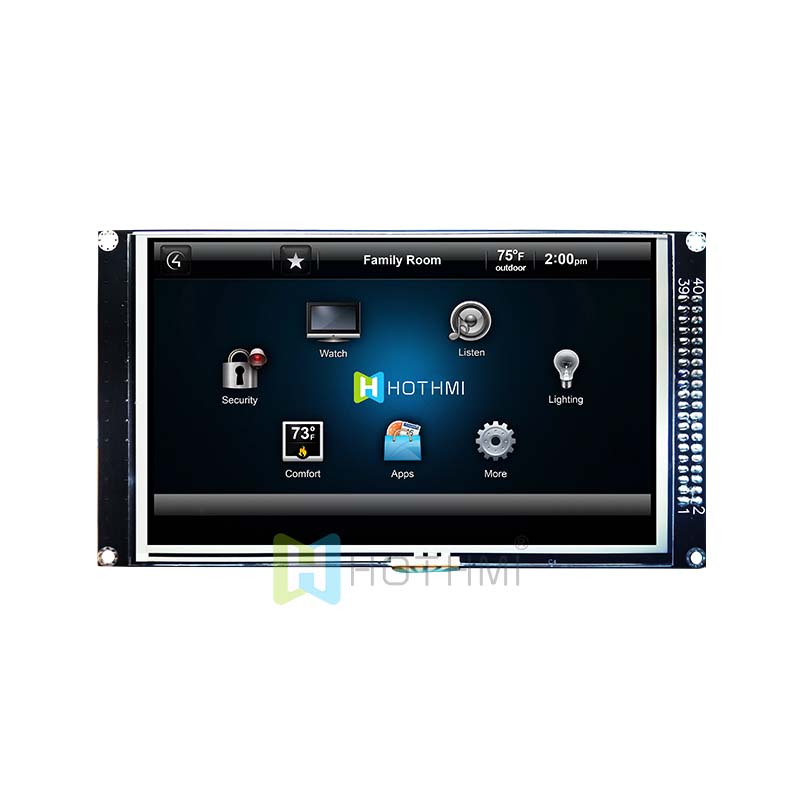
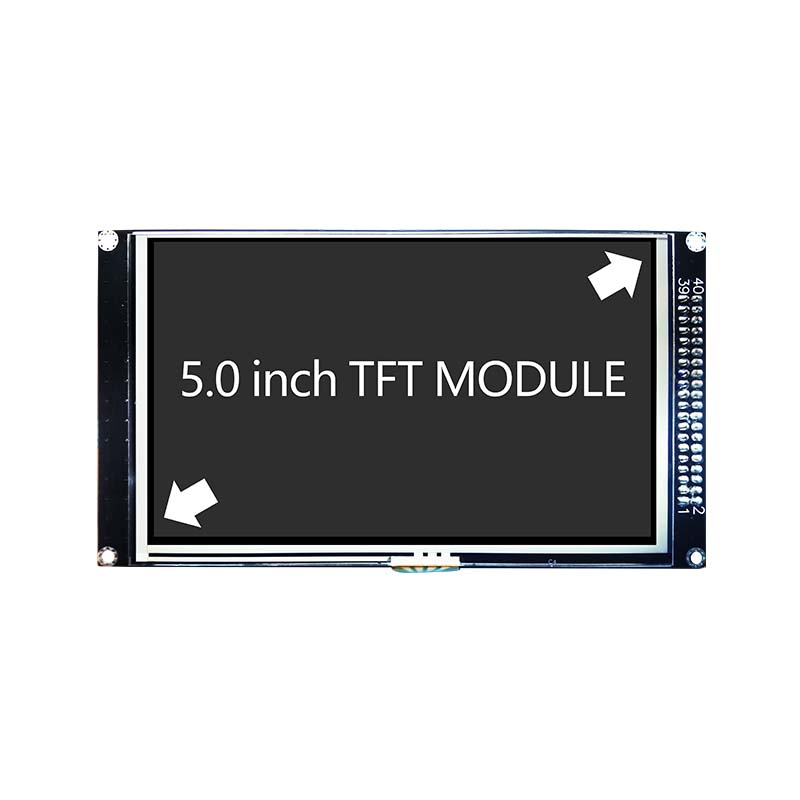
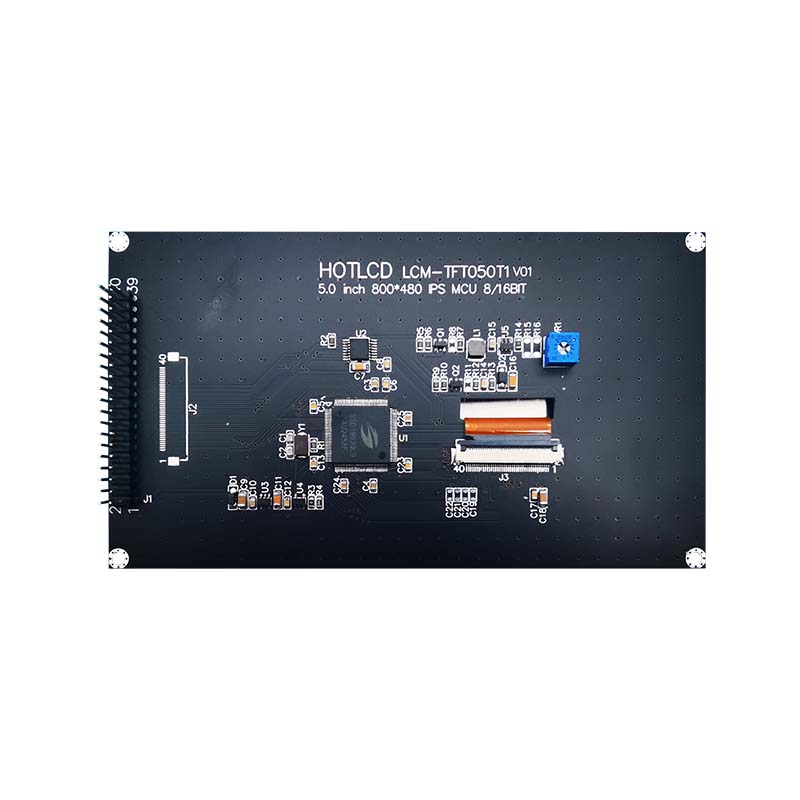
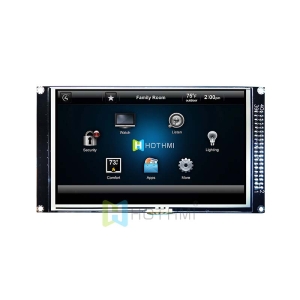
This LCM-TFT050T1SVP16R40D is a high-performance, industrial-grade 5.0-inch TFT Arduino LCD Display module. It integrates the industry‑classic SSD1963 pixel display controller and adopts a standard 8080 parallel bus interface (dynamically configurable for 8‑bit or 16‑bit operation), making it perfectly compatible with high‑performance development ecosystems built around the Arduino LCD Display architecture, such as Arduino Due, Mega 2560, Teensy, and ESP32 expansion platforms.
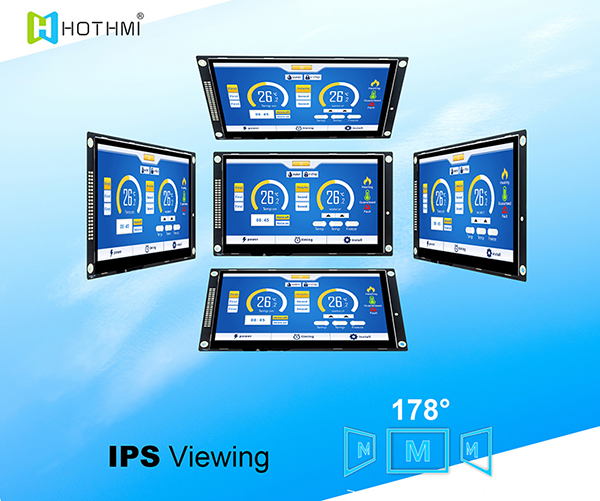
This Arduino LCD Display module features a normally black full‑transmissive panel technology with a native resolution of 800×3RGB×480. Its unique physical pixel density ensures crisp edges for miniature icons and curve charts, while the full‑viewing‑angle optical design guarantees that engineers and operators can enjoy clear visuals without colour shift or highlight inversion, even from complex mechanical mounting angles. The backlight assembly incorporates a high‑efficiency, high‑brightness white LED array, with a typical driving voltage Vf=19.6VVf=19.6V and current If=40mAIf=40mA, delivering a stable industrial‑grade luminance of up to 450 cd/m².
Moreover, this Arduino LCD Display module exhibits excellent environmental adaptability across a wide temperature range, with both operating and storage temperatures reaching from -30°C to +85°C, making it ideally suited for various industrial, automotive, or commercial display applications.
Product Highlights
Designed for high‑reliability scenarios, this Arduino LCD Display component offers the following significant engineering advantages in its hardware architecture:
- Integrated powerful SSD1963 hardware framebuffer controller: The SSD1963 chip incorporates up to 1215KB of frame buffer memory, capable of independently managing 24‑bit graphic data for 864×480 pixels. This means the microcontroller does not need to consume its own precious internal RAM for pixel‑by‑pixel refresh, greatly reducing the bandwidth burden on the Arduino host MCU.
- Flexible multi‑bit‑width 8080 parallel bus: The module’s hardware pins natively support 8‑bit or 16‑bit 8080 asynchronous parallel timing. In scenarios demanding extremely high refresh rates (e.g., real‑time waveform display, dynamic 2D dashboards), the 16‑bit mode can double data throughput; in systems with limited I/O pin resources, switching to 8‑bit mode conserves host pins.
- Extreme wide‑temperature industrial adaptability: Unlike ordinary consumer‑grade displays, this Arduino LCD Display has passed rigorous temperature‑humidity cycling tests and achieves both operating and storage temperatures of -30°C to +85°C. Whether in outdoor monitoring bus systems in frigid regions or in industrial boiler control cabinets with high heat and humidity, the module ensures stable electrical timing and liquid‑crystal response.
- High anti‑interference resistive touch network: Unlike common consumer capacitive touchscreens that are susceptible to electromagnetic interference, water droplets, or oil contamination, this product employs an industrial‑grade 4‑wire resistive touchscreen, which is entirely based on physical pressure triggering. Whether operators wear thick insulating gloves in factory workshops or the screen surface is contaminated with cutting fluid, machine oil, or dust, it delivers accurate physical coordinate feedback. Combined with the module’s silk‑screened black, rugged edge protection, it effectively absorbs and disperses mechanical stress from edge pressing, offering extremely high reliability in complex industrial sites or high‑intensity automotive HMI applications.
Pin Definition
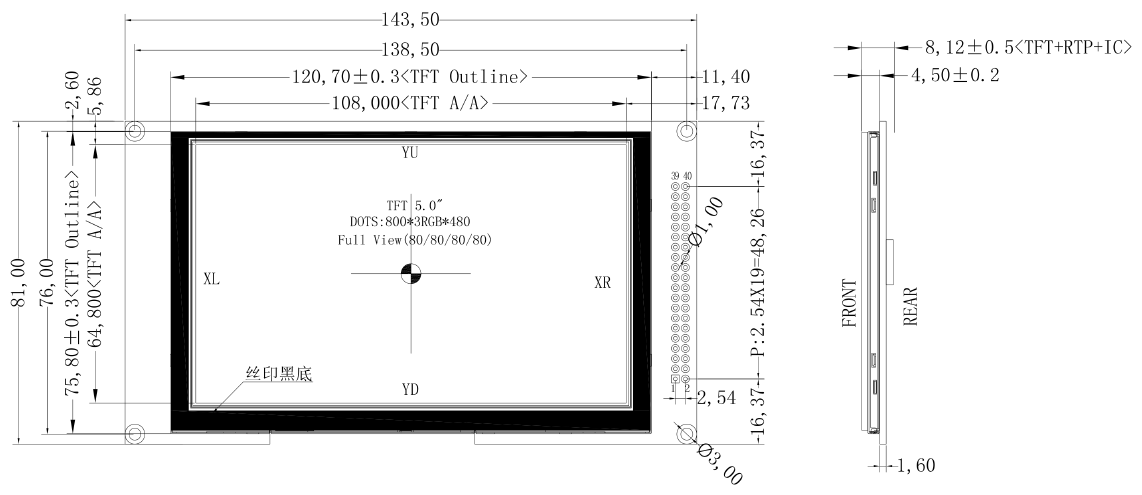
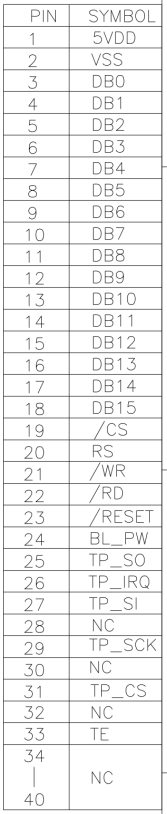
This Arduino LCD Display module connects to the external host via a standard 40‑pin, 2.54mm‑pitch dual‑row header / flat cable interface, with pin assignments strictly aligned to high‑level HMI bus standards.
Typical Engineering Application Areas
Thanks to its outstanding industrial‑grade electrical stability and large‑size high‑definition display, this SSD1963‑based Arduino LCD Display module is widely used in the following engineering fields:
- Industrial automation HMI: As a front‑end human‑machine control panel for various automated machine tools, PLC programming terminals, and CNC systems, it is used to display complex process flowcharts, alarm parameters, and production logs in real time.
- Medical monitoring and analytical equipment: Integrated into portable multi‑parameter monitors, biochemical analysers, and auxiliary display terminals for ultrasound diagnostic devices. The full‑viewing‑angle design facilitates multi‑angle observation of continuous physiological waveforms such as ECG by medical staff.
- Advanced embedded teaching and STEM / advanced prototyping projects: Used with Arduino Due or ESP32 development boards for university electronics and information engineering laboratory courses on large‑scale embedded graphics libraries (e.g., LVGL, UTFT) and graduation project prototypes.
Technical Q&A
Q1: How should I choose the host development board to drive this 800×480 resolution large screen within the Arduino ecosystem?
A1: It is strongly recommended to use a 32‑bit Arduino host (such as Arduino Due) or high‑performance third‑party boards (e.g., ESP32, Teensy 4.0).
- Reason analysis: This Arduino LCD Display screen has 800×480 pixels, and a single frame at 16‑bit colour depth represents a data volume of 768 KB. Traditional 8‑bit MCUs (e.g., Arduino Uno, Nano, based on ATmega328P) have only 2 KB of RAM and run at just 16 MHz – their pin count, memory, and processing speed are entirely insufficient to drive such a high‑resolution display.
- Engineering recommendation: If development must remain within the AVR architecture, Arduino Mega 2560 is the only choice with enough pins, but due to its 16 MHz clock limit, refreshing the entire screen typically takes hundreds of milliseconds, resulting in visible tearing artefacts. It is only suitable for static parameter displays with little or no change. For smooth graphical menus or dynamic curves, Arduino Due (84MHz ARM Cortex‑M3) is the official recommended standard.
From minor concept tweaks to full custom redesign & development, our engineering team offers end-to-end technical support. Feel free to contact us for custom display demands or technical issues during product selection.