-300x300.jpg)
Description
Reflective LCD Product Introduction
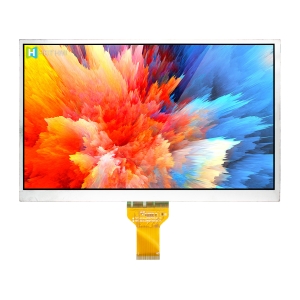
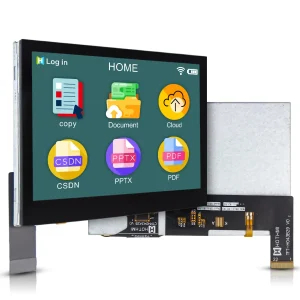
In outdoor high-brightness environments, portable low-power devices, and scenarios requiring long-term eye-friendly reading, traditional transmissive backlit displays often fall short due to issues such as screen glare, high power consumption, and visual fatigue. To address these challenges, HOTHMI introduces a high-performance 7.8-inch liquid crystal display module based on advanced Reflective LCD technology, model TFT-H078A04XGTILNG30.
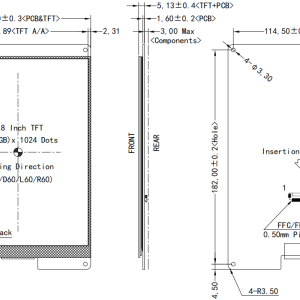
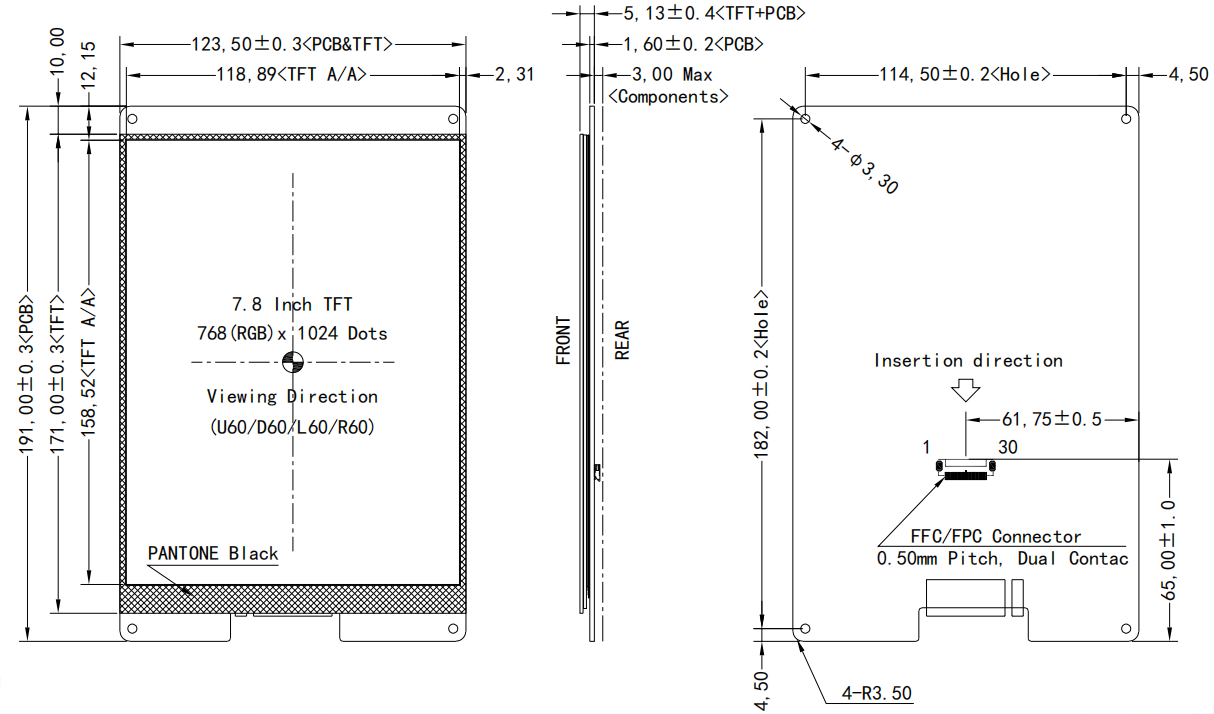
This screen features a resolution of 768(RGB)x1024, supports 16.7 million colors, and is equipped with the ILI9881 driver chip, utilizing a 4-lane MIPI interface. In terms of structure and hardware design, the module has an outline dimension of 123.5mm x 191mm, an active area (A/A) of 118.89mm x 158.52mm, and a 30-pin dual-contact FPC connector.
The design also includes a front light compensation system to enhance the visual performance of the reflective screen. Technical parameters include viewing directions of U60/D60/L60/R60, operating voltages IOVCC=1.8V and VCI=3.3V, and backlight driving conditions of 60mA current and 18.0V to 20.0V voltage. The module offers excellent environmental adaptability, with an operating temperature range of -20°C to +70°C and a storage temperature range of -30°C to +80°C, making it suitable for stable operation in various industrial or portable devices.
Reflective LCD Core Features and Key Advantages
Reflective LCD Display Technology
This module adopts a normally white reflective full-color LCD panel, capable of delivering true color reproduction with up to 16.7 million colors (8-bit). Compared to traditional monochrome e-paper displays, this Reflective LCD supports smooth dynamic refresh rates for detailed color images and video. In contrast to conventional transmissive TFT color screens, its readability under direct sunlight is exponentially better, completely eliminating the problem of the screen appearing dark or illegible in bright outdoor conditions.
High-Efficiency 4-Lane MIPI DSI Interface
To support high-definition streaming at 768(RGB)x1024 pixels, the module is powered by the widely used ILI9881 driver chip and features a MIPI 4-lane high-speed digital serial interface. The MIPI interface not only provides high data bandwidth for flicker-free dynamic refresh but also offers low EMI and low power consumption bus design, complementing the energy-saving characteristics of the Reflective LCD.
Flexible Lane Swap on FPC
During PCB hardware development, routing high-speed differential signals is often constrained by limited space on the mainboard. This Reflective LCD module offers significant flexibility in its underlying protocol and hardware design: the MIPI data lane hardware channel sequence supports exchangeable mapping. Engineers can directly optimize routing based on the main chip’s pin layout without complex cross-layer or zigzag traces, greatly improving signal integrity and shortening development cycles.
Front Light Compensation and All-Weather Dual-Mode Switching
Pure reflective screens are unreadable in dark environments without light. This module integrates a precision front light compensation system, effectively adding a night-time illumination layer for the Reflective LCD. During the day, it operates in pure reflective mode with near-zero LED power consumption. At night, the front light can be activated to provide low-glare, readable illumination, enabling seamless all-weather, all-scenario application.
Excellent Wide-Temperature Industrial-Grade Tolerance
Unlike ordinary consumer-grade displays, this Reflective LCD module is built for harsh environmental conditions. Its operating temperature ranges from -20°C to 70°C, and storage temperature from -30°C to 80°C, allowing it to reliably function in extreme cold, heat, and other challenging outdoor industrial or field environments.
Interface and Detailed Pin Descriptions
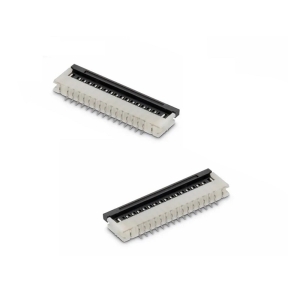
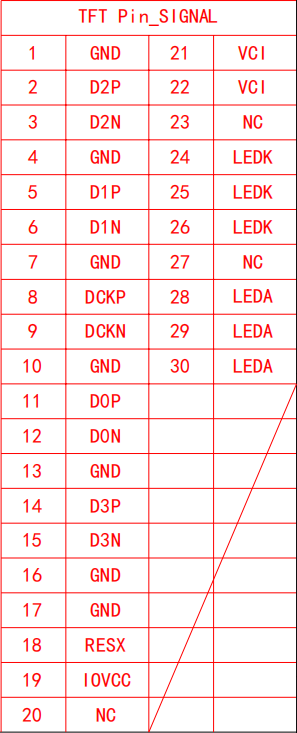
The module connects to the mainboard via a 0.50mm pitch 30-pin dual-contact FPC/FFC connector.
Reflective LCD Application Scenarios
Thanks to its ultra-low power consumption, full sunlight readability, and excellent temperature tolerance, this 7.8-inch display module is widely used in various high-end industrial and consumer devices:
- Outdoor Rugged Handheld Terminals and Surveying Instruments: GPS survey equipment, geological exploration devices, power inspection PDAs. In direct sunlight without shade, the stronger the sunlight, the clearer the Reflective LCD image, solving the industry-wide problem of unreadable screens in field operations.
- Green Low-Power Portable Devices: E-book readers, color e-paper alternatives, long-endurance outdoor tablets. These devices offer low visual fatigue similar to paper while maintaining 60fps dynamic video refresh rates, overcoming the slow refresh and color ghosting issues of traditional e-ink.
- Industrial Automation and Vehicle Instrumentation: Open-air factory control panels, motorcycle outdoor color dashboard displays. Stable operation under extreme temperature variations from -20°C to +70°C.
- Low-Carbon Smart Cities and Outdoor Signage: Bus stop information displays, smart charging station terminals, outdoor vending machine screens. Relying on natural light reflection for display, the front light can be turned off during the day, significantly reducing municipal and commercial electricity costs.
Reflective LCD Technical Q&A
Q1: What is Reflective LCD, and how is it fundamentally different from traditional transmissive LCD?
A1: A Reflective LCD does not contain a high-power backlight. Instead, it integrates a highly reflective mirror structure behind the liquid crystal layer.
Traditional transmissive LCDs rely on internal LED backlight shining through the liquid crystal layer to reach the eye. In strong outdoor sunlight, the backlight intensity cannot compete with ambient light, making the screen appear dark, reflective, and illegible.
A Reflective LCD uses external ambient light (e.g., sunlight, room light) that enters the screen, is modulated by the liquid crystals, and is then reflected back to the eye by the reflective layer. The stronger the ambient light, the brighter and clearer the reflected image. This provides excellent sunlight readability and extremely low static power consumption.
Q2: The module supports MIPI data lane sequence swapping (Lane Swap). What does this mean for hardware design and software driving?
A2: In traditional MIPI PCB layout, the differential pin order on the SoC (e.g., D0, D1, D2, D3) is typically fixed. If the display’s pin order does not match the chip, engineers must route traces with frequent vias, crossovers, and layer changes on the PCB, which can easily cause impedance mismatch and EMI issues on high-speed differential buses.
This Reflective LCD module supports exchangeable MIPI data lane sequences. This means you can connect D0–D3 to the display FPC pins in the most direct, shortest, non-crossing manner based on the physical placement of the main chip on the PCB. After hardware connections are made, you only need to modify the corresponding lane mapping control bits in the initialization code (within the ILI9881 chip’s configuration registers) to perform software-level lane calibration. This greatly improves hardware system robustness and design flexibility.