When Should You Use a Transflective Display?
If a device needs to operate under indoor lighting, outdoor daylight, or even direct sunlight, a conventional Transmissive LCD often requires a high-brightness backlight to maintain readability. A purely Reflective LCD, on the other hand, may not provide sufficient visibility in low-light or nighttime conditions. This combination of lighting environments is where a Transflective Display should be considered.
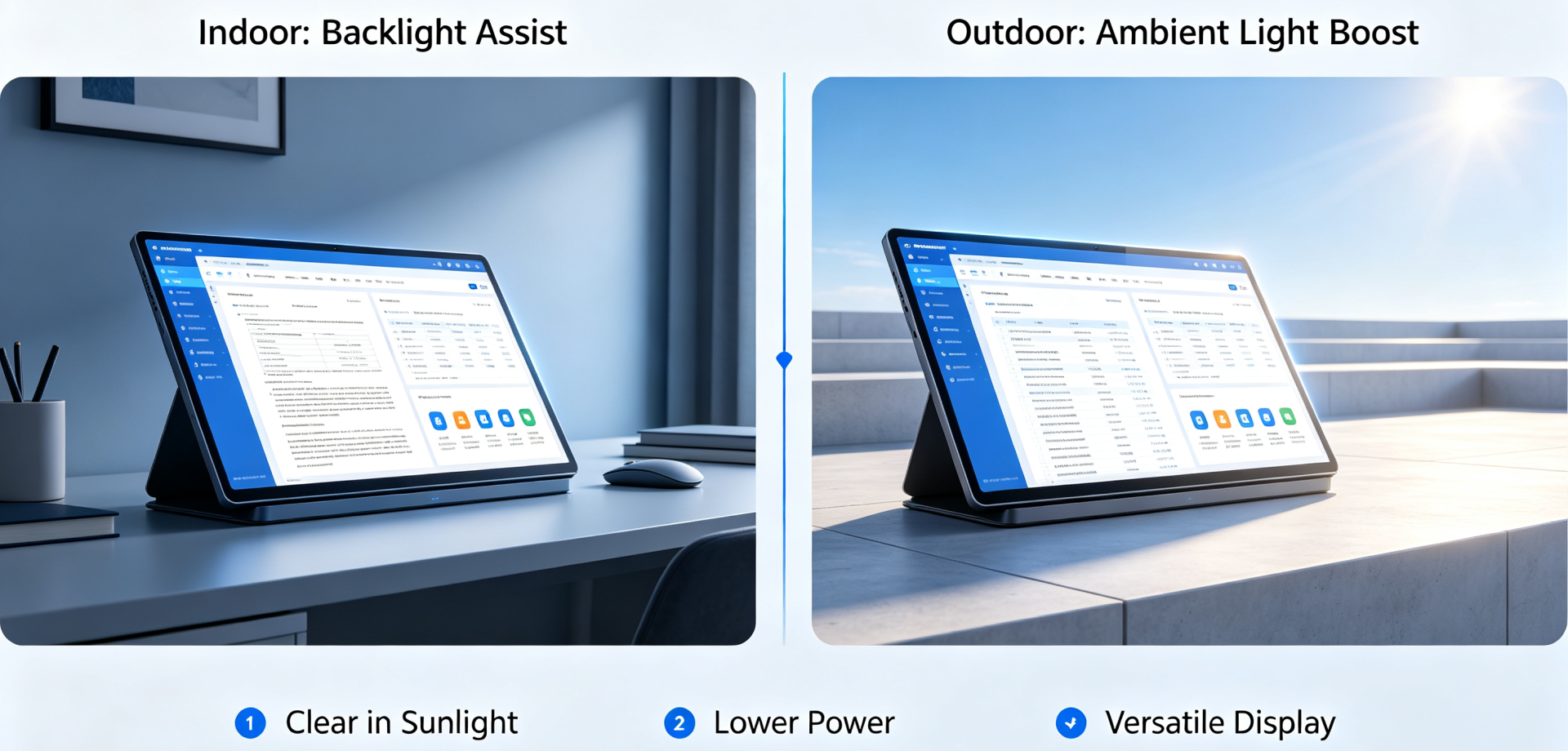
A Transflective Display uses both ambient-light reflection and backlight transmission. Under strong ambient light, the display can use available light to improve visibility while reducing backlight brightness or, under certain conditions, turning the backlight off. When ambient light is insufficient, the backlight provides the illumination required for readable content.
For engineers, deciding whether to use a Transflective Display should not be based only on whether the product is used outdoors. Environmental illuminance, day-and-night operation, power consumption, display content, screen size, brightness, and the mechanical structure of the complete device should all be considered.
How Does a Transflective Display Work?
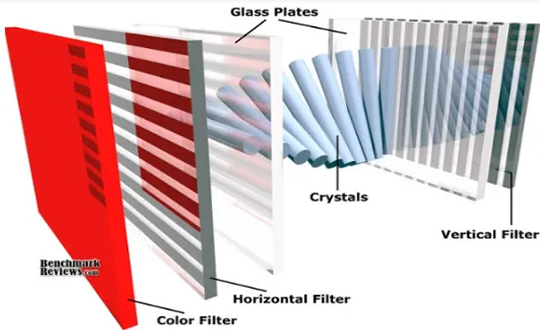
An LCD does not generate light by itself, so an external light source is required to make the displayed image visible. A Transflective Display incorporates an optical layer with partial reflective and transmissive properties into the LCD optical structure. This allows the display to use ambient light from the front while also allowing light from the backlight to pass through the display area.
In strong outdoor light, ambient light enters the display panel and follows the reflective optical path to produce a visible image. The backlight can then be dimmed, and under certain conditions, it can even be turned off.
When the device moves indoors, into cloudy conditions, nighttime operation, or another low-light environment, ambient light is no longer sufficient. The backlight is turned on to maintain image readability through the transmissive optical path.
This operating principle differs significantly from the two conventional LCD optical modes:
| Display Mode | Main Light Source | Strong-Light Environment | Low-Light Environment | Typical Considerations |
|---|---|---|---|---|
| Transmissive LCD | Backlight | Requires higher backlight output and optical optimization | Stable performance | Power consumption, heat generation, backlight brightness |
| Reflective LCD | Ambient light | Good readability | Readability decreases | Very low power consumption, dependence on ambient light |
| Transflective Display | Ambient light + backlight | Can make use of reflected ambient light | Can use the backlight for display | All-day operation, balance between power consumption and optical performance |
The core value of a Transflective Display is not simply higher brightness. It allows the display system to change its primary illumination method according to the surrounding light conditions.
When Should You Use a Transflective Display?
The Device Needs to Operate Both Indoors and Outdoors
This is one of the most typical situations for using a Transflective Display.
For example, a handheld testing instrument may be used inside a laboratory and then taken outdoors for field testing. Indoors, the device needs a backlight to maintain display visibility. Under outdoor sunlight, it can make use of ambient light while reducing the reliance on the backlight.
If a product is designed exclusively for indoor environments, a conventional Transmissive TFT LCD is usually sufficient. If it operates only under strong ambient light and does not need to be used at night, a Reflective LCD may also be a suitable option.
A Transflective Display becomes particularly relevant when the lighting conditions of the device change significantly during operation.
The Product Must Remain Readable in Sunlight Without Sacrificing Nighttime Operation
Outdoor use does not necessarily mean that a device operates outdoors throughout the entire day.
For example, handheld GPS terminals, outdoor testing instruments, portable measurement equipment, marine control devices, and some industrial handheld terminals may operate under direct sunlight during the day and later be used indoors, inside a vehicle, or at night.
A purely Reflective Display can perform well under strong ambient light, but its display capability is limited when the surrounding light becomes insufficient. A Transflective Display can use the backlight to address this limitation, making it more suitable for equipment that needs to operate across both daytime and nighttime conditions.
The Product Is Battery-Powered and Needs to Reduce Backlight Operating Time
For battery-powered equipment, display power consumption needs to be included in the overall system power budget.
With a conventional high-brightness Transmissive LCD, outdoor operation generally requires a higher backlight level to maintain readability against strong ambient light. This increases LED backlight power consumption and may also add thermal management requirements to the display module and the complete device.
A Transflective Display can reduce backlight power when sufficient ambient light is available and, under certain conditions, turn the backlight off. This can reduce the amount of time the backlight needs to operate. However, the actual power savings depend on factors such as display size, backlight specifications, brightness settings, ambient illuminance, and the device’s operating cycle. It should not be assumed that every transflective display will always consume less power than a conventional TFT.
The Operating Environment Does Not Have a Fixed Light Level
If the operating environment can be strictly controlled, such as a laboratory, office, indoor medical device, or fixed industrial control cabinet, engineers can more easily achieve stable display performance by setting a fixed backlight level, ambient lighting condition, and display parameters.
Mobile equipment is different. The surrounding light can change quickly from around 500 lux indoors to tens of thousands of lux outdoors. In this situation, relying only on a fixed backlight setting is not always practical.
The advantage of a Transflective Display is that it can make use of different lighting conditions instead of relying entirely on the backlight to generate the required display illumination.
Which Products Are Suitable for a Transflective Display?
In actual projects, the following types of equipment are worth considering:
Outdoor Handheld Instruments
Examples include portable data collectors, field testing instruments, industrial measurement devices, and maintenance terminals. These products are often used by engineers outdoors to check parameters and then indoors for configuration or data review.
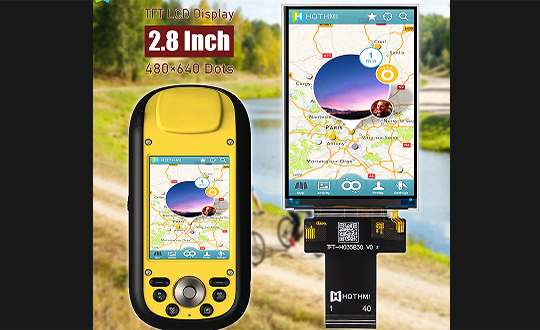
GPS and Navigation Equipment
Navigation equipment may be exposed to indoor lighting, vehicle interiors, outdoor environments, and direct sunlight. The display needs to maintain basic readability for maps, coordinates, status information, and menu content under different lighting conditions.
Marine Display
Marine control equipment, navigation instruments, and portable marine testing equipment are commonly used outdoors and may also operate inside a cockpit or under low-light conditions. In these applications, both sunlight readability and nighttime visibility need to be considered.
Industrial Portable Terminals
Examples include field maintenance terminals, handheld controllers, portable PLC debugging equipment, and industrial data acquisition devices. These products often need to operate across outdoor work areas, factory lighting, and low-light environments.
Outdoor Measurement and Instrumentation Equipment
Flow meters, pressure testing instruments, environmental monitoring devices, and portable test equipment may need to display numerical values, curves, or status information under different lighting conditions. For these products, the optical mode of the display can directly affect field operation and readability.
How Should You Choose Between a Transflective Display and a High-Brightness TFT LCD?
Both solutions can be used for outdoor displays, but they rely on different design approaches.
A High-Brightness TFT LCD mainly improves visibility by increasing backlight brightness and creating a greater luminance difference between the displayed content and the surrounding light. For fixed outdoor equipment or products that require bright color graphics, this can be a practical option.
A Transflective Display uses both reflective and transmissive optical paths. Under strong ambient light, the display can make use of available environmental light. Under low-light conditions, the backlight provides the required illumination. This makes the technology more suitable for devices that experience significant changes in ambient lighting.
During selection, engineers should not compare solutions only by individual parameters such as 600 cd/m² or 1000 cd/m². Reflectivity, contrast ratio, cover glass reflection, polarizer characteristics, backlight power consumption, optical bonding, and actual display performance under the target lighting conditions should also be evaluated.
When Do You Not Need a Transflective Display?
Not every outdoor device requires a Transflective Display.
If a product operates indoors more than 90% of the time and requires high color performance, brightness, and dynamic image quality, a conventional Transmissive TFT LCD may already meet the requirements.
If a device operates only in strong daylight and rarely needs to display information at night, a Reflective LCD may be more suitable for low-power operation.
In addition, the optical structure of a Transflective Display requires a balance between reflective and transmissive performance. Compared with display solutions optimized for a single optical path, its color performance, brightness, and cost need to be evaluated according to the specific product. The final performance should not be determined simply by the display technology name.
How Can Engineers Determine Whether a Project Needs a Transflective Display?
Start by answering the following questions:
- Does the product need to move between indoor and outdoor environments?
- Will the display be exposed directly to sunlight?
- Does the device need to operate at night or under low-light conditions?
- Is the product battery-powered?
- Is it necessary to reduce backlight power under high ambient light?
- Does the product require a color TFT graphical interface?
- Does the product need to operate continuously for long periods?
- Has backlight power consumption become a limitation in the overall system design?
If several of these conditions apply at the same time, a Transflective Display is worth including in the prototype evaluation stage.
Final selection should still be based on actual sample testing. Engineers should test the display with the target cover glass, touch structure, mounting angle, and actual light sources rather than relying only on a single brightness specification in the LCD datasheet. Display performance is affected by the complete optical stack, especially under strong ambient light.
FAQ: About Transflective Displays
Q1: Can a Transflective Display still show content in a completely dark environment?
Yes, but the backlight needs to be turned on. A Transflective Display does not rely entirely on ambient light like a Reflective LCD. Its transmissive optical path allows the backlight to provide illumination when ambient light is insufficient.
Q2: Is a Transflective Display always more power-efficient than a High-Brightness Display?
Not necessarily. Its potential power-saving advantage mainly comes from reducing or turning off the backlight when sufficient ambient light is available. If the device operates mainly in low-light conditions, the backlight still needs to remain on. Actual power consumption should be calculated based on the display size, LED parameters, and backlight driving conditions.
Q3: Can a Transflective Display completely eliminate reflections in sunlight?
It should not be understood that way. A Transflective Display can make use of ambient light to improve display readability, but the final result is also affected by cover glass reflection, surface treatment, viewing angle, display contrast, and actual lighting conditions. Products designed for strong outdoor light should still undergo complete system testing.
Conclusion
When should you use a Transflective Display? When a device needs to handle both strong ambient light and low-light conditions while maintaining readability and controlling backlight power consumption, a Transflective Display is a display solution worth evaluating.
It is particularly suitable for outdoor handheld devices, industrial instruments, Marine Display applications, GPS/navigation equipment, portable testing instruments, and other embedded terminals designed for both daytime and nighttime operation.
However, a Transflective Display is not a fixed solution for every outdoor project. Engineers still need to evaluate the display size, resolution, backlight brightness, reflective performance, power consumption, operating temperature, touch structure, and cover glass design as part of the complete system. For projects requiring customized dimensions, interfaces, touch functions, or optical structures, the appropriate TFT LCD display solution can be selected according to the actual operating environment.