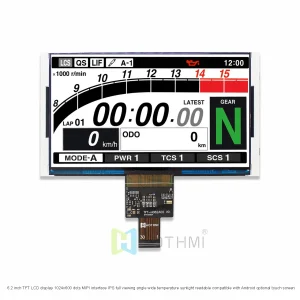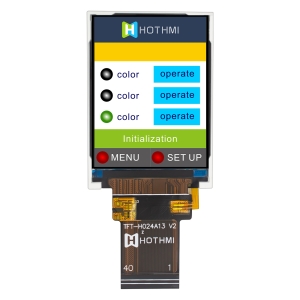
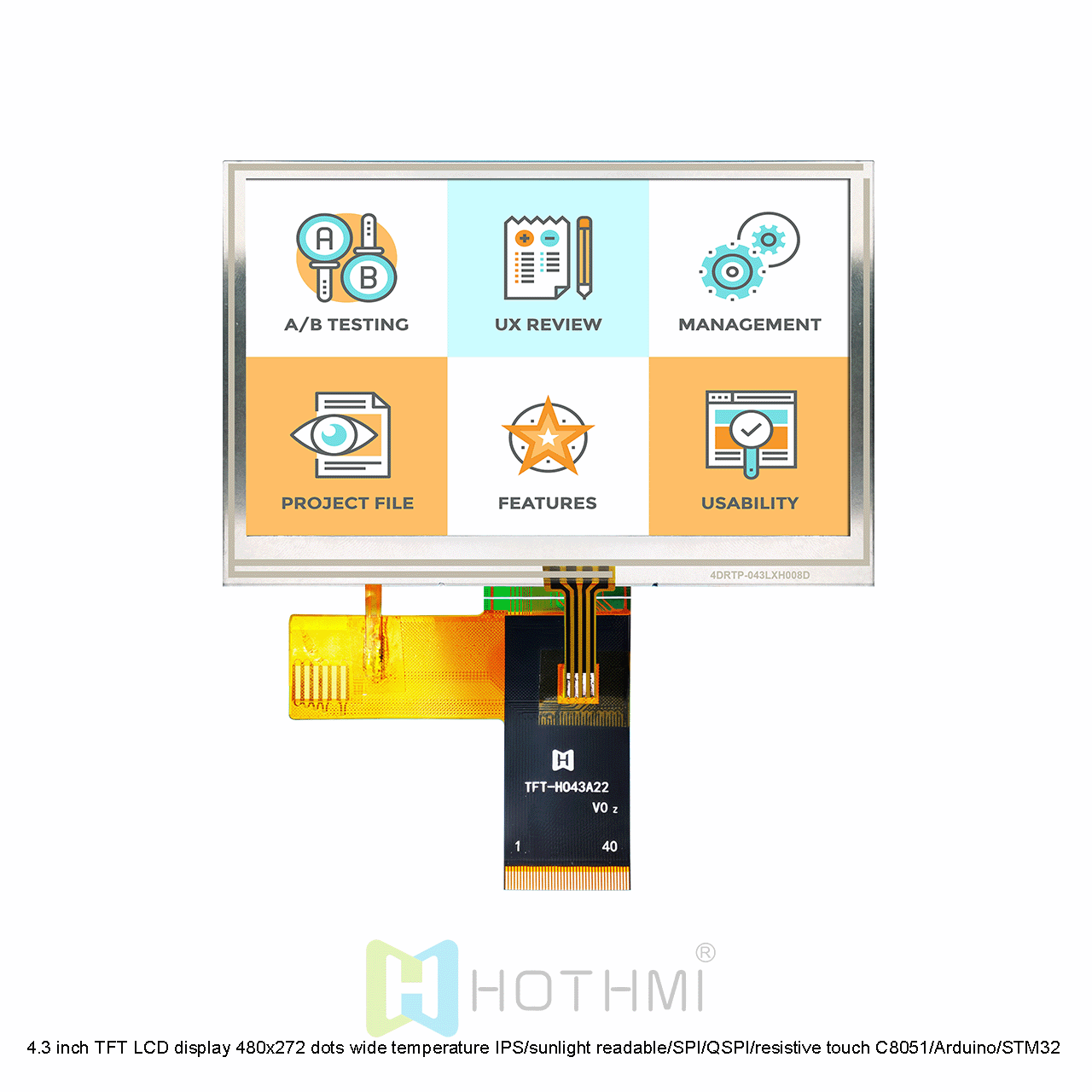
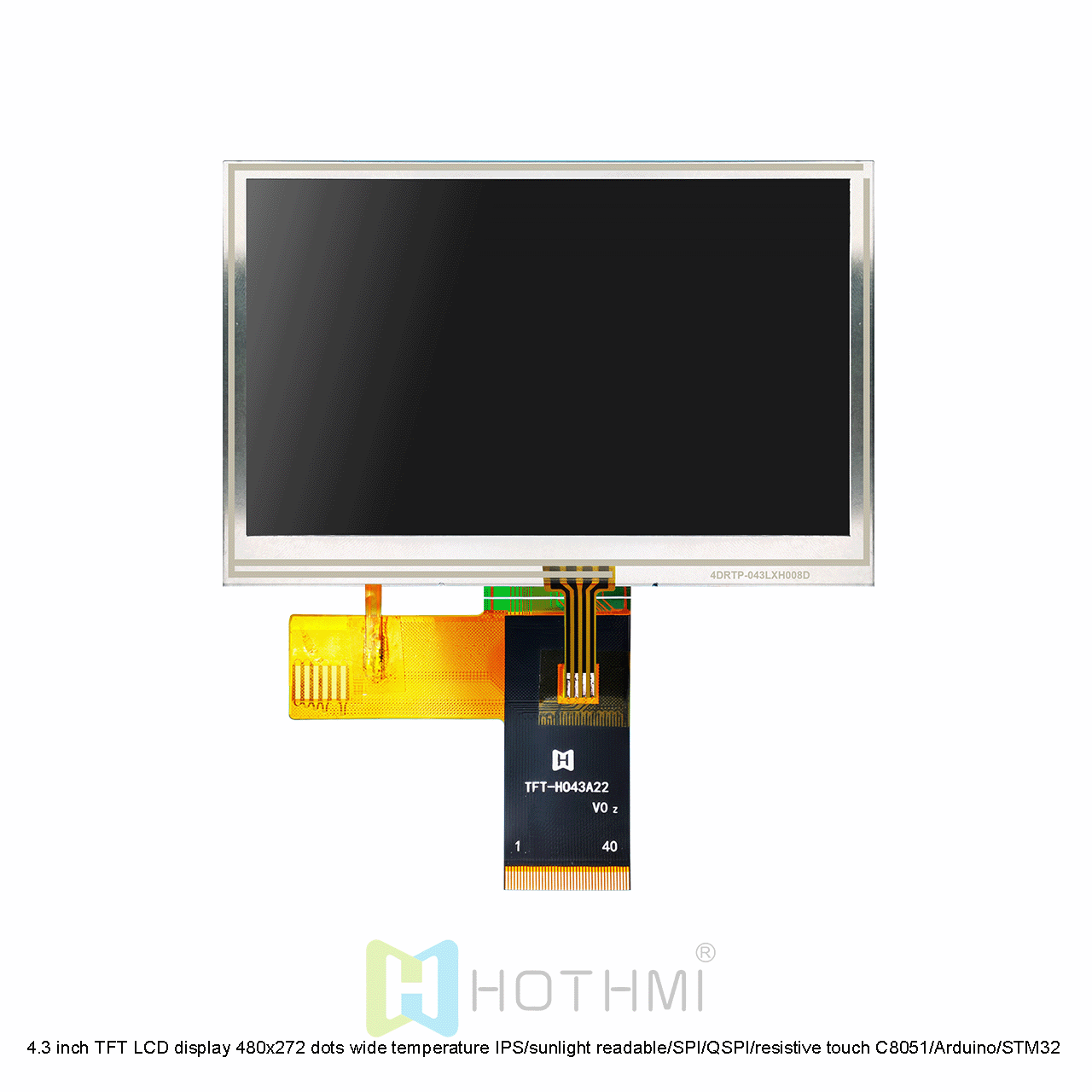
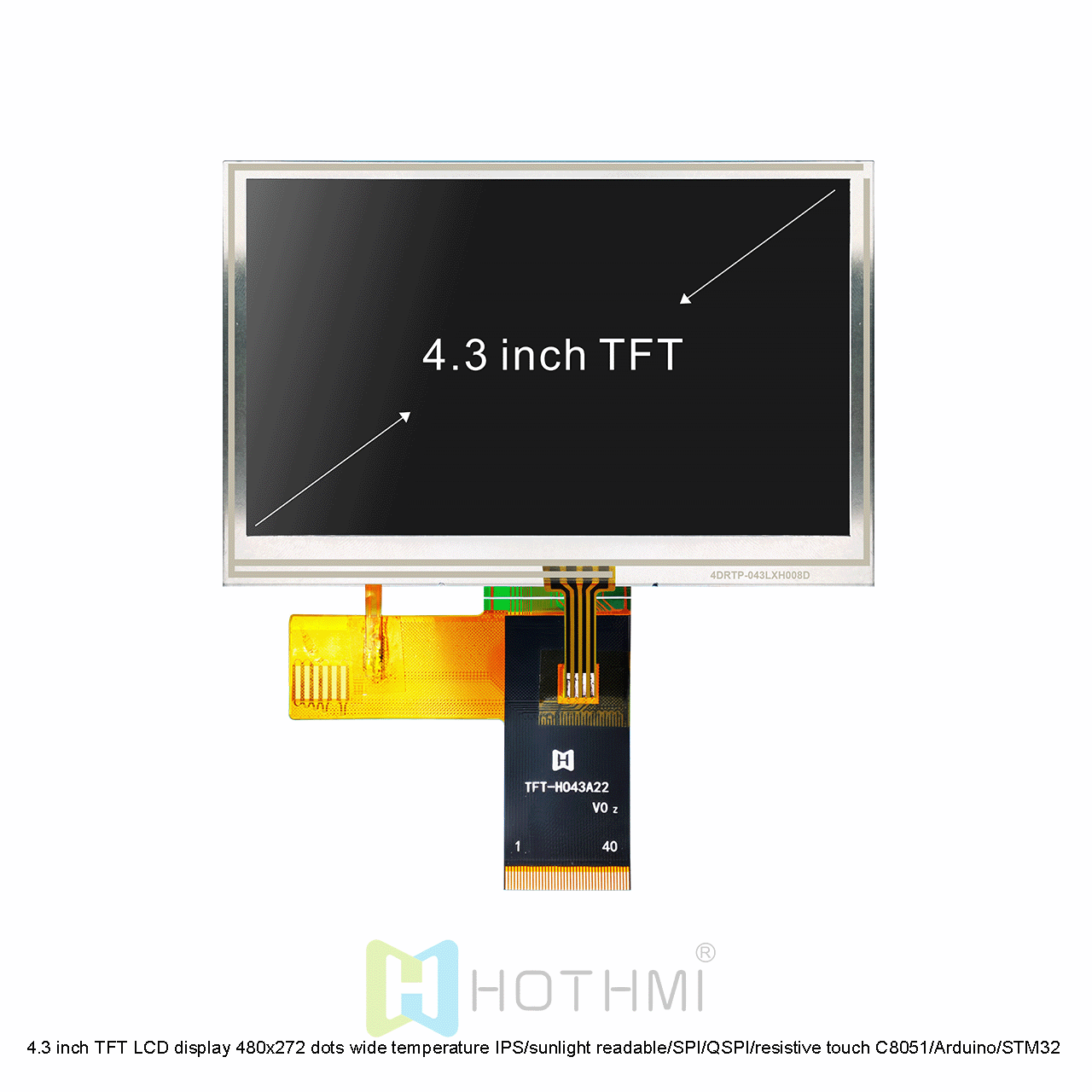
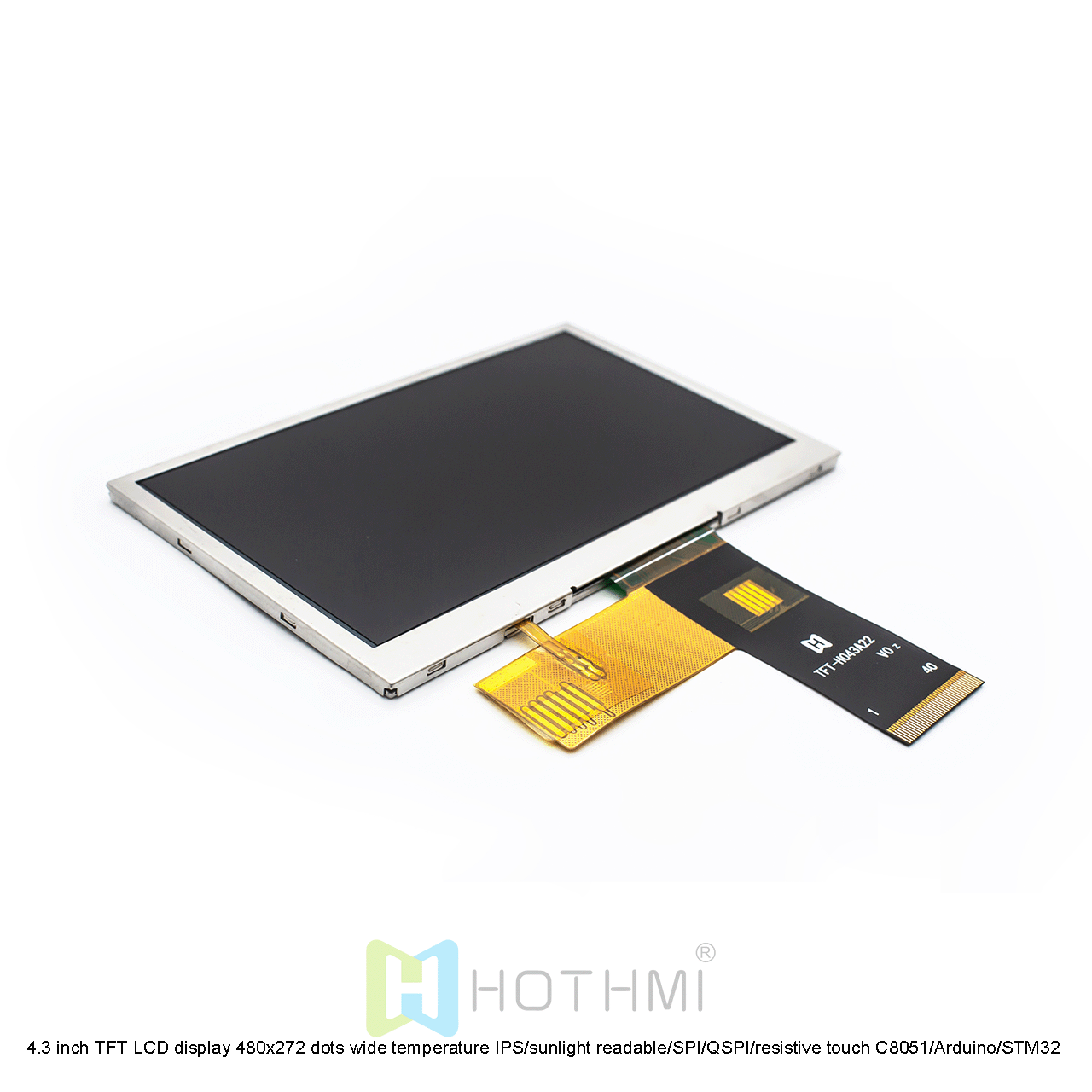
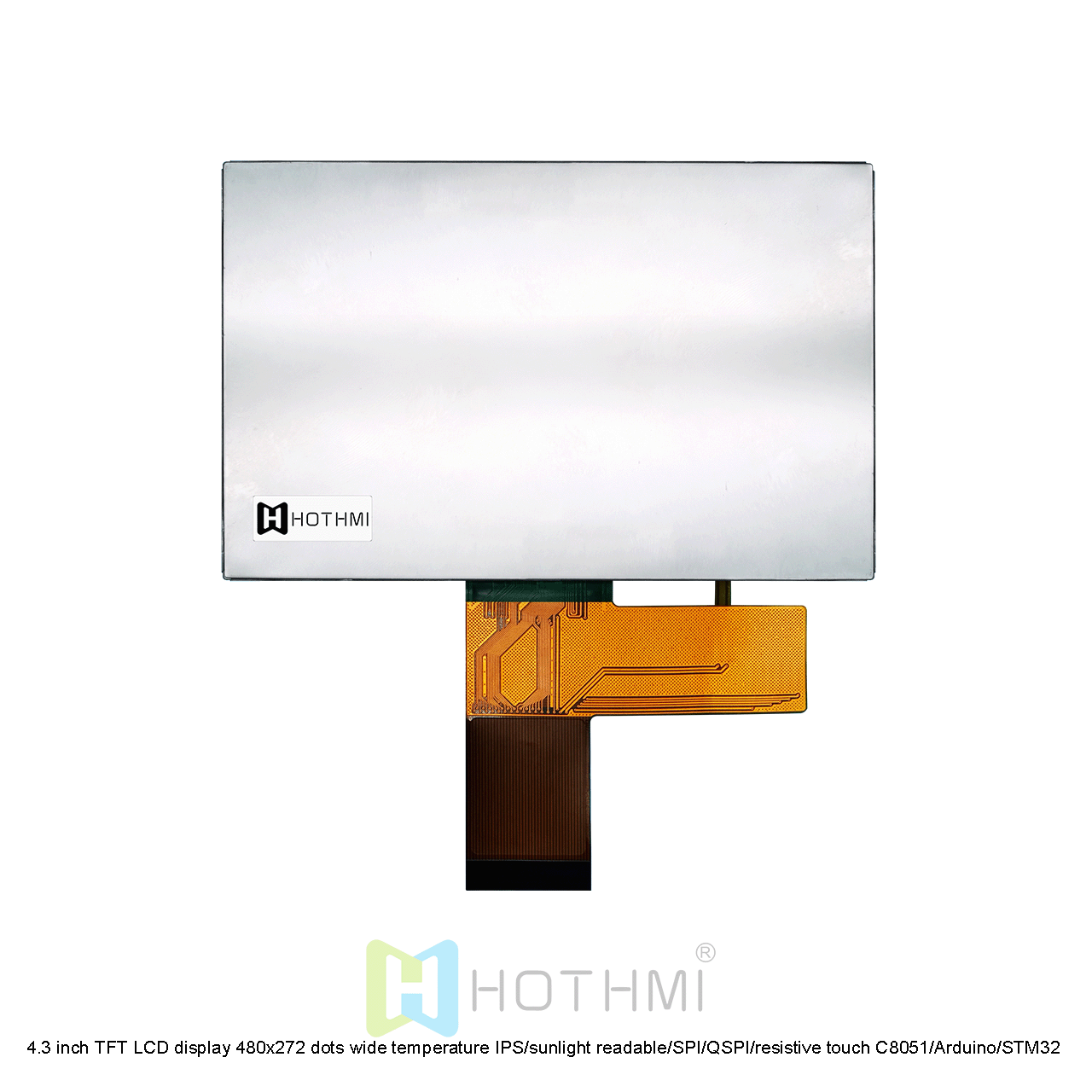
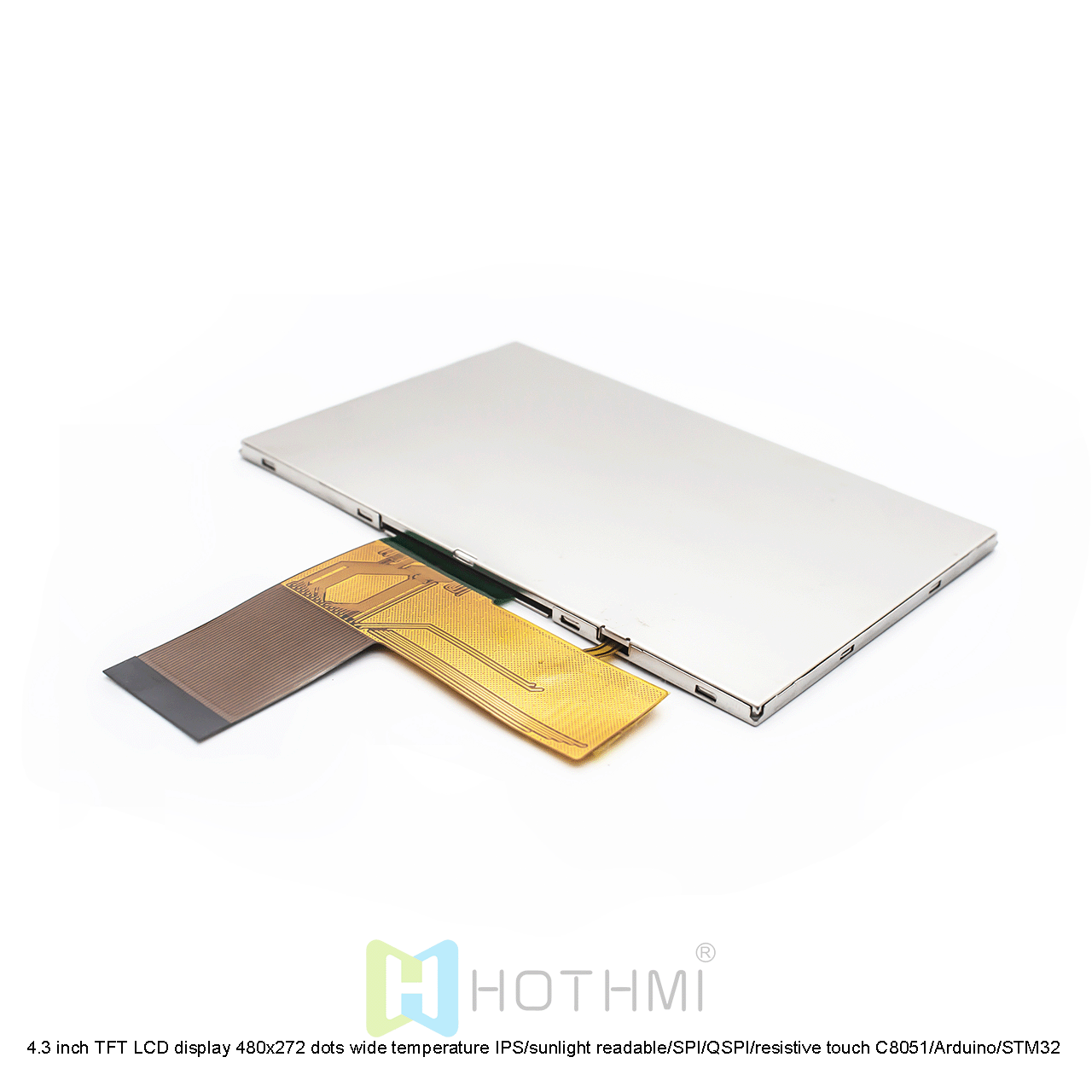
HOTHMI 4.3 inch Touchscreen Resistive 480×272
- Model: TFT-H043A22WQIST8R40
- Display pixels: 480×272 pixels
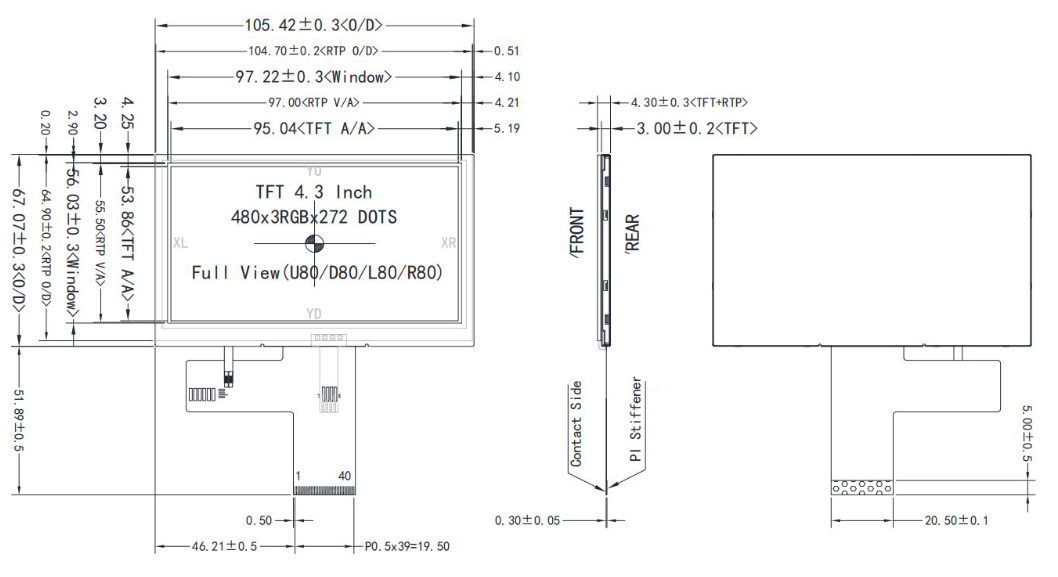
- Dimensions (mm): 105.42×67.07×4.30
- Brightness: 850 cd/m²
- Interface: SPI/Dual SPI/QSPI or MCU 8/16Bit
- Working temperature: -30℃~+80℃
- Driver chip: TBD
$28.00 – $36.00
In stock
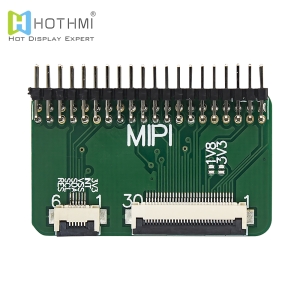
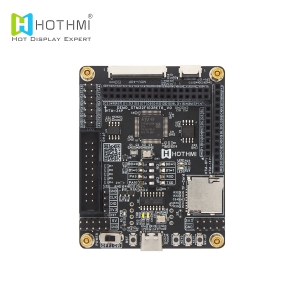
This item: HOTHMI 4.3 inch Touchscreen Resistive 480×272
$28.00 – $36.00
$28.00 – $36.00
Description
Touchscreen Resistive Product Detailed Introduction
TFT-H043A22WQINV8R40 is a 4.3-inch high-definition thin-film transistor (TFT) liquid crystal display module featuring Touchscreen Resistive technology. It adopts a full-viewing-angle design and delivers an outstanding resolution of 480×3RGB×272 pixels, reproducing 262K colors with rich saturation and lifelike image quality. In terms of hardware interfaces, this product offers exceptional versatility and compatibility, fully supporting SPI, Dual SPI, Quad SPI, and MCU 8/16-bit parallel interfaces. Its typical operating voltage is VCI=3.3V, and the backlight system consists of 12 white LEDs, which, under constant-current testing, can provide an industrial-grade brightness of up to 850 cd/m², ensuring clear visibility under various lighting conditions.
Regarding durability and environmental adaptability, this Touchscreen Resistive module operates reliably across a wide temperature range from -30°C to +80°C (storage temperature up to -30°C to 85°C), making it highly suitable for smart hardware, industrial instruments, in-vehicle displays, and other demanding applications. To accommodate different interactive use cases, three specific models are distinguished by touchscreen configuration: the KN40 version comes without a touch panel, the 8C40 version includes a capacitive touchscreen (driver chip GT911), and the 8R40 version is equipped with a Touchscreen Resistive panel.
Touchscreen Resistive Core Product Highlights
- Full-viewing-angle IPS-level display technology: breaks through the narrow viewing angles and color inversion limitations of traditional TN panels, offering an ultra-wide viewing range of 80° in all directions.
- Superior interface compatibility: not only supports traditional MCU 8-bit and 16-bit parallel interfaces but also fully accommodates highly integrated SPI, Dual SPI, and Quad SPI serial interfaces, significantly saving controller I/O pin resources.
- High-brightness sunlight-readable: even after passing through the Touchscreen Resistive stack-up, the backlight driver still delivers up to 850 cd/m² of brightness, meeting the demands of semi-outdoor or strong-light industrial environments.
- Wide-temperature industrial-grade quality: operating temperature ranges from -30°C to +80°C, and storage temperature from -30°C to +85°C, perfectly suited for extreme cold or severe hot working conditions.
Comparison of Three Model Variants
To address different application sensitivities regarding touch media and cost, HOTHMI offers three derivative models based on the same display core.
Touch Technology Differences
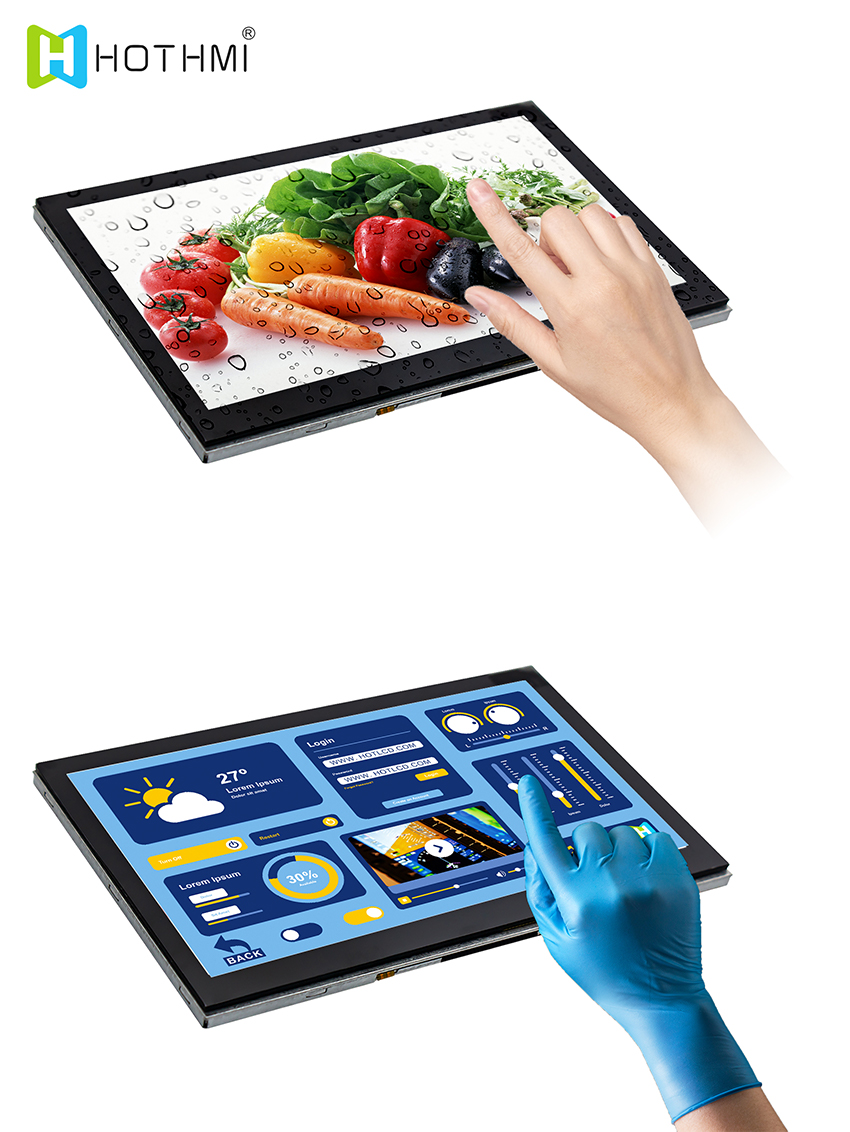
- TFT-H043A22WQIST8R40: equipped with a highly reliable Touchscreen Resistive panel. It relies on pressure to generate resistive electrical signals, and its greatest advantage is that it does not discriminate against touch media. In actual factory, in-vehicle, or medical environments, operators can achieve precise click responses whether wearing thick insulating gloves, using fingernails, or employing a dedicated stylus.
- TFT-H043A22WQIST8C40: equipped with a capacitive touchscreen based on the GT911 driver chip. It senses through the human body’s micro-electric field. Its advantages include multi-touch support, higher scratch resistance, and a clearer glass surface; however, in industrial settings, if exposed to large amounts of water, oil stains, or when operators wear thick protective gloves, touch sensitivity can be significantly degraded.
- TFT-H043A22WQISTKN40: a display-only version with no touch-trace layers on the surface. Its surface transmittance reaches the highest level, offering the most direct visual experience.
Optical Display Brightness Performance
- The display-only version, without any optical obstruction, achieves an LCM brightness of up to 1000 cd/m².
- The resistive-screen version and capacitive-screen version, due to absorption and refraction caused by touch traces and sensing layers, are both factory-calibrated to a unified whole-module output brightness of 850 cd/m².
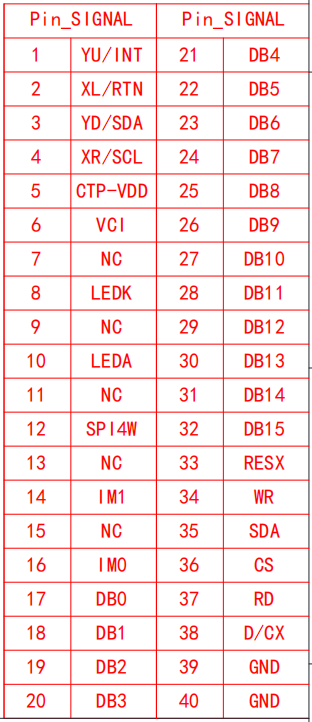
Interface Pin Description of Touchscreen Resistive
This module uses a 40-Pin flat cable interface that integrates power supply, data bus, control lines, and resistive touch pins.
Typical Application Fields
With its excellent industrial performance and integrated Touchscreen Resistive touch panel, the TFT-H043A22WQIST8R40 is widely used in complex scenarios across various industries:
- Industrial control and automation HMI panels: in CNC machines, automated injection molding machines, and PLC control cabinets that are often accompanied by substantial dust and heavy oil contamination, the resistive touchscreen ensures that workers wearing thick insulating rubber gloves can still click accurately without errors.
- Medical analyzers and monitoring terminals: the medical industry requires touch devices to withstand frequent wiping with chemical-based alcohol and disinfectants, and medical staff typically wear latex surgical gloves. This resistive touch module provides stable, media-insensitive operational responses.
- Outdoor in-vehicle and agricultural machinery terminals: the lower operating temperature limit reaches -30°C, withstanding extreme cold outdoor environments in northern regions; excellent vibration resistance allows direct integration into agricultural harvesters, specialized excavators, and forklift front-mounted control displays.
- Smart warehousing and rugged handheld PDAs: even if the screen surface suffers physical scratches from drops, the resistive sensing layer can still maintain local click and coordinate feedback, making it highly suitable for high-intensity smart logistics inventory operations.
Technical Q&A of Touchscreen Resistive
Q1: Why is the TFT-H043A22WQIST8R40 the preferred choice over the capacitive version in dusty, oily, or high-low temperature fluctuating industrial environments?
A1: This is determined by the physical characteristics of its built-in Touchscreen Resistive touch panel. Capacitive touchscreens rely on the human body’s micro-current for coupling sensing. When the surface is covered with oil, large amounts of water, or when thick gloves are worn, the electric field is severely disturbed, leading to “touch disconnection” or “drift.” In contrast, the TFT-H043A22WQIST8R40 relies on physical pressure to bring the touch-layer film into conductive contact with the glass. Therefore, whether exposed to mud contamination, heavy water splash, or operators wearing cold-weather gloves or using a stylus in extremely cold conditions, it delivers 100% stable coordinate recognition with high reliability.
Q2: Can this resistive touch module be controlled directly via the SPI serial bus? How should the pins be configured?
A2: Yes. This LCD module integrates a powerful interface conversion register internally. To use the Standard SPI protocol for control, simply configure the hardware circuit as follows: first, connect pin 12 (SPI4W) to VCI power (for 4-wire SPI mode) or to GND (for 3-wire SPI mode); then connect pins 14 (IM1) and 16 (IM0) to the appropriate logic levels according to the serial timing specifications in the data sheet. The display can then be efficiently read from and written to via the clock line (WR/SCL) and serial data line (SDA).
Additional information
| Weight | 0.5 kg |
|---|
Attributes
| Project | Parameter Description | Unit |
| TFT series | Standard TFT | |
| Diagonal size | 4.3” | Inch |
| Resolution | 480 × RGB × 272 | pixels |
| Dimensions | 105.42x67.07x4.3 | mm |
| Effective area (AA) | 95.04x53.86 | mm |
| LCD type | TFT, white, transmissive | |
| Display perspective | IPS(U80/D80/L80/R80) | |
| Aspect ratio | 1.1:2 | |
| Backlight type | LED, white | |
| TFT driver IC | TBD | |
| Touch panel | Resistive touch | |
| Surface | glossy | |
| Brightness | 850 | cd/m² |
| Operating temperature | -30°C~+80°C | °C |
| Storage temperature | -30°C~+85°C | °C |
Related products