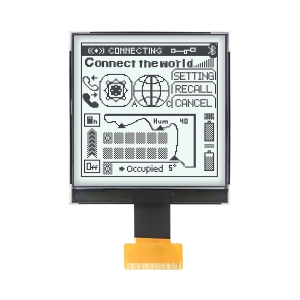
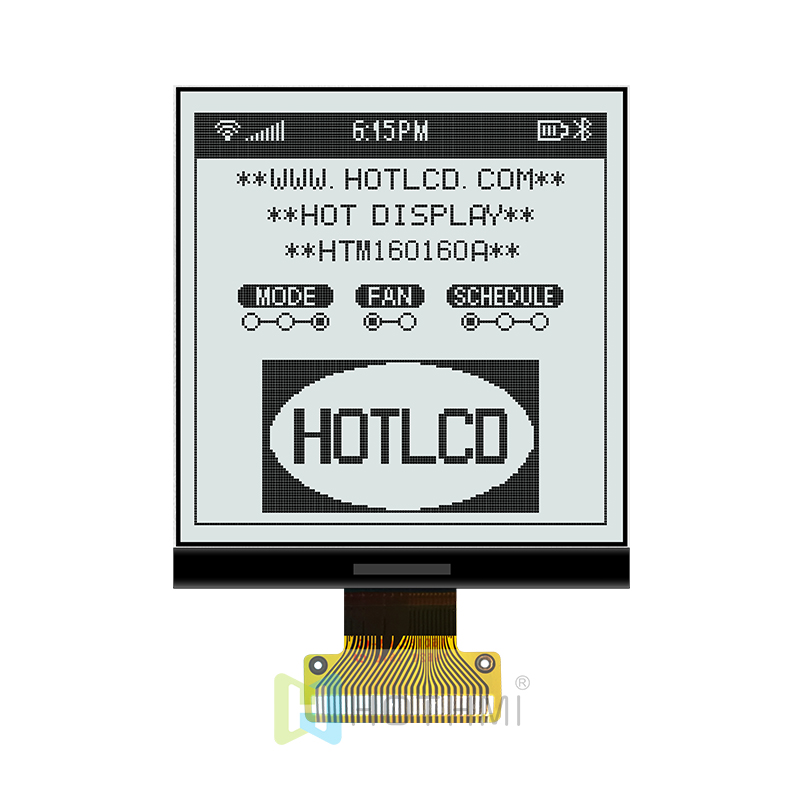
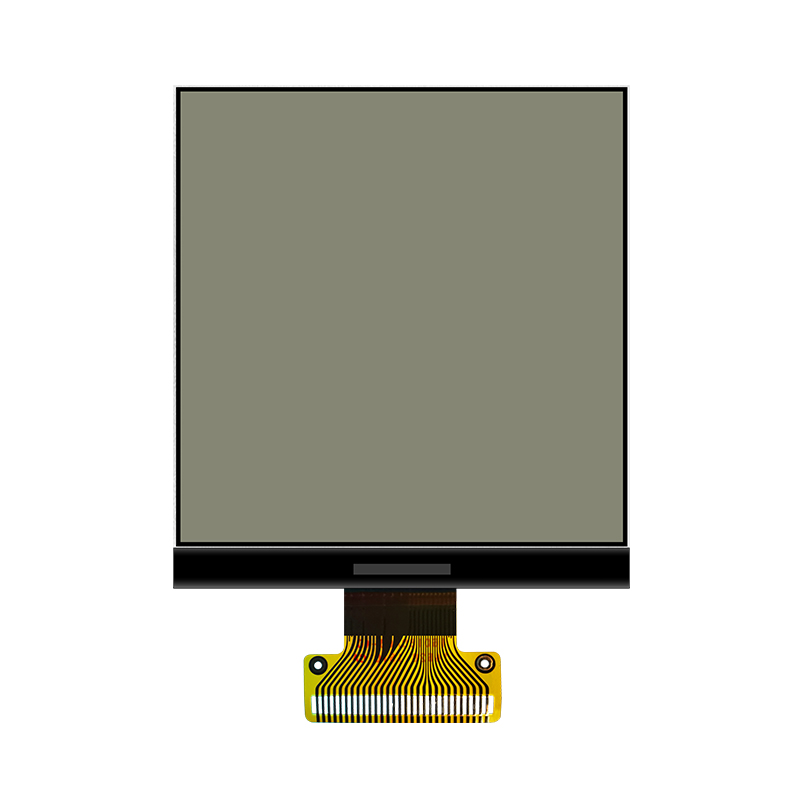
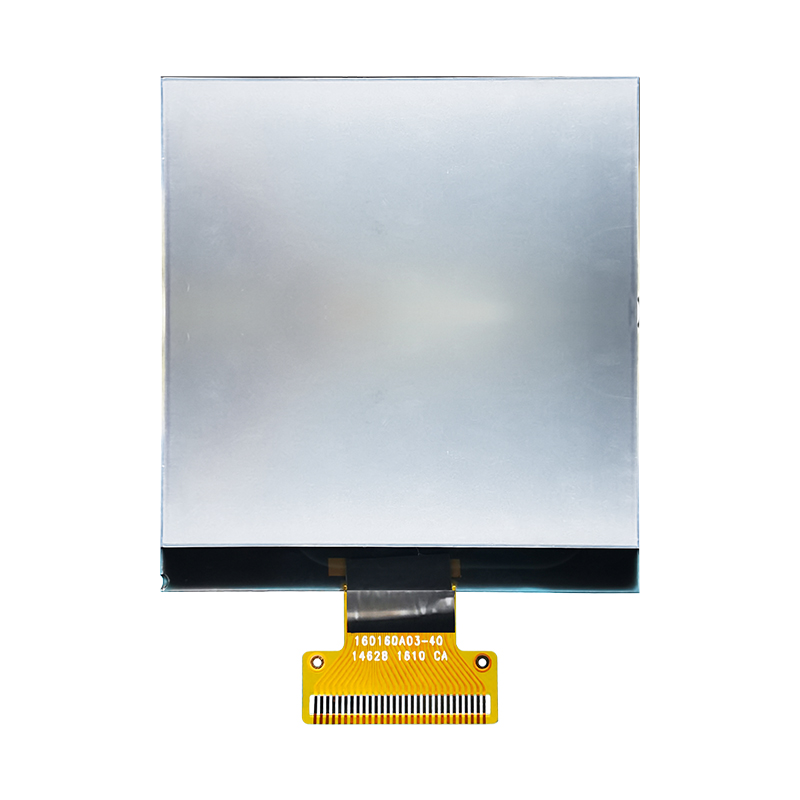
160×160 Monochrome LCD FSTN COG Graphic Display Module
- Model: HTG160160F-31W
- Type:Monochrome graphics COG
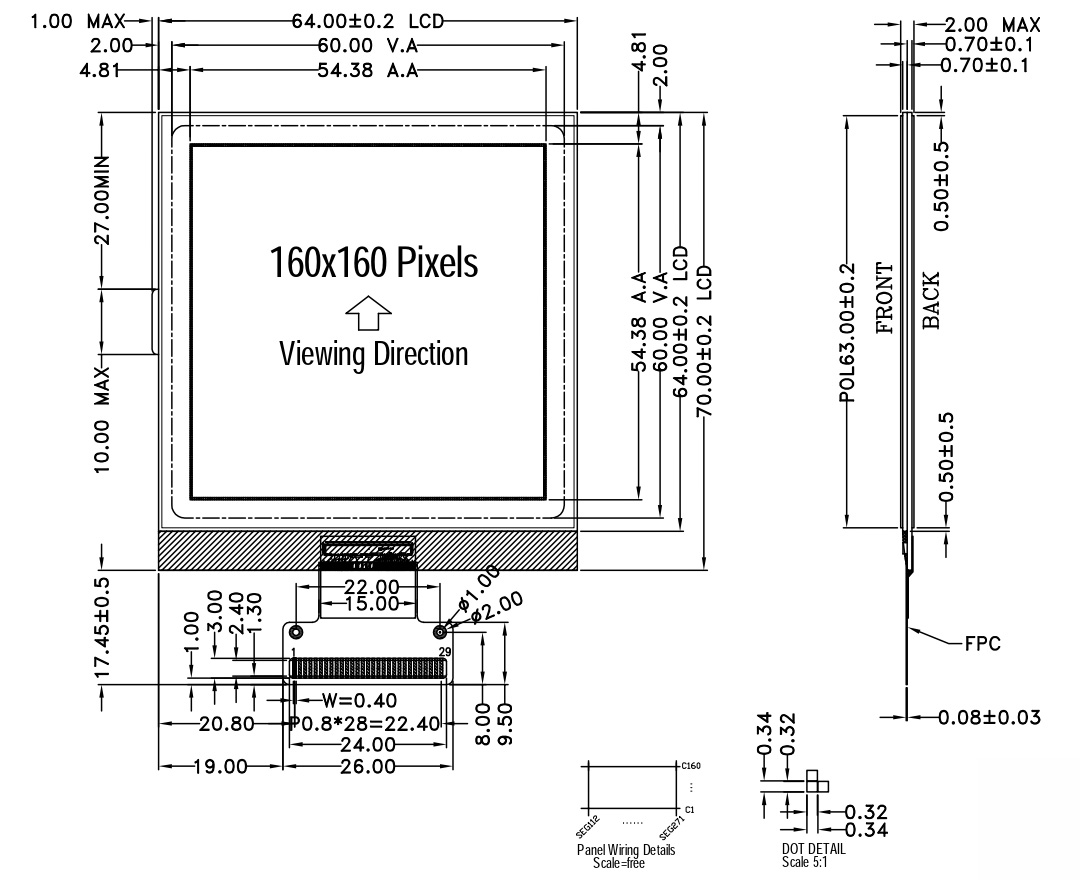
- Overall dimensions (mm): 64.0×70.0x2.0
- VA size (mm): 60.0×60.0
- Interface mode: MCU
- Working temperature: -20~70℃
- Supply voltage: 3.3v
- Driver chip: UC1698
$30.00
In stock
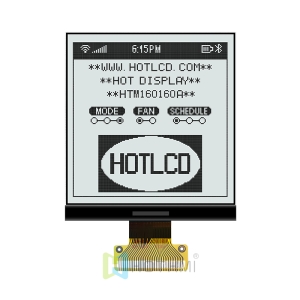
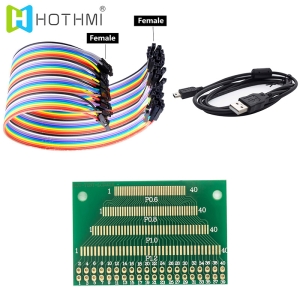
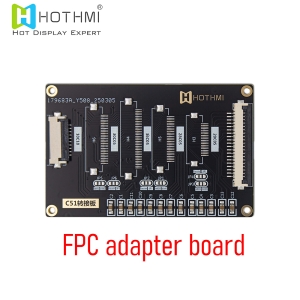
This item: 160x160 Monochrome LCD FSTN COG Graphic Display Module
$30.00
$30.00
Description
Industrial Grade 3.3 inch 160×160 Monochrome LCD Module Driver chip UC1698
In an era where embedded devices demand long battery life and high reliability, our 160×160 pixel Monochrome LCD module has become the preferred choice for various industry applications. Utilizing advanced STN/FSTN display technology combined with a precise 160×160 dot matrix layout, this LCD ensures that text, icons, and complex graphics remain sharp and legible under diverse lighting conditions.
This LCD not only excels in power management but is also deeply optimized for interface compatibility. With a 30-pin flexible circuit connection, it supports multiple driving modes including 8-bit and 16-bit parallel interfaces (utilizing pin definitions such as VB1+/VB1- and DB0-DB15), allowing engineers to quickly integrate the display into existing control systems.
Core Application Scenarios: Powering Smart Hardware
Thanks to the low power consumption and high durability of the Monochrome LCD, it is widely used in the following fields:
- Industrial Control Panels: PLC controllers, frequency converter interfaces, and CNC machine parameter monitoring.
- Medical Diagnostic Equipment: Portable ECG monitors, glucose meters, and laboratory analysis tools.
- Smart Metering: Single and three-phase smart electricity meters, water meter control units, and heat allocators.
- Automotive and Transport: Electric vehicle dashboards, charging pile displays, and On-Board Diagnostic (OBD) systems.
- Smart Home Systems: Intelligent thermostat displays and high-end kitchen appliance control panels.
Key Product Highlights: Why Choose Our Monochrome LCD?
- High Resolution Dot Matrix: The 160×160 pixel density removes the limitations of traditional character displays, supporting multi-language rendering and smooth curve drawing.
- Wide Voltage Operating Range: Supports various voltage inputs (VDD/VSS) and features an integrated VLCD regulation circuit to ensure uniform display brightness.
- Ultra-Low Power Consumption: Compared to color TFT screens, this Monochrome LCD reduces power usage by over 70% in always-on mode, significantly extending the battery life of portable devices.
- High Reliability Connection Design: Features a multi-pin gold finger design (DB0-DB15 data bus) with dedicated RST reset and CS chip select control for superior anti-interference performance.
- Enhanced Viewing Angles and Contrast: Optimized Viewing Direction technology (available in 6:00 or 12:00 orientations) ensures users receive clear readings from different perspectives.
Technical QA: Deep Dive into Monochrome LCD Specifications
Q1: What communication protocols does this 160×160 Monochrome LCD support?
A: The module is highly flexible. Through pin configuration (such as BM0 mode selection), it supports 8-bit or 16-bit parallel interfaces (DB0-DB15). It also includes dedicated control pins: WR0/WR1 for read/write control, CD for command/data switching, and CS0 for chip selection, making it compatible with mainstream ARM, STM32, or FPGA controllers.
Q2: How does the Monochrome LCD perform in low-temperature environments regarding ghosting or slow response?
A: For industrial applications, our Monochrome LCD uses wide-temperature liquid crystal materials. Furthermore, the circuit includes VLCD and VS pins, allowing users to dynamically optimize contrast by adjusting the bias voltage. This ensures a stable refresh rate even in environments ranging from -20°C to 70°C.
Q3: What is the function of pins like VB1+ and VB0+ in the pinout?
A: These are capacitor interface pins for the internal voltage booster or voltage divider circuits of the screen. A dot matrix LCD requires higher driving voltages to toggle pixels. By connecting capacitors of appropriate capacity between pins like VB1+ and VB1-, the stability of the driving waveform is guaranteed, preventing screen flickering.
Q4: Why is a Monochrome LCD often preferred over color screens in medical or power equipment?
A: The primary reasons are reliability and Electromagnetic Compatibility (EMC). The drive logic of a LCD is simple, producing extremely low electromagnetic interference that will not disrupt sensitive sensor sampling. Additionally, the lack of a complex backlight system allows for a typical lifespan of 5 to 10 years, far exceeding that of color displays.
Additional information
| Weight | 0.4 kg |
|---|
Attributes
| parameter | Specification content | unit |
| Name | HTG160160F-31W | |
| Graphic display | 160 × 160 | dots |
| Dimensions | 64.0x70.0x2.0 | mm |
| VA size | 60.0x60.0 | mm |
| AA size | 54.38x54.38 | mm |
| Pixel pitch | 0.34x0.34 | mm |
| Driver chip | UC1698 | |
| Applied voltage | 3.3V | V |
| Backlight illumination | White | |
| Display mode | FSTN+ | |
| Product type | Graphic COG | |
| Polarizer type | Transflective |
Related products