-300x300.jpg)
Description
I. Product Overview
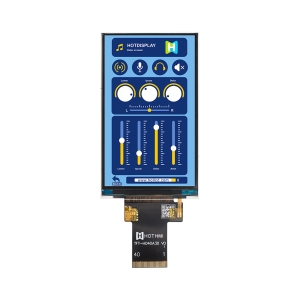
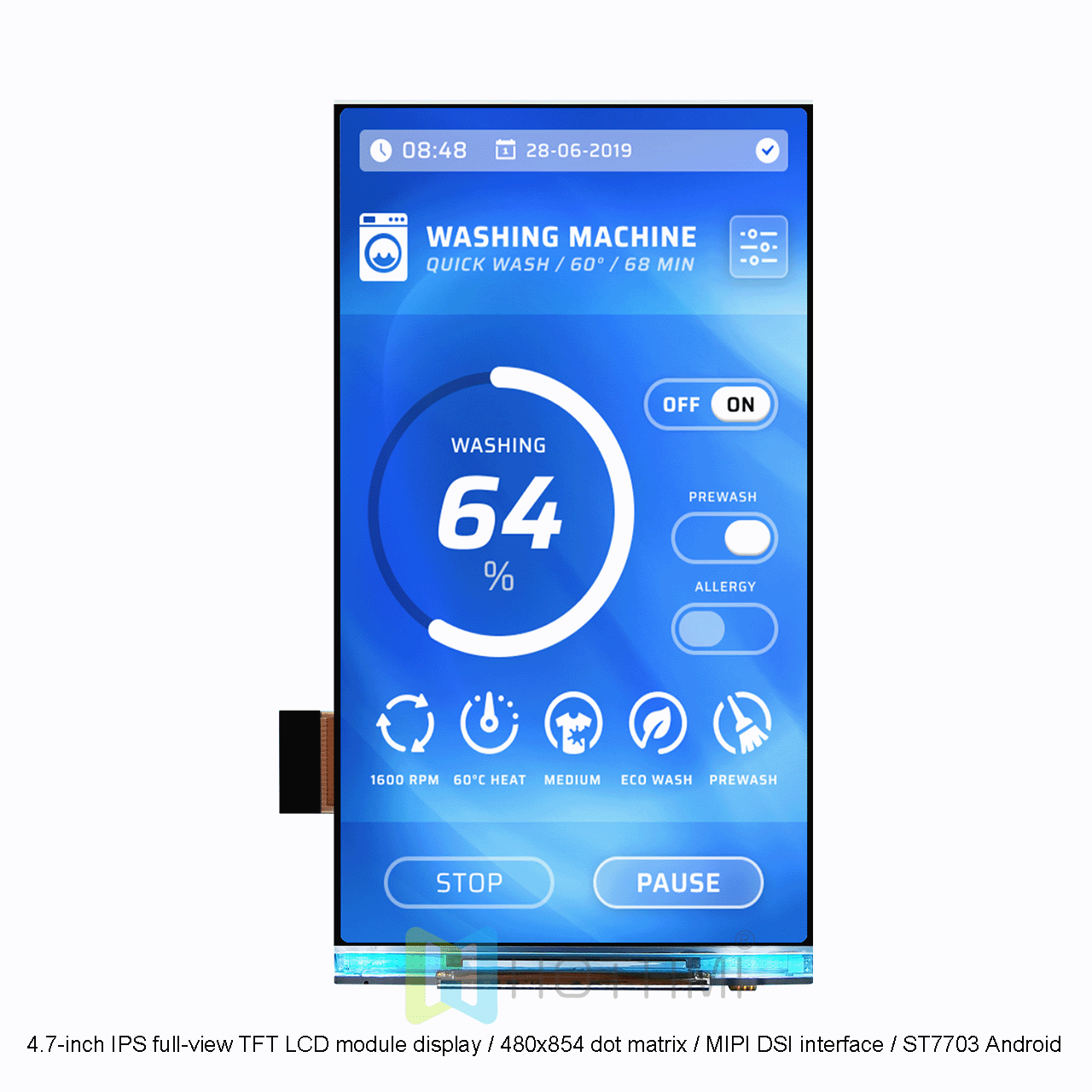
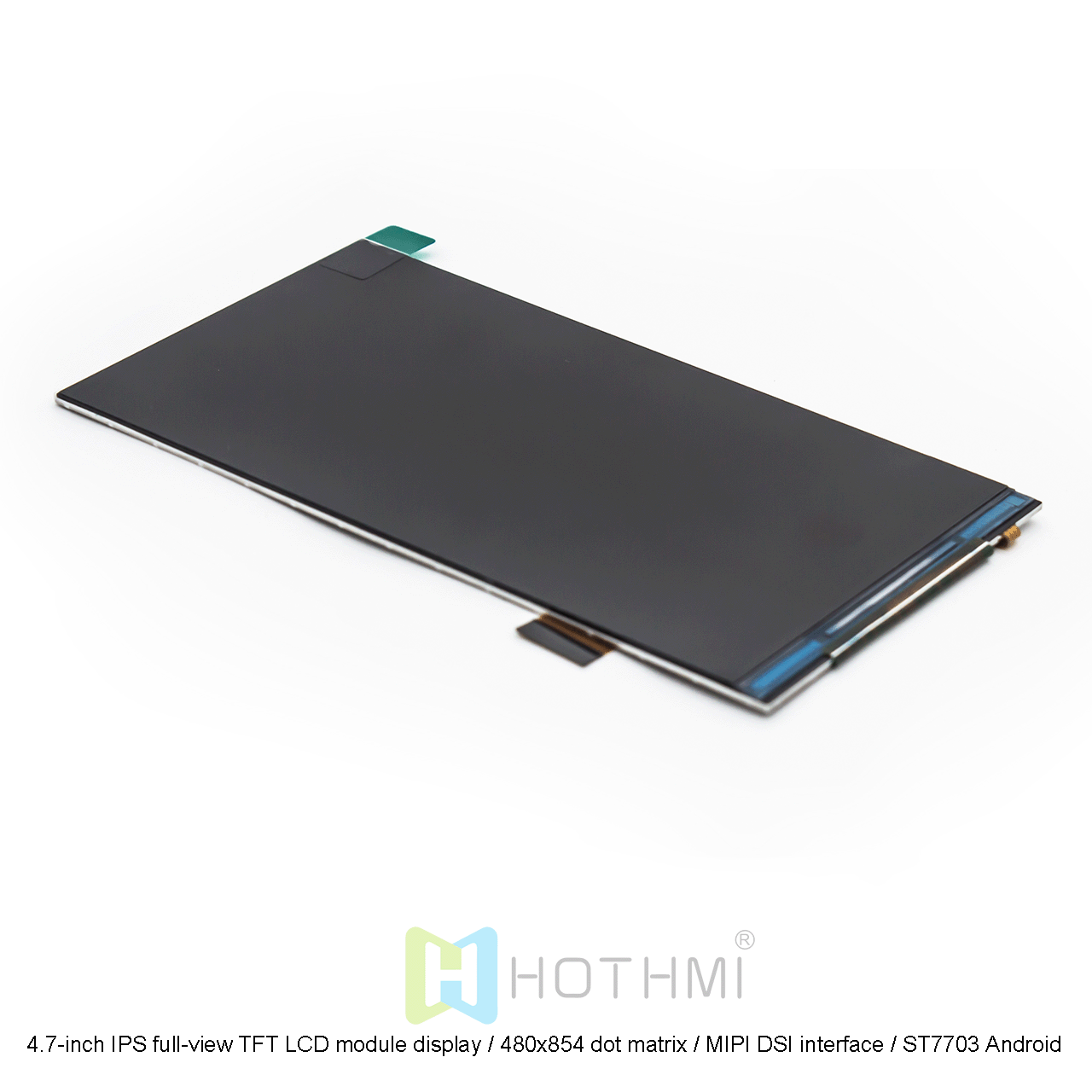
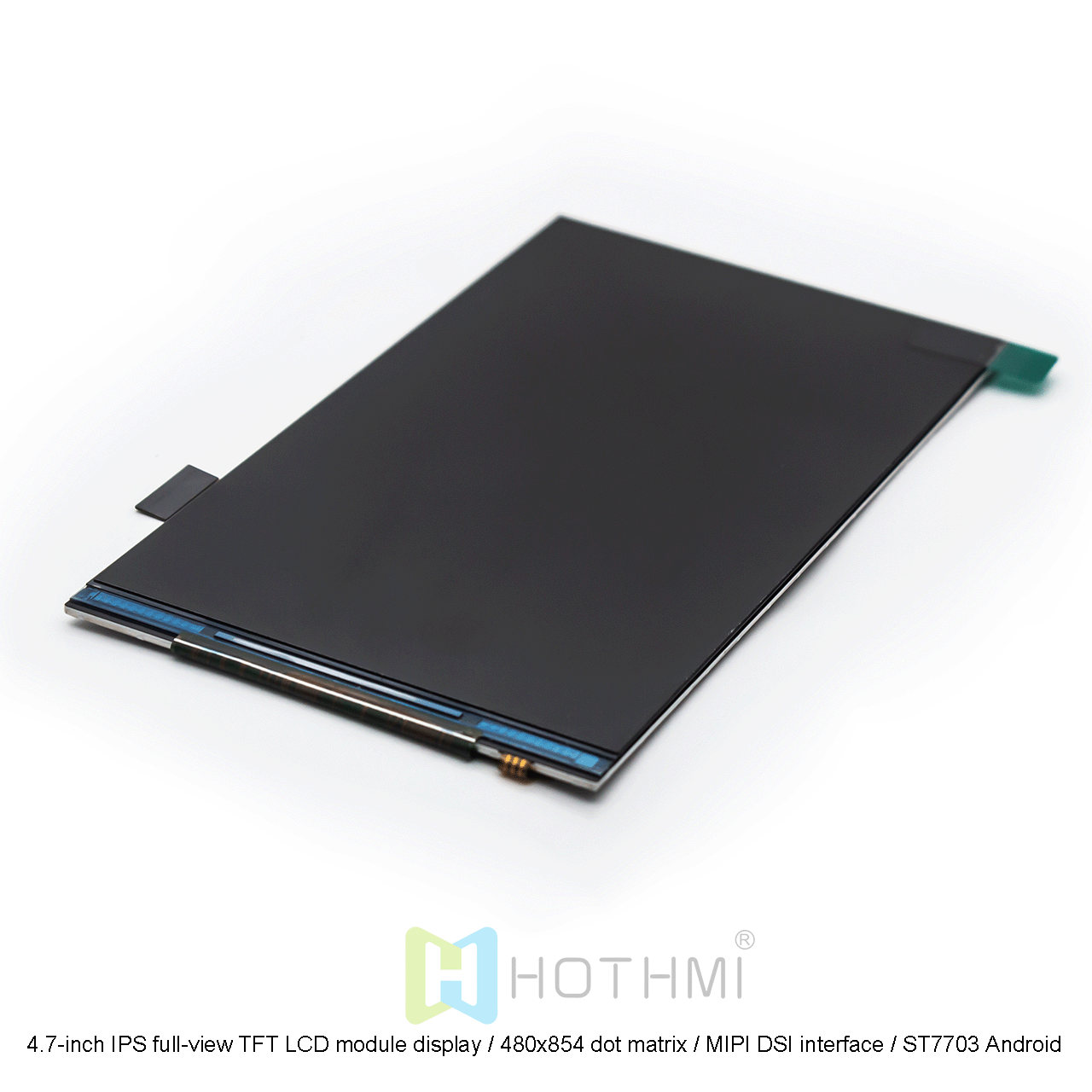
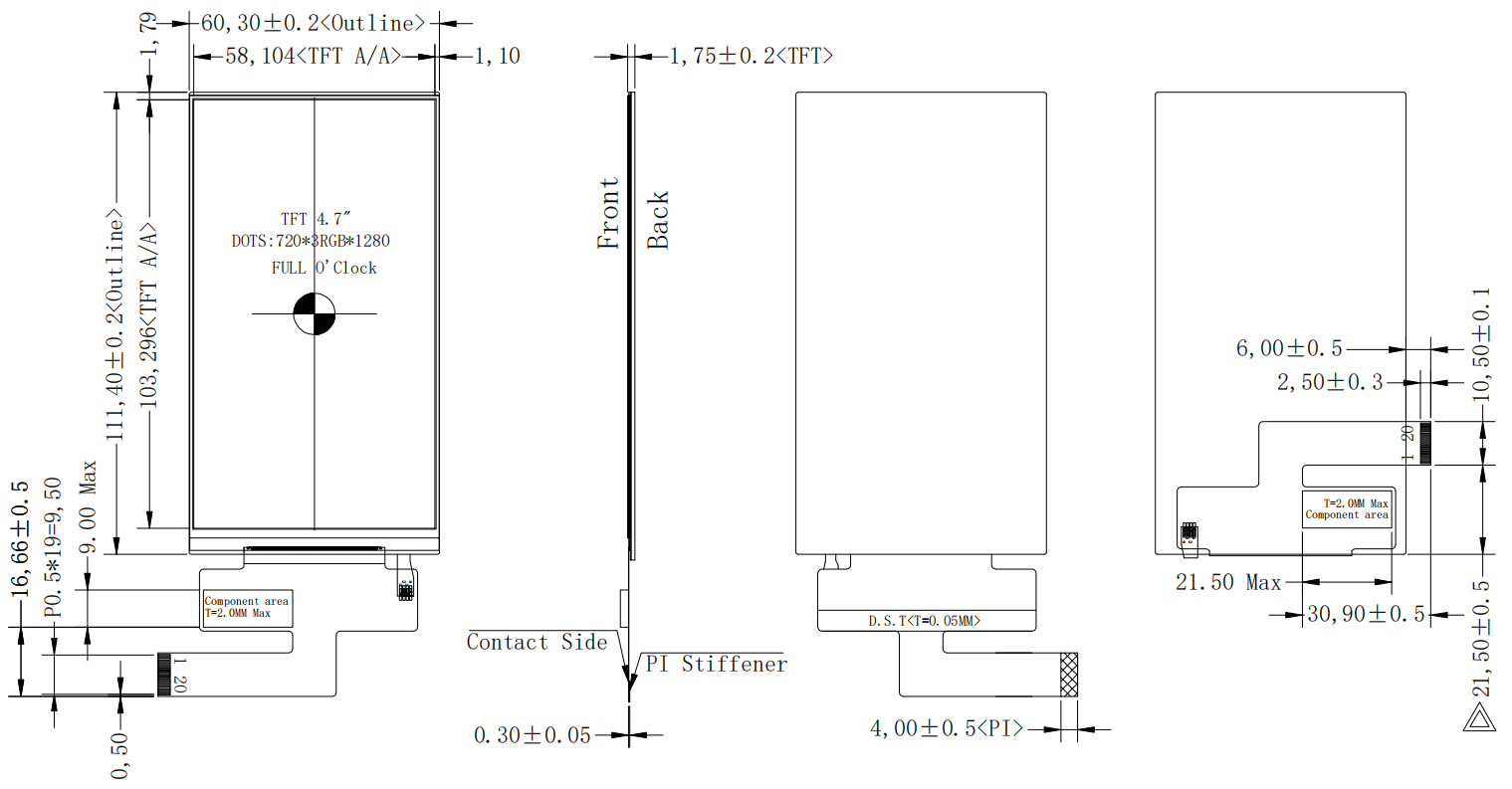
The TFT-H047A3HDIST4N20 is a 4.7-inch high-definition MIPI TFT Display module introduced by HOTHMI. This model features an IPS full-angle transmissive normally-black LCD panel, capable of rendering 16.7 million rich colors. With a sharp 720×1280 HD resolution and an integrated ST7703 driver chip, the display supports seamless MIPI video mode communication. In terms of power supply and consumption, the module operates with a digital core voltage IOVCC of 1.8V and an analog voltage VCI of 2.8V. The backlight unit consists of 12 high-quality white LEDs arranged in a 3-series, 4-parallel configuration, delivering a typical brightness of 400 cd/m² under fixed-current testing, while operating at a low driving voltage ranging from 8.4V to 10.2V.
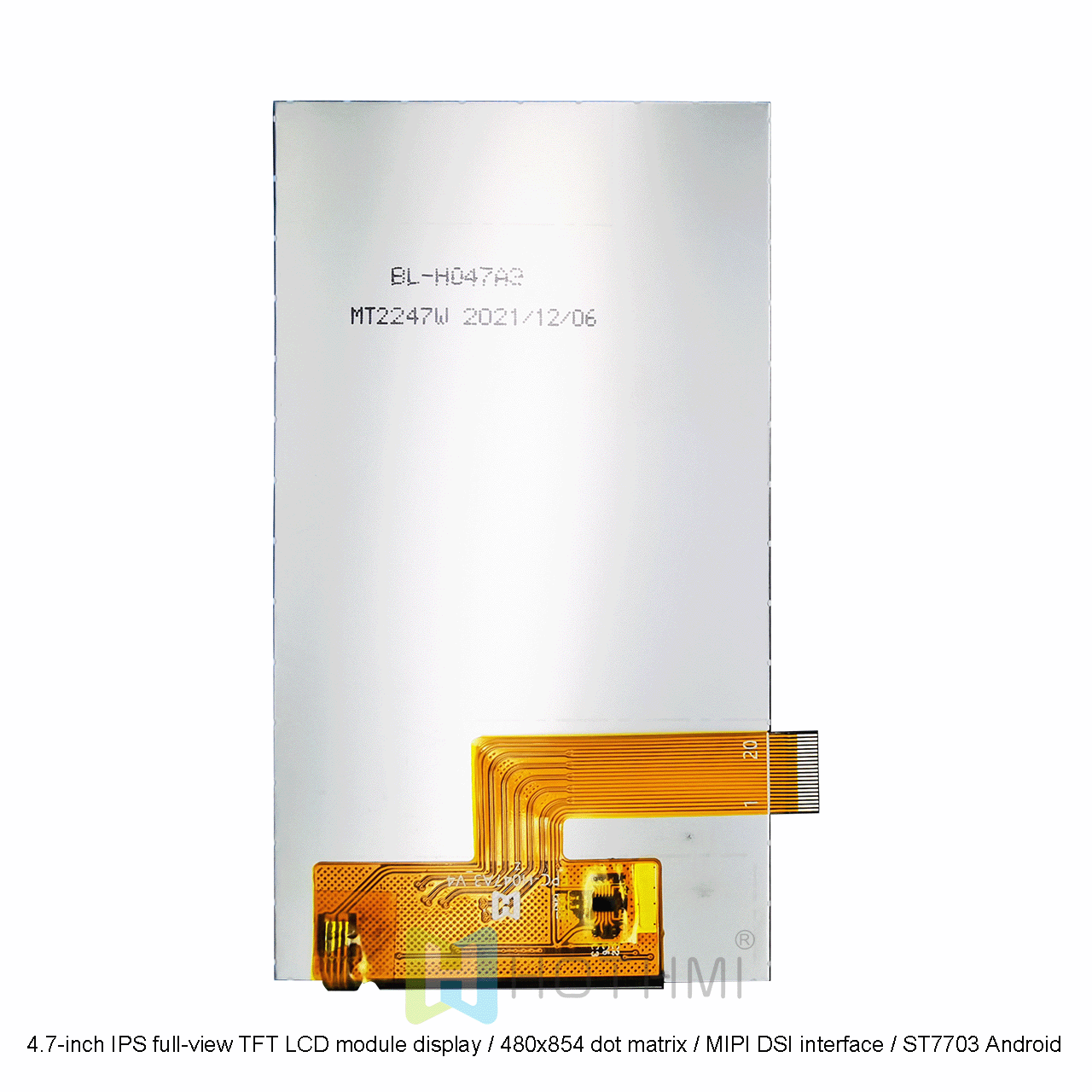
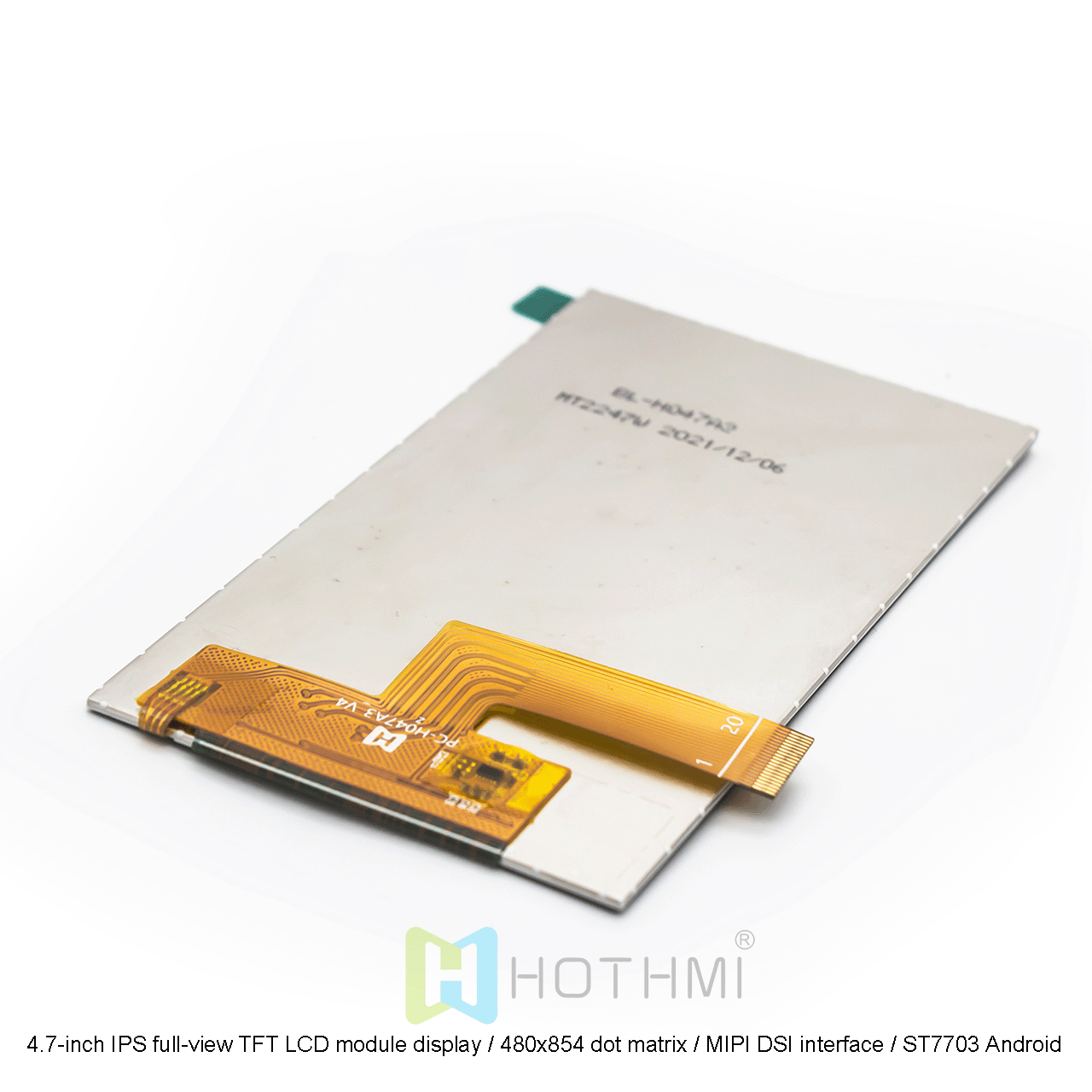
The MIPI TFT Display module features a compact design with precise thickness control, equipped with a bendable 20-pin flexible printed circuit and gold-finger contact area for easy assembly and shipping. Moreover, it offers broad environmental tolerance, operating stably from -20℃ to +70℃ and safely storing from -30℃ to +80℃, making it ideally suited for high-standard portable smart terminals or industrial automotive display applications.
II. Technical Highlights
- Ultra-High Definition and Fine Image Quality: Integrating 720×1280 HD pixels within a compact 4.7-inch size, the display achieves a high pixel density that ensures smooth edges on characters and graphics without aliasing, perfectly meeting the demanding needs of charts, waveform graphs, and complex UI interfaces.
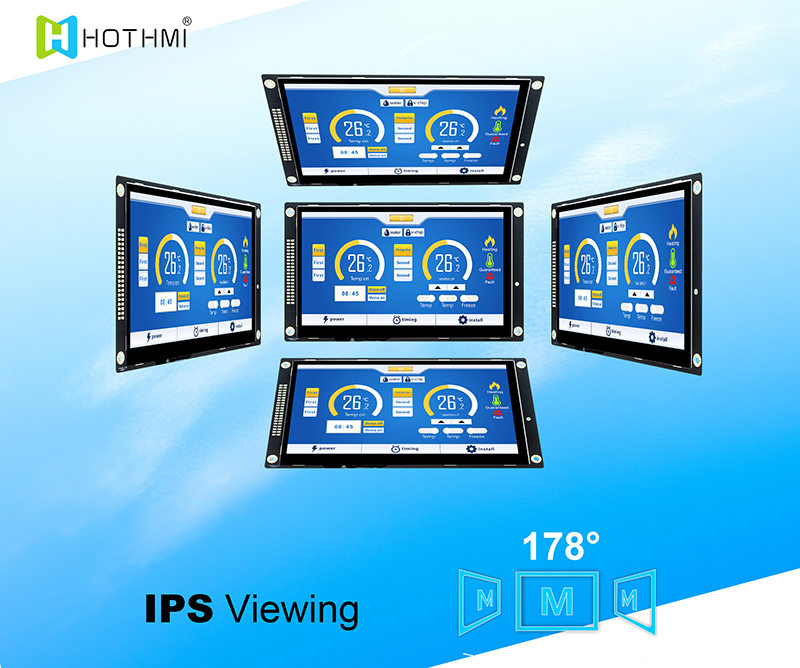
- IPS Full Viewing Angle: With an ultra-wide viewing angle of U80/D80/R80/L80, the screen exhibits no grayscale inversion or color distortion from any viewing direction, delivering an exceptional human-machine interaction experience.
- High-Speed MIPI DSI Interface: Adopting a high-speed MIPI serial interface, this module significantly reduces the number of signal lines compared to traditional RGB or MCU interfaces, while offering extremely low EMI and lower operating power consumption – particularly advantageous for battery-powered portable devices.
- 400 cd/m² Brightness Backlight System: Built with 12 high-quality white LEDs in a 3-series, 4-parallel circuit topology. Under standard fixed-current (80mA) testing, the LCD module achieves a typical brightness of 400 cd/m².
- Industrial-Grade Temperature Tolerance: With an operating temperature range of -20℃ to +70℃ and a storage temperature range extending from -30℃ to +80℃, this rigorous wide-temperature design ensures reliable continuous operation in harsh industrial environments, from extreme cold to intense heat.
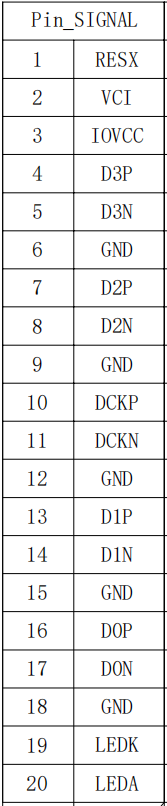
III. 20-Pin Pin Assignment and Description
To facilitate hardware engineers in PCB prototyping and signal cascading, the FPC interface of this MIPI TFT Display adopts a standard 20-pin design with a pin pitch of 0.5mm.
IV. Core Application Scenarios of the MIPI TFT Display
Benefiting from its 4.7-inch high-definition resolution, industrial-grade wide-temperature design, and high-speed host controller compatibility, this MIPI TFT Display is widely used in the following industries:
- Handheld Industrial Terminals and Rugged PDAs: The high-speed MIPI interface seamlessly connects with mainstream ARM Cortex-A application processors, providing high-clarity data and barcode image displays for logistics warehousing, power inspection, and other handheld devices.
- Portable Medical Monitoring Equipment: Full-angle technology ensures that doctors and nurses can accurately read critical vital signs – such as ECG waveforms and blood oxygen levels – from various viewing angles while moving around.
- Smart Home and High-End Control Panels: The normally-black panel delivers a high-contrast pure-black aesthetic, while the ultra-slim body and bendable FPC greatly facilitate flush mounting in wall-mounted central control screens and high-end kitchen appliance control panels.
- Automotive Displays and Micro-Screens: The wide operating temperature range (-20℃ to +70℃) and low EMI characteristics make this module outstanding in applications such as automotive auxiliary center consoles and smart instrument clusters for two-wheeled electric vehicles.
V. Technical Q&A on MIPI TFT Displays
Q1: What is a MIPI TFT Display, and how does it differ from traditional RGB-interface TFT screens?
A1: A MIPI TFT Display refers to a liquid crystal display that adopts the MIPI DSI protocol. Compared with traditional RGB interfaces, the main differences are:
Pin Count: RGB interfaces typically require 24 data lines, clock, enable, synchronization, and others, totaling over 30 pins. In contrast, the MIPI DSI interface uses differential signal transmission, requiring only a small number of clock and data pairs (for instance, this product achieves HD display with just 20 pins).
Anti-Interference Capability: MIPI employs low-voltage differential signaling (similar to LVDS principles), resulting in extremely low electromagnetic radiation, making it highly suitable for RF-complex wireless communication devices.
Resolution Support: At high resolutions, RGB interfaces are prone to signal distortion due to excessively high clock frequencies, whereas MIPI has become the absolute standard for high-resolution displays.
Q2: What are the specific requirements for the host controller and power supply system when driving this 4.7-inch MIPI TFT Display?
A2:Host Controller Requirements: Since the built-in ST7703 driver chip operates in MIPI Video mode, ordinary microcontrollers without hardware MIPI controllers (such as low-end MCUs) cannot drive it directly. The host must include a native MIPI DSI hardware interface (e.g., Rockchip, Allwinner, or high-end MCUs with MIPI support such as ESP32-P4).
Power Supply System Requirements: Hardware designers must provide two independent logic voltages. One is the digital interface voltage IOVCC = 1.8V; the other is the analog operating voltage VCI = 2.8V. Both voltages must be kept clean with proper decoupling and filtering to ensure stable operation.