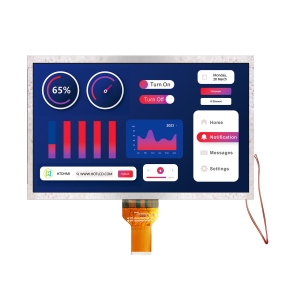
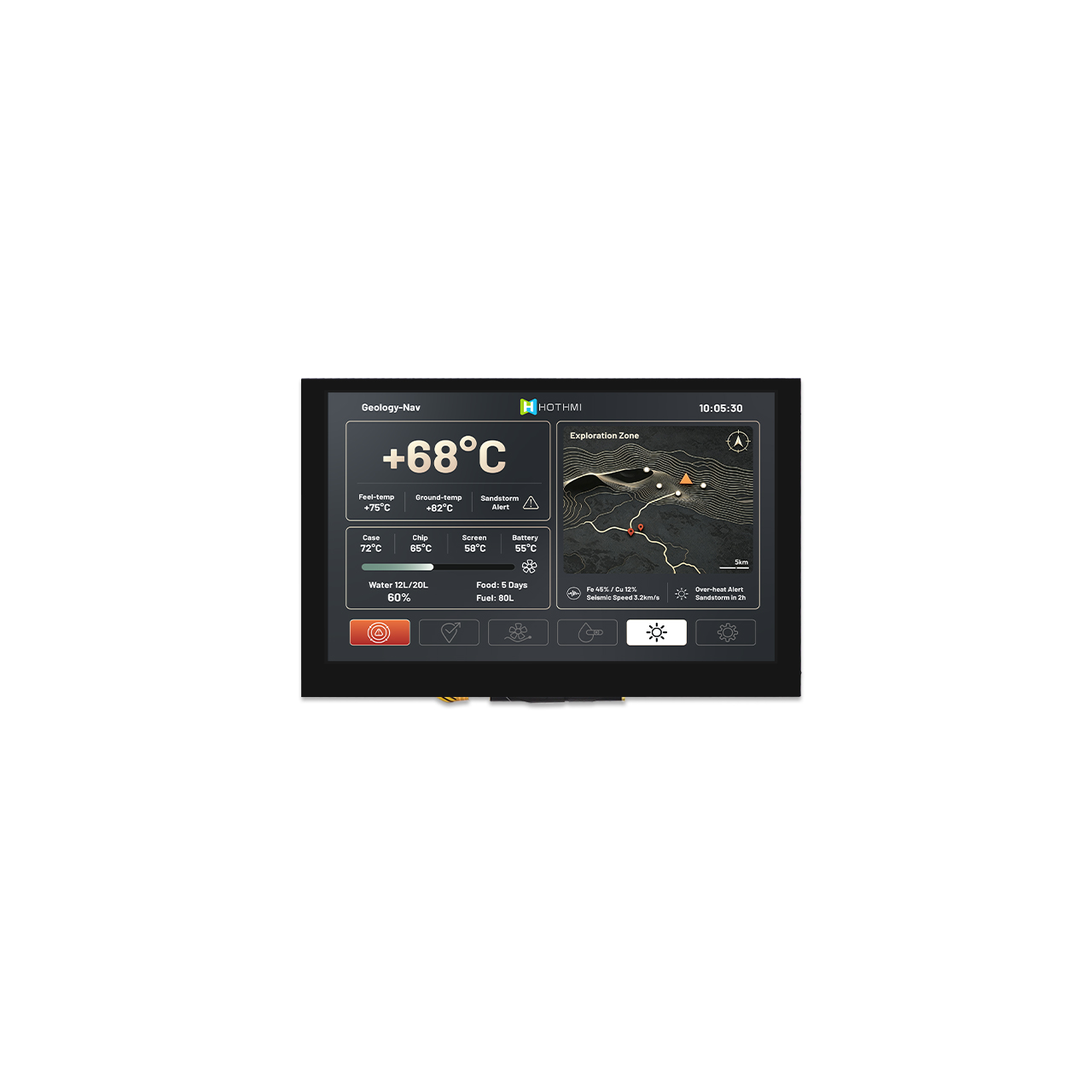
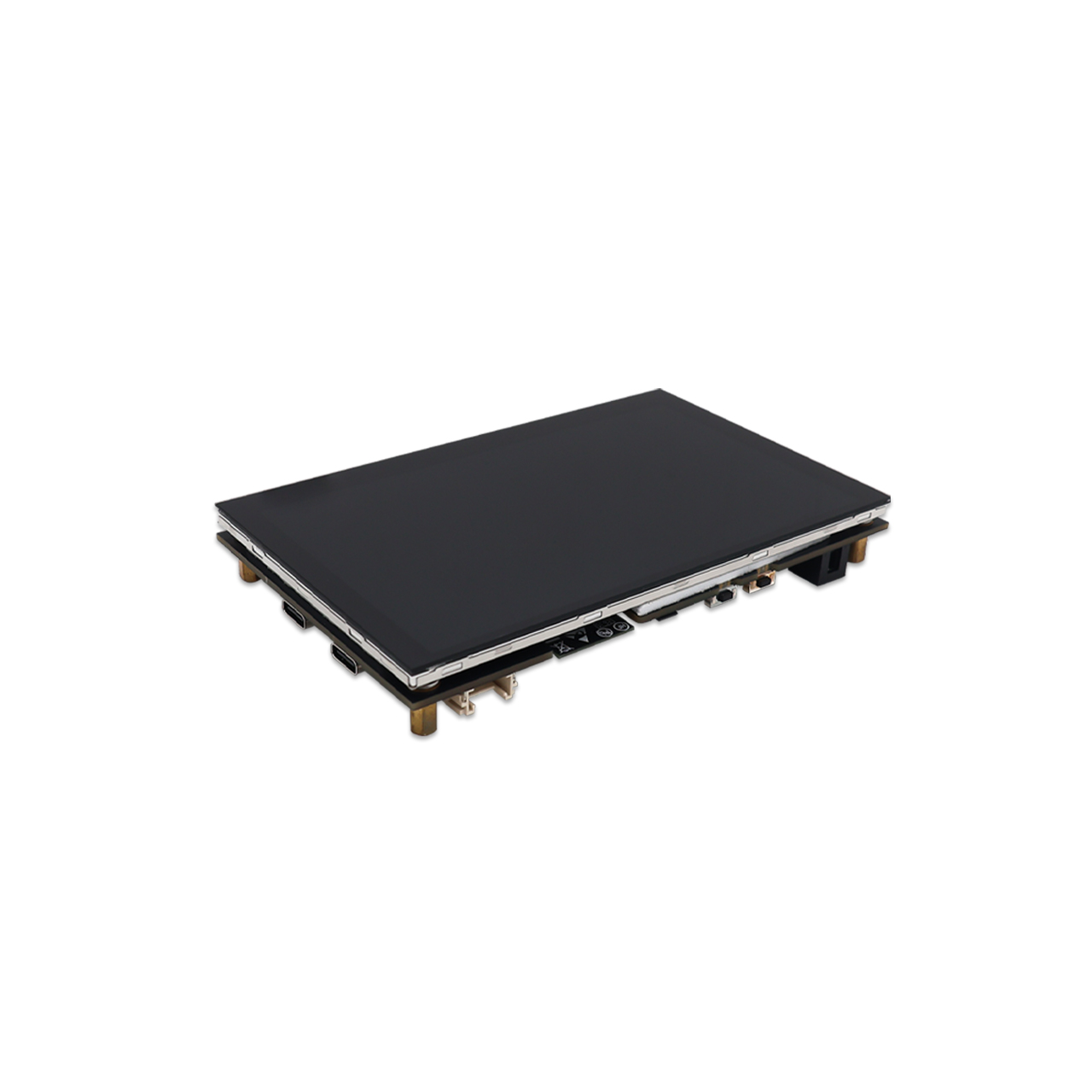
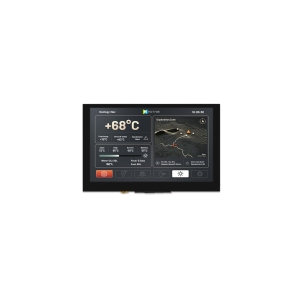
HOTHMI 5 inch HMI Display High Brightness ESP32 IPS
- Model: HTM-H050A29-ESP-StdRGB
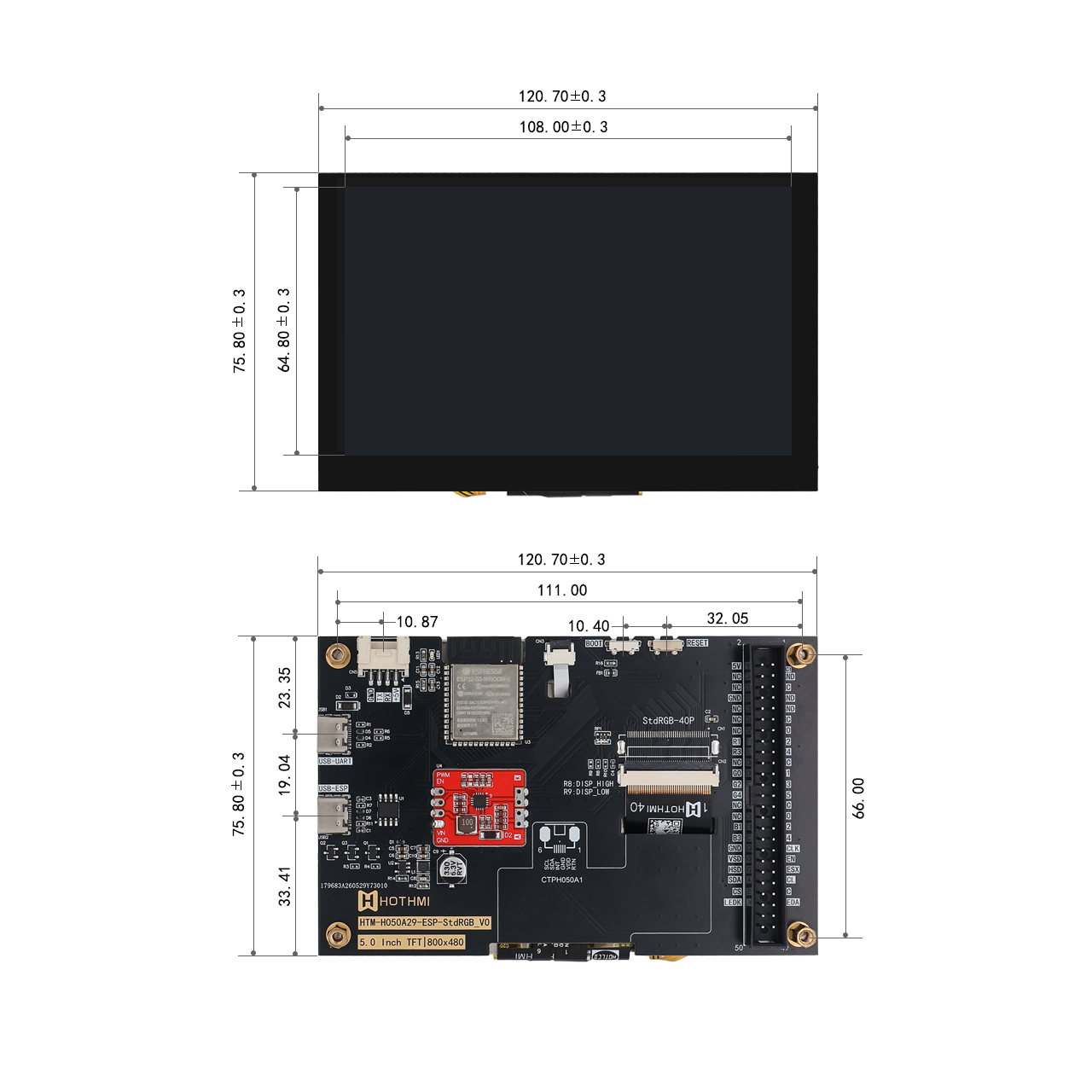
- Dimensions: 120.7×75.8×8.15(mm)
- Resolution:800×480 pixels
- Backlight/Brightness: 1500 cd/m²
- Interface: RGB
- Operating temperature: -30℃~+80℃
$88.00
In stock
-300x300.jpg)
This item: HOTHMI 5 inch HMI Display High Brightness ESP32 IPS
$88.00
$88.00
Description
Product Introduction
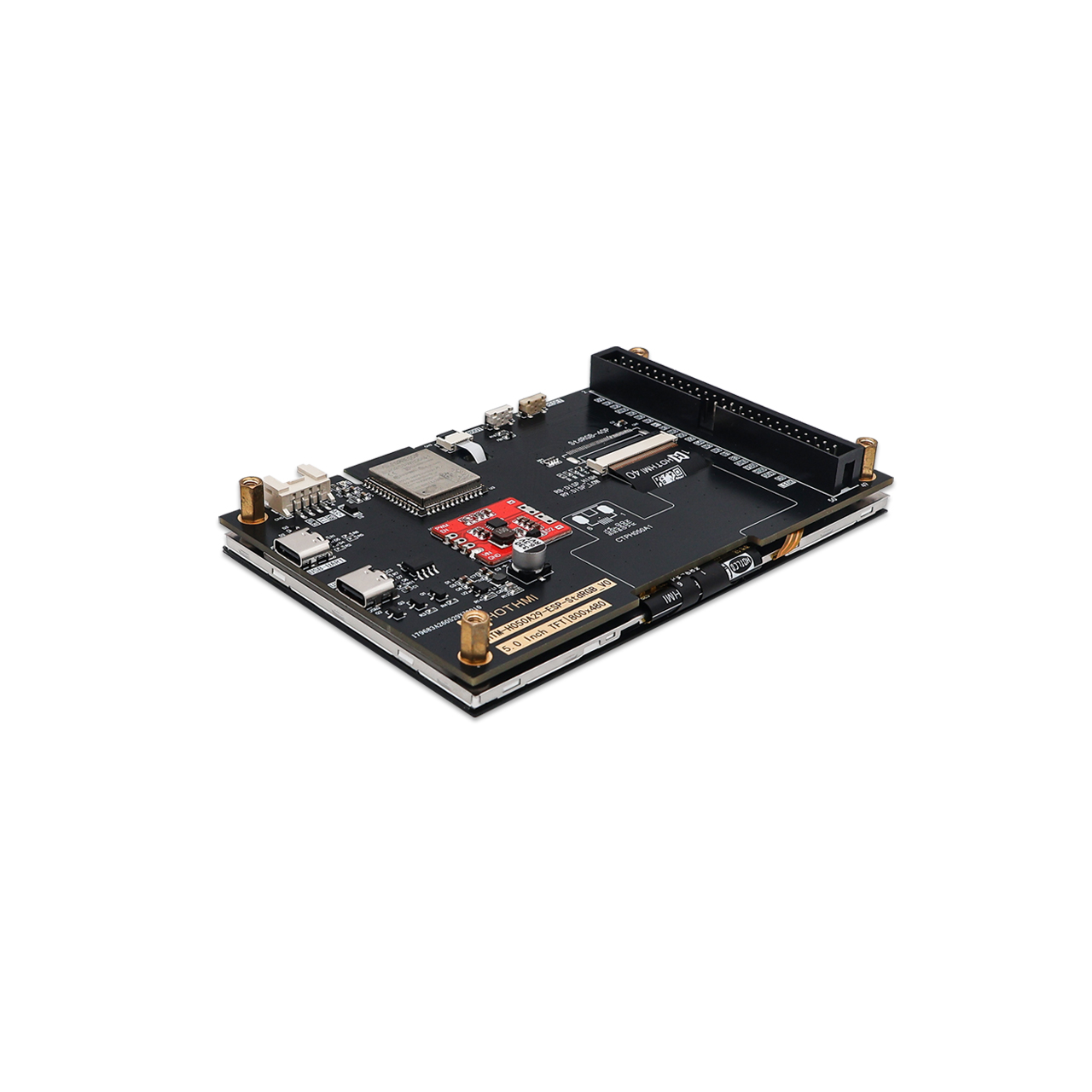
The HTM-H050A29-ESP-StdRGB is a highly integrated 5.0-inch TFT smart HMI display module. It combines a high-performance 5.0-inch TFT full-color LCD panel with a powerful ESP32 main control PCB backplane module, enabling integrated smart control and graphical display.
The HMI display module features an 800(RGB) x 480 pixel Normally Black IPS full-viewing-angle panel with vivid colors and a 55% NTSC color gamut, achieving a maximum brightness of 1700 cd/m² (1500 cd/m² with capacitive touch layer). Its core advantage lies in the deep integration of the ESP32 series main control solution, onboard USB-ESP and USB-UART dual interfaces, and abundant peripheral pins (such as CS, SCL, SDA, RESX, DCLK, etc.), fully supporting standard RGB and RGB565 video signal transmission, greatly simplifying software and hardware development processes.
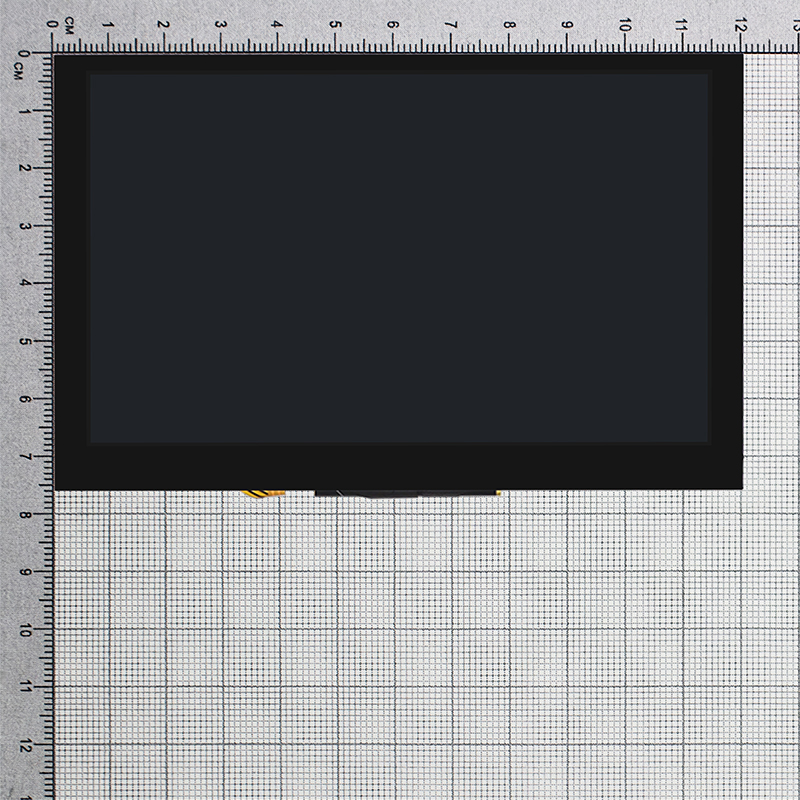
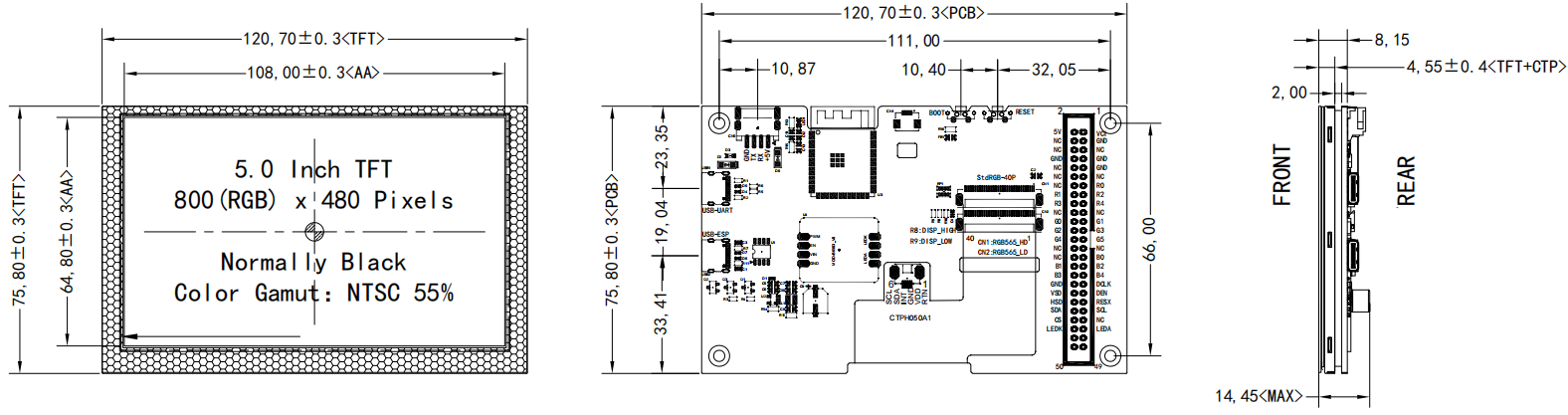
As an industrial-grade HMI display, its exterior and structural design are meticulously crafted. The overall dimensions (including PCB) are 120.70mm x 75.80mm, with a thickness of only 4.55mm (TFT+CTP) and a maximum total thickness within 14.45mm, making it compact and easy to embed. The active display area is 108.00mm x 64.80mm, providing ample visual space for UI interfaces and graphical interaction. Additionally, this HMI display module offers excellent industrial-grade wide-temperature operation and storage from -30°C to +80°C, and requires no complex screen initialization code—it is ready to use upon power-up. It is an ideal core interaction solution for smart home control centers, industrial IoT instruments, and full-color vehicle terminals.
Core Product Highlights
- Onboard ESP32 wireless main control, eliminating external MCU: The backplane integrates an ESP32 core PCB with built-in Wi-Fi and Bluetooth dual-mode wireless communication, delivering up to 240MHz computing power. It can handle complex business logic directly within the HMI display module, completely removing the need for an external main control MCU and significantly reducing overall BOM costs.
- 1500+ cd/m² ultra-high brightness, sunlight-readable: The HMI display module achieves up to 1700±150 cd/m² in pure display mode. Even with a high-transmittance capacitive touch panel, the overall brightness remains at an exceptional 1500±150 cd/m². This ultra-high brightness makes it ideal for outdoor IoT devices, two-wheeler electric vehicle dashboards, and other scenarios requiring clear visibility under strong light.
- Highly responsive hardened capacitive touch: Equipped with a mainstream GT911 capacitive touchscreen using IIC bus communication, the surface hardness reaches 6H, supporting up to 5-point simultaneous touch for smooth multi-finger gestures and sliding interactions.
- Steel plate reinforcement and grounding design for strong industrial interference immunity: To combat harsh interference from industrial inverters, static electricity, and similar sources, the backplane features a large-area steel plate reinforcement (T=0.2mm) with direct pin grounding. This effectively shields electromagnetic radiation and has passed stringent ESD tests at contact discharge ±4KV and air discharge ±8KV, ensuring the GT911 capacitive touchscreen remains jitter-free even in high-interference environments.
- Industrial-grade wide-temperature operation: This HMI module has passed high-temperature storage (+80°C/120hrs), low-temperature storage (-30°C/120hrs), and full-function always-on aging tests. The entire system operates over a wide temperature range from -30°C to +80°C, easily handling severe cold in northern regions and extreme heat inside enclosed industrial cabinets in southern climates.
Pin Description
The HMI display module’s hardware interfaces are divided into internal TFT display buses and external CTP touch control buses. To facilitate software debugging and development, the hardware pin definitions are well-organized and clearly structured.
TFT Core Display Interface Pins
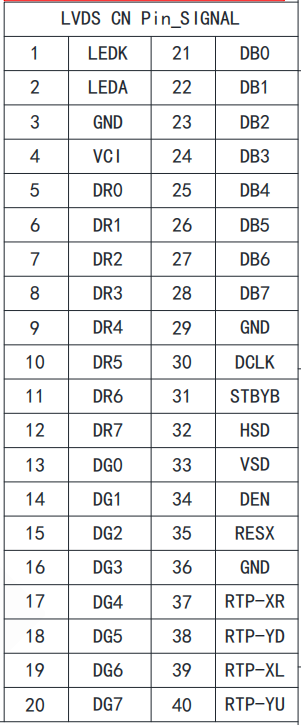
The internal panel uses a Parallel 24-bit RGB interface (SYNC + DE hybrid mode) with a total of 40 pins. It is directly driven by the onboard ESP32 and conversion circuitry on the backplane, with the following pin definitions:
External CTP Capacitive Touch Interface Pins
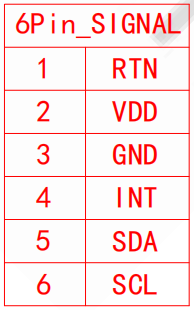
The backplane ESP32 main control PCB provides external standard capacitive touch interaction pins, using the standard IIC serial communication protocol to interface with the GT911 touch controller:
Application Fields
- Smart home wall control panels: Leveraging the ESP32’s built-in Wi-Fi and Bluetooth, the module can serve directly as a central gateway and control node for smart homes, enabling centralized management of lighting, curtains, and ventilation systems through a large, high-color-display interface.
- New energy and industrial instruments: The 1500 cd/m² ultra-high brightness combined with the -30°C to +80°C industrial-grade wide-temperature range makes it exceptionally suitable for outdoor solar energy storage inverters, charging station display terminals, and on-site micro-central control consoles in automated factories.
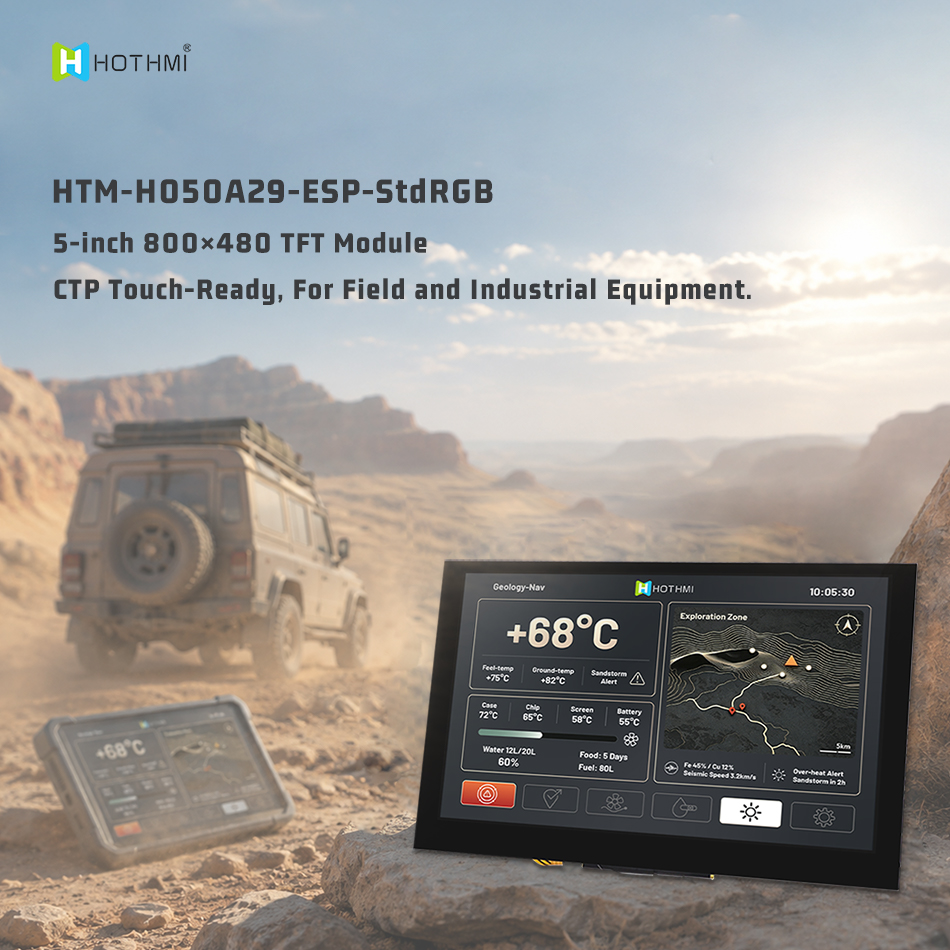
- Vehicle and two-wheeler electric vehicle smart screens: The IPS full-viewing-angle panel ensures clear readability of speed, battery level, and navigation maps from various riding positions. Its high ESD protection easily handles the complex electromagnetic environments of vehicle motors.
- Medical and commercial automation terminals: The 6H hardness glass cover is scratch-resistant and wear-resistant, supporting high-frequency intensive touch operations, making it ideal for medical monitoring auxiliary screens, vending machines, and food ordering HMI display terminals.
HMI Display Technical FAQ
Q1: Why choose an ESP32-based HMI display over traditional serial screen modules?
A1: Traditional serial screens come with a closed, fixed GUI system that requires an external MCU to send specific command sets via UART to indirectly control the UI. This limits graphical animation flexibility and adds to overall BOM costs. In contrast, this 5.0-inch ESP32-based HMI display integrates a powerful microprocessor directly on the back of the screen. Developers can use mainstream open-source graphics libraries such as LVGL and SquareLine Studio for native C/C++ low-level UI programming directly within the module. Additionally, it features built-in Wi-Fi and Bluetooth, enabling a closed-loop system for data acquisition, network communication, and graphical rendering with fast response times and a greatly simplified system architecture.
Q2: Does this HMI display module require complex low-level initialization code during hardware development? How should the reset circuit be designed?
A2: A key convenience of this product is that the panel itself does not require any initialization code. Once the ESP32 main control PCB is properly powered with stable digital and backlight supplies, the screen can be directly driven by sending data according to standard RGB timing (typical clock frequency 30MHz, frame rate 60Hz) and will display immediately.
For reset circuit design, the module’s RESX pin already includes a built-in RC hardware reset delay circuit consisting of a 10KΩ resistor and a 1µF capacitor. In most standard development scenarios, this pin will automatically complete the reset sequence from low to high upon system power-up, eliminating the need for external MCU GPIO timing control. This truly achieves plug-and-play operation at the hardware level.
Additional information
| Weight | 0.6 kg |
|---|
Attributes
| ITEM | PARAMETER DESCRIPTION |
| TFT series | HTM-H050A29-ESP-StdRGB |
| Diagonal size | 5.0-inch |
| Resolution | 800x480 |
| Dimensions | 120.7x75.8x8.15(mm) |
| Active area (AA) | 108.0x64.8(mm) |
| LCD type | 5.0-inch TFT LCD |
| Display viewing angle | Full View |
| Aspect ratio | 3:2 |
| Backlight type | LED white |
| TFT driver IC | —— |
| Brightness | 1500cd/m² |
| Operating temperature | -30℃~+80℃ |
| Storage temperature | -30℃~+80℃ |
Related products