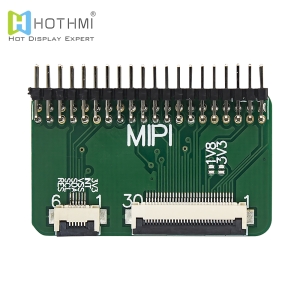
-300x300.jpg)
Description
Product Overview: High-Reliability Industrial-Grade MIPI DSI Resistive Touchscreen Display
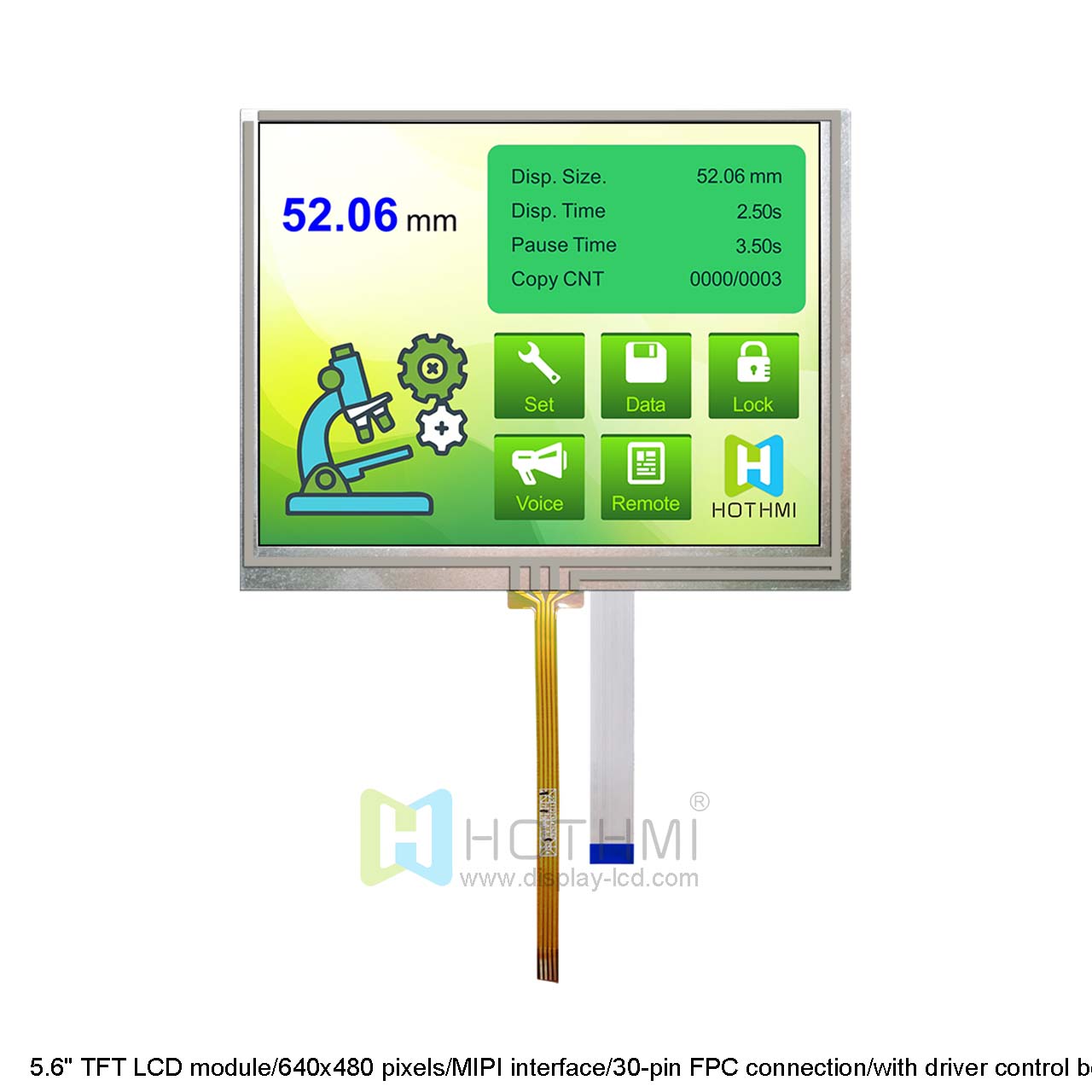
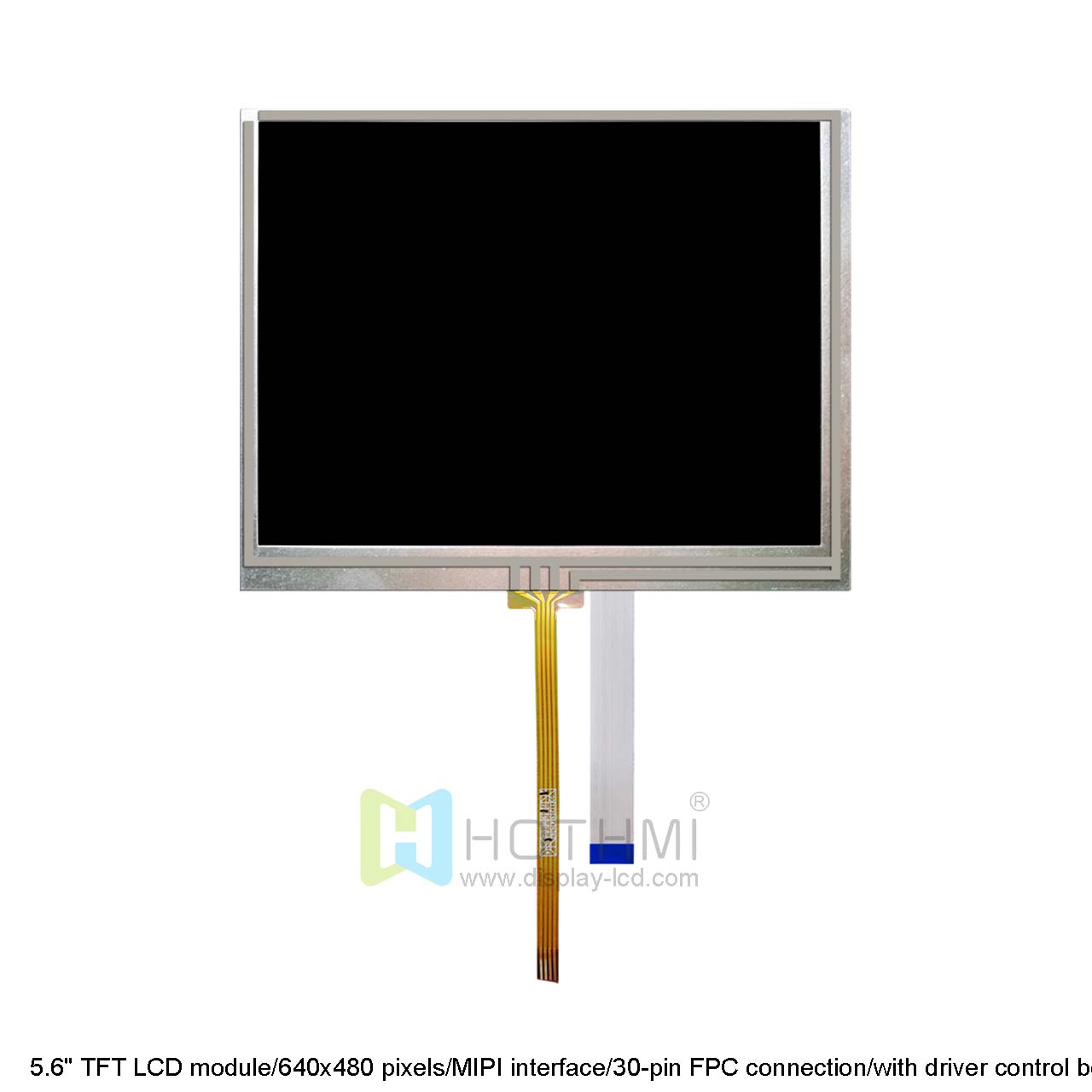
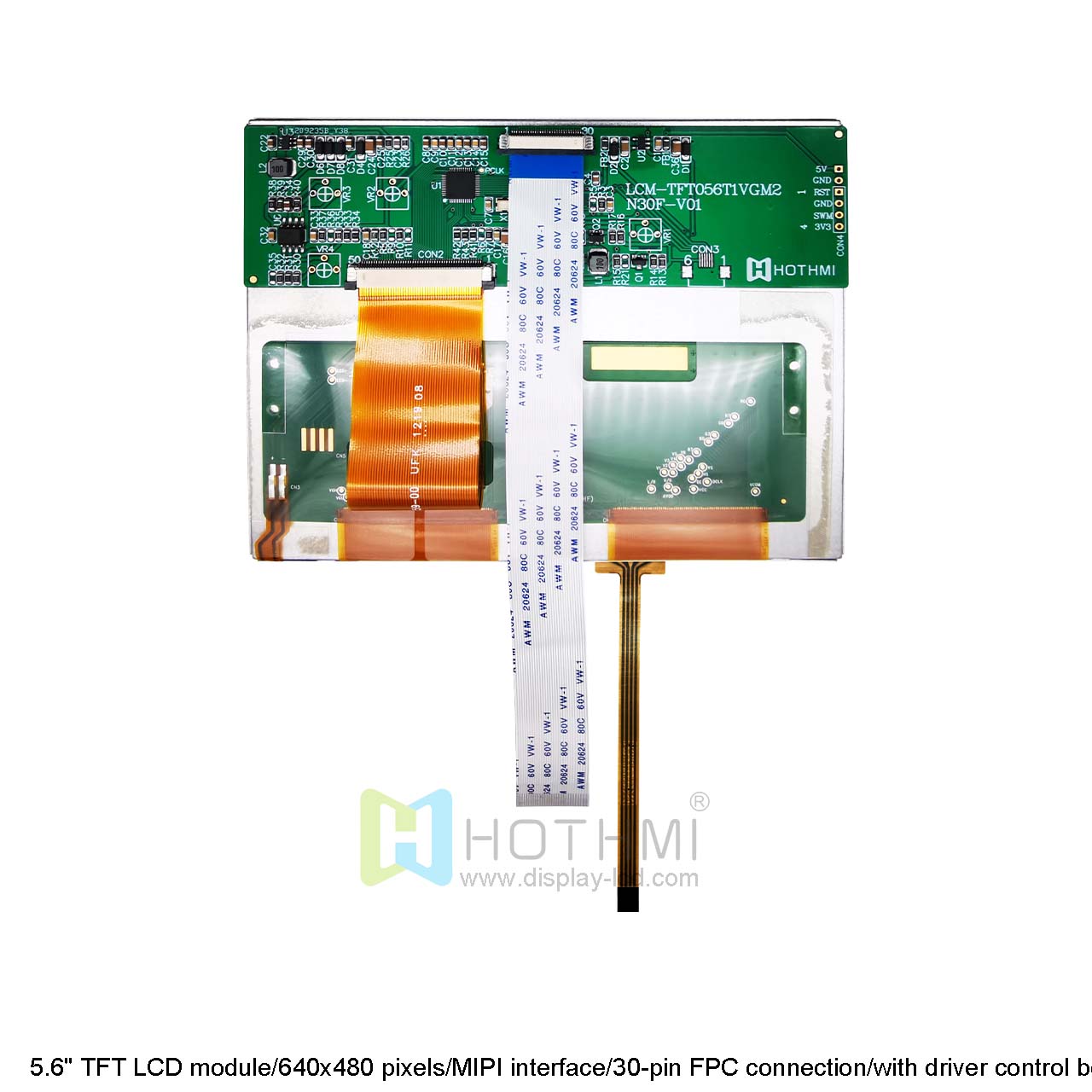
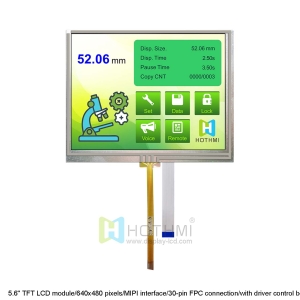
LCM-TFT056T1VGM2N30F is a professional-grade 5.6-inch active-matrix transmissive TFT liquid crystal display module manufactured by HOTHMI. This industrial-focused Resistive Touchscreen Display offers a native resolution of 640 × 3(RGB) × 480 pixels in a standard 4:3 aspect ratio. The panel is built on a high-performance a-Si TFT active-matrix architecture and integrates a dedicated MIPI-to-RGB bridge driver IC. This on-chip bridge converts high-speed MIPI DSI 2-lane data packets directly into parallel RGB video streams, creating a robust interface between ultra-low-power modern application processors and traditional industrial panel timing requirements.
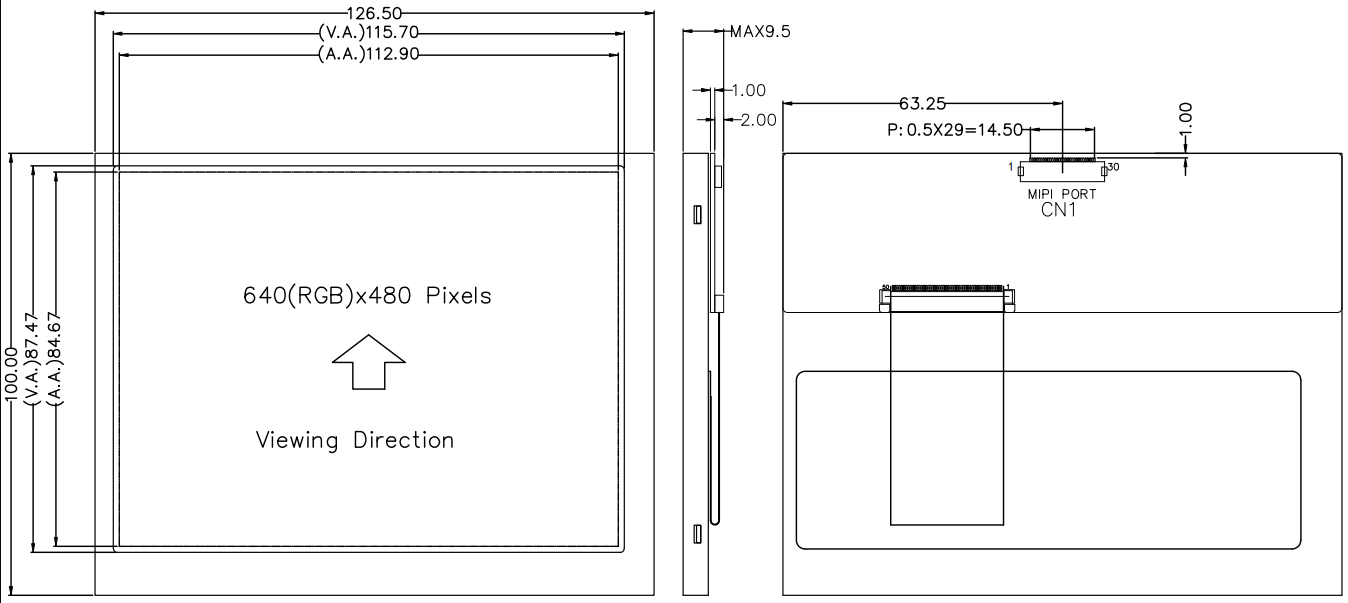
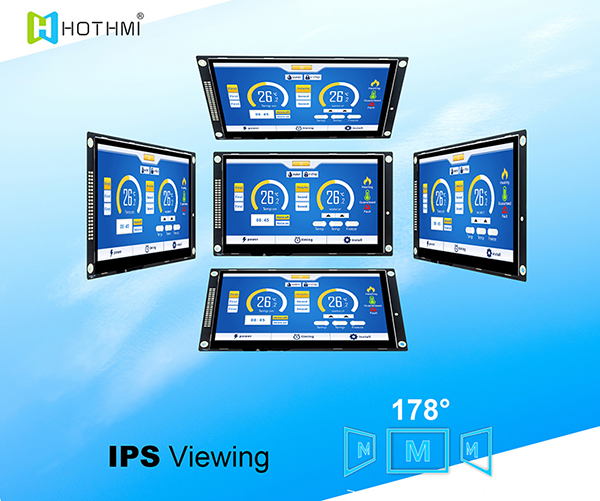
This 5.6-inch Resistive Touchscreen Display module is designed for demanding environments, with an operating temperature range of -20°C to +70°C and a storage temperature range of -30°C to +80°C. It runs on a standard +5.0V system power supply, balancing optical clarity with electrical efficiency. The visual output is powered by a 3×5 white LED backlight array, delivering a native surface luminance of 250 cd/m². The entire hardware assembly is packaged in a compact form factor of just 126.5(W) × 100.0(H) × 9.5(D) mm. The Resistive Touchscreen Display supports full viewing angles and is specifically engineered for modern embedded environments, human-machine interface (HMI) terminals, and harsh industrial automation deployments requiring high mechanical stress tolerance and environmental resilience.
Core Technology Highlights
- Integrated MIPI-RGB Bridge Architecture: With a natively integrated MIPI-to-RGB bridge micro-engine, this module communicates directly with low-pin-count modern processors via the MIPI DSI 2-lane interface. This eliminates the need for costly external conversion circuits and significantly reduces dense 24-bit parallel RGB trace widths and PCB layer counts.
- Industrial-Grade Durability and Wide Operating Temperature Range: Unlike consumer-grade glass panels, this display module operates reliably across an extended temperature range from -20°C to +70°C, with long-term storage certification from -30°C to +80°C. It is fully optimized for continuous, long-term operation in non-condensing environments.
- Superior Structural Rigidity in All Directions: To withstand physical impacts in harsh industrial applications, the display assembly has passed rigorous packaging drop tests (76cm drop height), 100G mechanical shock screening (6ms pulses in ±X, ±Y, ±Z directions), and 6-hour random vibration tests with 10Hz to 55Hz frequency sweeping.
- Precision Dynamic Backlight Management: The Resistive Touchscreen Display module features dedicated BL_PWM dimming input and an independent BL_EN hardware pin, allowing host systems to achieve fine-grained linear brightness adjustment and dynamic power-saving sleep modes.
- Flexible Video Transmission Synchronization Modes: The built-in chip supports three mainstream MIPI protocol modes, including: non-burst mode with sync pulses, non-burst mode with sync events, and high-speed burst mode. Among these, burst mode compresses RGB pixel data packets at very high clock rates, leaving longer low-power (LP) intervals for the host processor during scanline periods, thereby significantly reducing overall system power consumption.
Pin Assignment
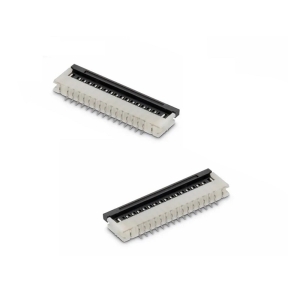
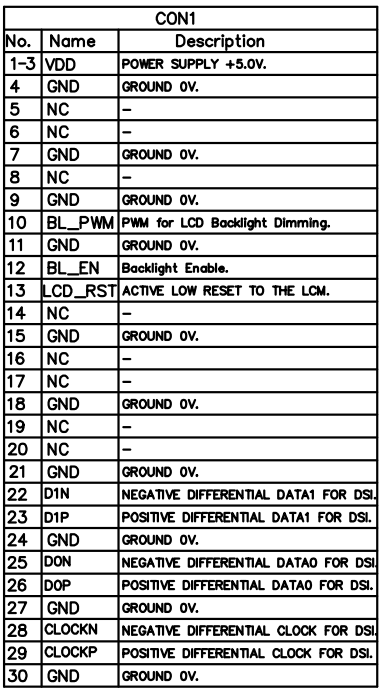
This Resistive Touchscreen Display module uses a standard 30-pin FPC connector (CN1) layout.
Product Application Scenarios
Thanks to its unique interface integration advantages and high durability, this Resistive Touchscreen Display is widely adopted in various low-power, high-rigidity industrial and embedded control units:
- Industrial HMI Terminals: The standard 4:3 aspect ratio and 640×480 resolution are ideally suited for traditional industrial control panel mounts. Its excellent vibration resistance, high mechanical shock tolerance, and wide operating temperature make it a preferred choice for factory central controllers, warehouse operation terminals, and control panels in heavy agricultural and mining machinery cabins.
- Medical Monitoring and Diagnostic Equipment: The module delivers highly stable color performance, making it suitable for integration into bedside mobile vital signs monitors, portable ultrasound machines, and blood analysis workstations, ensuring medical staff can quickly and accurately read critical physiological telemetry data from various viewing angles.
- Outdoor Self-Service Energy Stations and Charging Piles: The resistive touchscreen’s unique physical structure provides a natural “anti-false-touch” feature. Even in rainy, humid conditions with water droplets on the surface, or when technicians wear thick protective gloves in heavy industrial settings, this panel delivers highly accurate touch feedback—unlike capacitive screens that often suffer from false triggers due to high-dielectric moisture.
- Embedded Edge Computing IoT Control Boxes: The Resistive Touchscreen Display module is fully compatible with various high-performance Android or Linux single-board computers, such as platforms based on Rockchip RK3568 and Allwinner chips. The low-pin-count MIPI DSI architecture frees up valuable board space in space-constrained intelligent grid distribution monitoring nodes.
Engineering Q&A of Resistive Touchscreen Display
Q1: The Resistive Touchscreen Display module supports three MIPI DSI video transmission timing modes. How should we choose among them in embedded system architecture design?
A: The choice depends primarily on your host processor performance, memory bandwidth limits, and overall power budget:
- Non-Burst Mode with Sync Pulses: Suitable for devices that demand extremely high synchronization accuracy for video signals. This mode allows the peripheral interface to precisely reconstruct the original video timing including sync pulse widths, making it a good fit for processors with balanced video processing capabilities.
- Non-Burst Mode with Sync Events: Similar to the pulse mode, but because the host or panel does not need to precisely reconstruct the exact width of each sync pulse, the driver uses lighter-weight single-byte “sync event” packets instead. This reduces host CPU scheduling overhead.
- Burst Mode: This is the optimal choice for low-power embedded or mobile IoT devices. RGB pixel data packets are compressed and transmitted at very high clock frequencies across the two data lanes. This burst transmission allows the display interface to complete line data transfers ahead of the scanline period, leaving significantly longer idle time for entering low-power (LP) modes. This dramatically reduces dynamic current consumption during static or slow-refresh screens.