
Showing 29–56 of 177 results
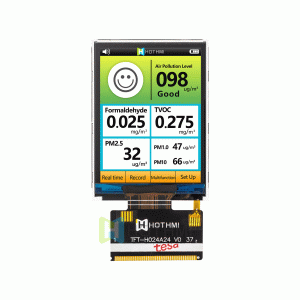
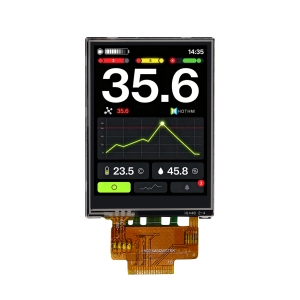
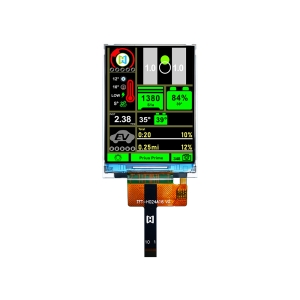
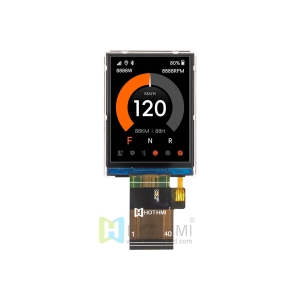
Interface Selection: Comparison & Decision Guide
Interface Characteristics Comparison
| Interface Type | Transfer Rate | Pin Count | Power Consumption | Noise Immunity | Built-in Frame Buffer | Typical Application Size |
|---|---|---|---|---|---|---|
| SPI | Low | 4-6 | Low | Medium | Required | Below 2 inches |
| MCU | Low-Medium | 8-18 | Low-Medium | Medium | Required | Below 3.5 inches |
| RGB/TTL | High | 20-29 | High | Poor | Not Required | 3.5 – 10 inches |
| LVDS | Very High | 8-16 | Low | Excellent | Not Required | 7 inches and above |
| MIPI DSI | Extremely High | 6-10 | Low | Excellent | Not Required | All Sizes |
TFT LCD interface Key Selection Dimensions
- Selection Based on Resolution
Below 320×240: SPI or MCU interfaces are sufficient.
480×272 to 1024×600: RGB interface offers good cost-performance.
1280×800 and above: Requires LVDS or MIPI DSI support.
- Selection Based on Application Scenario
Portable/Wearable Devices: Prioritize MIPI DSI or SPI, focusing on low power consumption and compact size.
Industrial Control Interfaces: Opt for RGB or LVDS, prioritizing stability and noise immunity.
Medical Equipment: Choose LVDS or RGB, focusing on signal integrity and reliability.
Consumer Electronics: Select based on product positioning; mobile products lean towards MIPI, while stationary products may opt for LVDS or RGB.
- Selection Based on Main Controller Capabilities
Verify if the main controller chip integrates the target interface controller.
Assess whether the main controller’s I/O resources and processing power meet the interface requirements.
Consider the availability of development resources and technical support maturity.
FAQs about TFT LCD interface
Q1: What are the mainstream electrical interface types for TFT LCDs? What are their core characteristics and typical applications?
A1:
- TTL/RGB Interface: A parallel interface with numerous signal lines (RGB data, clock, sync signals). Suitable for small sizes (typically under 15 inches) or low-resolution screens. However, it suffers from poor noise immunity and short transmission distances.
- LVDS Interface: A differential serial interface known for excellent noise immunity, fewer wires, and low power consumption. Widely used in medium to large-sized screens (e.g., notebooks, monitors).
- MIPI DSI Interface: A high-speed differential serial interface offering high bandwidth, flexibility, and low power consumption. It is the mainstream choice for mobile devices like smartphones and tablets but requires strict PCB layout considerations.
- MCU Interface: Includes a built-in frame buffer. The main controller writes data via a parallel bus. Suitable for small-sized modules, but the refresh rate is limited by the bus speed.
Q2: What is the lifespan of a TFT LCD screen? Why do some screens show fading, image retention (ghosting), or touch issues over time?
A2: Screen lifespan is determined by the degradation cycle of several key components, with different failure modes corresponding to different causes:
- Backlight Lifespan: LED backlights experience luminosity degradation over time. Lifespan is often defined as the time until brightness decays to 50% of its initial value, typically around 20,000 to 50,000 hours. Continuous operation at maximum brightness accelerates this decay. If a screen appears dim or yellowish, it’s often due to backlight aging.
- LCD and Polarizer Aging: These components are sensitive to high temperatures and UV light. Poor heat dissipation or prolonged operation above recommended temperatures can cause the liquid crystal molecules to fail prematurely, leading to decreased contrast and image retention. Outdoor exposure can cause the polarizer to bubble or turn white.
- Decreased Touch Sensitivity: Often caused by aging of the adhesive layers or moisture ingress into the environment, leading to delamination or stress that affects touch accuracy.
Recommendations: Setting the backlight brightness reasonably (e.g., 80%), improving heat dissipation, and choosing wide-temperature or high-brightness screens for harsh environments can effectively extend the screen’s operational life.
Q3: What are the key PCB layout considerations for MIPI interface screens to avoid display problems?
A3: MIPI is a high-speed interface. Layout must follow three key principles:
- Impedance Matching: Differential pairs must be strictly controlled to 100Ω ± 10%. Request impedance control from the PCB manufacturer in advance to avoid signal reflections.
- Length Matching (Skew Control): Ensure the P and N lines within the same differential pair are length-matched (skew < 5 mils). Minimize the total length difference between data lanes and the clock lane (e.g., < 200 mils) to maintain signal synchronization.
- Isolation and Shielding: Keep MIPI traces away from noise sources (crystals, inductors, RF circuits). Use ground guarding and add stitching vias where possible. Minimize the number of vias and ensure a solid continuous return path.
Adhering to these three principles significantly reduces the risk of screen flickering or image corruption, making software debugging much smoother later in the development process.